Feeling overwhelmed by clutter in your home? Whether you're a homeowner craving peace, an Airbnb host looking to stand out, or a real estate agent staging a property, Japanese design offers a beautiful solution. It's not about rigid rules or expensive overhauls; it's a philosophy focused on simplicity, nature, and craftsmanship to create a true sanctuary.
This guide provides practical japanese home decorating ideas you can use in any space, from a small city apartment to a family home. We’ll break down concepts like 'Ma' (the art of empty space) and 'Wabi-Sabi' (finding beauty in imperfection) into simple, step-by-step tips for your living room, bedroom, and more. You'll learn not just what to do, but why it works for real-life spaces—saving you time, money, and decision stress. We'll also show you how an AI Interior Designer can help you visualize these ideas instantly, so you can test concepts before you commit.
1. Embrace Simplicity with Natural Materials
At the heart of Japanese design is a Zen-inspired minimalism that values function, quality, and a deep connection to nature. This isn't about having an empty room; it's about creating a calm, uncluttered environment by choosing essential, high-quality items made from organic materials. This style values "negative space"—the empty areas around objects—as much as the objects themselves, allowing each piece to be appreciated.
Why it matters: For homeowners and renters, this approach makes small spaces feel larger and more organized. For Airbnb hosts, a minimalist, natural aesthetic is universally appealing and photographs beautifully, boosting your listing's appeal.
How to Implement It
Start by decluttering. Keep only what is truly necessary or beautiful. Then, introduce materials like light-grained wood (like maple or bamboo), stone, and rice paper. The goal is to create a calming atmosphere that feels intentional. For more on this, explore these minimalist design principles.
- Living Room: Choose a low-profile wooden coffee table, a simple linen sofa, and a single, carefully chosen ceramic vase.
- Bedroom: Opt for a platform bed frame made of solid oak and neutral-colored organic cotton bedding.
- Practical Tip: In a small apartment, multifunction furniture (like a storage ottoman) is key to maintaining a minimalist look without sacrificing function.
AI Pro-Tip: Feeling unsure? Visualize it first. Use an AI Interior Designer to see how different wood tones or layouts would look in your actual room. Just upload a photo, select a "Minimalist Japanese" style, and let the AI generate realistic options, helping you avoid costly mistakes.
2. Use Tatami Mats and Low Furniture
Tatami mats, woven from soft rush straw, are an iconic element of Japanese flooring. This tradition encourages a connection to the ground and influences the use of low-profile furniture. This creates an intimate, multi-functional space perfect for modern living, where a room might serve as a living area by day and a sleeping space by night.
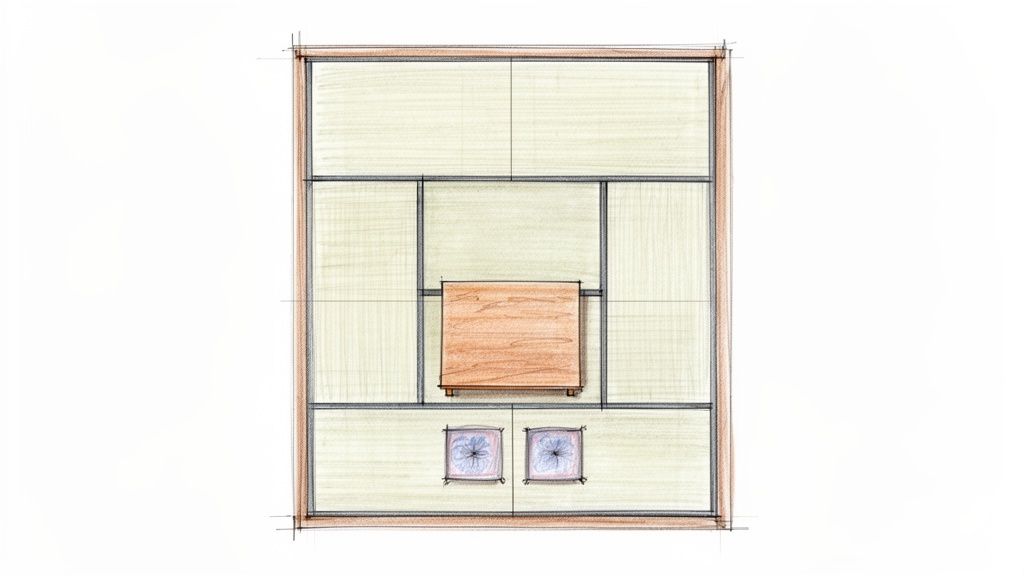
Why it matters: This is a fantastic space-saving strategy. Low furniture keeps sightlines open, making rooms feel larger and more airy—a huge benefit for small homes, apartments, and rental properties.
How to Implement It
You don't need to cover an entire room. Create a designated "tatami zone" with a large, woven rush rug in a corner for reading or tea. Pair it with low-to-the-ground furniture like floor cushions (zabuton), a low coffee table, or a simple platform bed.
- Living Room: Create a cozy conversation area with a large tatami-style rug, floor cushions, and a low-slung wooden coffee table.
- Bedroom: A minimalist platform bed frame combined with a small tatami mat beside it for a meditation or dressing area.
- Family Tip: A low-level living area is great for families with young children, creating a safe and comfortable play space.
AI Pro-Tip: Not sure if low furniture will work for you? Use an AI Interior Designer to experiment. Upload a photo and let the tool generate variations with different low-furniture styles, like a "Low Oak Table" versus a "Minimalist Floor Sofa," to see which layout feels most balanced and functional.
3. Divide Space with Shoji Screens
Shoji screens are translucent sliding panels made from wooden lattice and washi paper. They are one of the most transformative Japanese home decorating ideas because they allow for flexible, light-filled spaces. Shoji screens diffuse natural light beautifully, creating a soft glow while providing privacy. They let you open up rooms for entertaining or close them off for intimacy—a perfect solution for modern open-plan living.
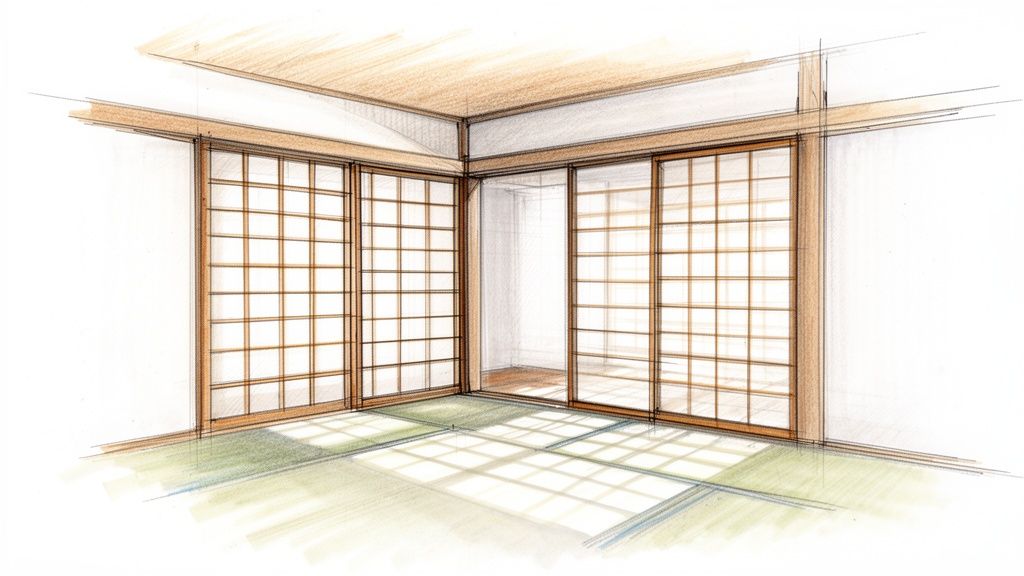
Why it matters: For renters or those in small spaces, shoji screens are a non-permanent way to create zones. You can easily create a home office nook in a living room or a private sleeping area in a studio apartment without blocking precious light.
How to Implement It
Use shoji screens as room dividers, closet doors, or even window coverings to replace heavy curtains. They are surprisingly versatile and can be found in various sizes and styles to fit modern homes.
- Living Room: Use a large set of freestanding shoji screens to divide the living and dining areas.
- Bedroom: Replace standard closet doors with sliding shoji panels for a lighter, more streamlined look.
- Budget Tip: If custom screens are too expensive, look for folding shoji-style screens that can be moved as needed.
AI Pro-Tip: Wondering how shoji screens would look? Visualize it instantly with an AI Interior Designer. Upload a photo of your room and let the AI add "shoji screen dividers." You can test different wood finishes and placements to see how they redefine the layout and light flow before buying.
4. Create a Focal Point with a Tokonoma Alcove
A tokonoma is a recessed alcove in a traditional Japanese room used to display art. Instead of being filled with clutter, it’s intentionally minimalist, typically holding a single hanging scroll (kakemono), a seasonal flower arrangement (ikebana), or a piece of pottery. This practice creates a powerful focal point that grounds the room and reflects the changing seasons.
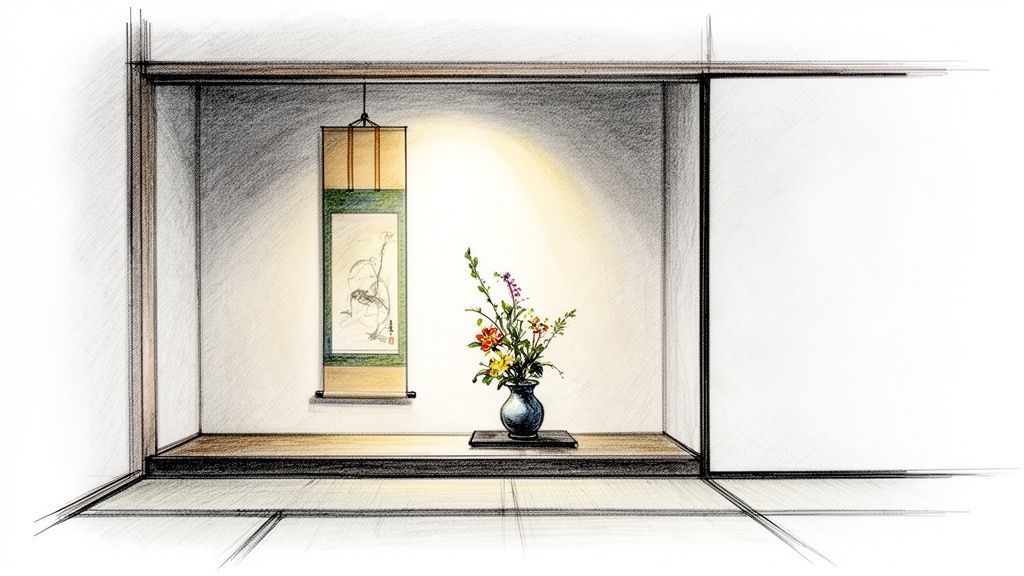
Why it matters: This "less is more" approach is perfect for real estate staging. A single, beautiful focal point makes a room feel intentional and high-end. For homeowners, it encourages mindfulness by rotating displays seasonally, keeping the space fresh and interesting.
How to Implement It
You don't need to build an actual alcove. Designate a floating shelf, a small console table, or even a specific corner for this purpose. The key is to keep the display minimal and rotate the items. For more inspiration, look at traditional Japanese tea rooms.
- Living Room: Dedicate a floating shelf to display a single ceramic vase with seasonal branches.
- Entryway: Use a minimalist console table against a wall as your tokonoma, featuring a bonsai tree and a simple tray for keys.
AI Pro-Tip: Use an AI Interior Designer to find the best spot for your focal point. Upload a photo of your living room and let the tool test a tokonoma-style shelf on different walls. You can then try combinations of artwork and vases to see what creates the most balanced and serene look.
5. Embrace Wabi-Sabi: The Beauty of Imperfection
Wabi-sabi is a philosophy that finds beauty in imperfection, impermanence, and authenticity. It’s the opposite of a sterile, mass-produced look. Think of the unique glaze on a handmade ceramic bowl, the weathered texture of an old wooden bench, or a slightly wrinkled linen throw. This concept creates spaces that feel soulful, lived-in, and deeply personal.
Why it matters: This is a budget-friendly and sustainable approach. It encourages you to find beauty in vintage or secondhand items rather than always buying new. For an Airbnb, it creates a unique, charming atmosphere that guests will remember.
How to Implement It
Look for items with asymmetrical forms, rough textures, and a handmade quality. Embrace materials that age gracefully and tell a story. This isn't about creating a distressed look; it's about choosing authentic pieces and letting them be.
- Living Room: A reclaimed wood coffee table with visible knots, a simple linen sofa, and hand-thrown pottery for plants.
- Kitchen: Unglazed ceramic dinnerware, aged brass fixtures, and a well-used wooden cutting board left on display.
- Bathroom: A natural stone soap dish and Turkish cotton towels create a simple, spa-like feel.
AI Pro-Tip: See how this concept works before you start shopping. Upload a photo of your room and apply a "Wabi-Sabi" or "Rustic Japanese" style. An AI Interior Designer can visualize how textures like cracked plaster or weathered wood can add character and warmth to your space.
6. Connect with Nature via an Engawa (Veranda)
An engawa is a traditional Japanese veranda that blurs the line between indoors and outdoors. This transitional space, often a covered wooden porch, connects interior rooms to a garden. It invites nature, light, and fresh air into the home, creating a tranquil area for relaxation.
Why it matters: Creating an indoor-outdoor connection can make your living space feel much larger and improve well-being. For real estate agents, highlighting this feature is a huge selling point.
How to Implement It
You don't need a major renovation. The key is to create a seamless transition to your outdoor area, even if it's just a small balcony.
- Living Room: If you have sliding glass doors, use similar flooring or a continuous rug that extends just outside onto a patio or deck.
- Bedroom: Create a small, covered balcony with a single wooden bench to feel like an extension of the room.
- Apartment Tip: Place a row of plants just inside a large window to create the feeling of a garden view. Use weather-resistant, low-profile seating that works both indoors and on the balcony.
AI Pro-Tip: Use an AI Interior Designer to visualize an engawa-inspired transition. Upload a photo of a room with a window or door. The AI can show you how extending the flooring material onto a virtual patio or adding a minimalist wooden overhang would look, helping you see the potential.
7. Use Ikebana Flower Arrangements
Ikebana is the Japanese art of flower arranging. Unlike dense Western bouquets, ikebana emphasizes line, form, and negative space. Each stem and leaf is carefully placed to create a dynamic, sculptural composition. In a minimalist interior, an ikebana arrangement becomes a living focal point, adding life without clutter.
Why it matters: This is an easy, low-cost way to add elegance and a touch of nature to any room. For staging or an Airbnb, a simple, beautiful arrangement looks incredibly sophisticated and welcoming.
How to Implement It
Start with a simple vase. Select only a few high-quality natural elements—even interesting branches from your backyard will work. Focus on creating a sense of movement and harmony.
- Living Room: A single, dramatic arrangement of cherry blossom or forsythia branches on a console table.
- Bedroom: A small, delicate arrangement of a single flower on a nightstand to create a peaceful atmosphere.
- Bathroom: A few stems of eucalyptus in a slender vase on the counter adds a spa-like touch.
AI Pro-Tip: Not sure what arrangement will work? Use an AI Interior Designer to see how different ikebana styles impact your space. Upload a photo of your room and let the AI place various virtual arrangements. You can test how a tall composition looks on a low cabinet versus a horizontal one on a dining table.
8. Adopt a Japanese Color Palette
The Japanese color palette is inspired by nature, using subtle, nuanced tones. Think deep indigo (ai), earthy rust (akane), soft sage greens, and complex charcoal blacks (sumi). These colors create a harmonious, calming environment that feels deeply connected to the natural world.
Why it matters: A neutral, nature-inspired palette has broad appeal and creates a relaxing atmosphere, which is great for residential homes, rentals, and properties for sale. It also serves as a perfect backdrop for natural materials like wood and stone.
How to Implement It
Start with a foundational color, like a warm off-white or light gray for the walls. Then, layer in accent colors through textiles (cushions, throws), ceramics, and artwork.
- Living Room: Walls in a soft, mossy green, paired with an indigo-dyed throw blanket and charcoal-colored pottery.
- Bedroom: A feature wall painted in a deep rust color behind a natural wood bed frame, with bedding in shades of cream and stone gray.
- Kitchen: Dark slate-gray cabinets paired with a light wood countertop for a modern Japanese look.
AI Pro-Tip: Choosing the right shade can be tricky. Use an AI Interior Designer to test paint colors risk-free. Upload a photo of your room, and you can instantly see how different shades of indigo or rust look in your lighting conditions, helping you avoid a costly painting mistake.
9. Maximize Natural Light with Screens and Lattice
Japanese design masters the art of diffusing sunlight. Instead of direct, harsh light, it uses translucent screens (shoji) and wooden lattice patterns (kumiko) to filter and soften daylight. This creates a gentle, indirect glow and produces beautiful, meditative shadow patterns that shift throughout the day.
Why it matters: Good lighting makes any space feel more inviting and spacious. This technique is perfect for rooms that get harsh afternoon sun or for adding privacy without sacrificing light—a common challenge in city apartments.
How to Implement It
Replace heavy drapes with translucent linen blinds or apply a frosted or rice-paper-style film to windows. You can also use decorative freestanding lattice panels to divide a space while letting light through.
- Living Room: Install shoji-inspired sliding panels over a large window or glass door to diffuse harsh sun.
- Bedroom: Use a delicate wooden lattice headboard that casts intricate shadows on the wall as the morning light enters.
- Outdoor Spaces: A simple wooden pergola or lattice screen on a patio can create beautiful dappled light for an outdoor seating area.
AI Pro-Tip: Visualize how light and shadow will play in your room. Use an AI Interior Designer to experiment with different "Lattice Screen" or "Shoji Panel" elements. Some tools can even generate renders for different times of day to show you how the light will change.
10. Choose Sustainable and Eco-Conscious Materials
A core Japanese principle is mottainai—a sense of regret concerning waste. This translates to design through the use of sustainable, long-lasting, and locally-sourced materials. It's about choosing quality over quantity and celebrating traditional craftsmanship.
Why it matters: Choosing sustainable materials is not only better for the environment but often results in a higher-quality, more durable home. For Airbnb hosts and real estate agents, highlighting eco-friendly features is a growing selling point for conscious consumers.
How to Implement It
Incorporate renewable materials like bamboo, cork, and wood from managed forests. Look for organic textiles like cotton and linen. When you can, choose handmade items from local artisans. Researching sustainable interior design materials can help you make informed choices.
- Living Room: An armchair crafted from sustainably sourced ash with natural linen cushions.
- Kitchen: Bamboo cutting boards, recycled glass containers, and linen dish towels.
- Bathroom: A reclaimed wood vanity and organic cotton towels.
AI Pro-Tip: An AI Interior Designer can help you visualize how different sustainable materials look together. Upload a photo of your dining area and compare a reclaimed wood table with chairs upholstered in organic hemp fabric. The AI can generate multiple variations to help you find the most balanced combination.
10-Point Comparison: Japanese Home Decorating Ideas
| Item | Implementation complexity | Resource requirements | Expected outcomes | Ideal use cases | Key advantages | Main limitations |
|---|---|---|---|---|---|---|
| Minimalist Zen with Natural Materials | Moderate — careful curation and layout | Quality natural materials, minimalist furniture, skilled sourcing | Calm, uncluttered, timeless interiors emphasizing function | Small apartments, staging, meditation spaces, modern homes | Stress-reducing, low-maintenance, spatially efficient, photogenic | Can feel cold/impersonal; limited color variety; requires discipline |
| Tatami Mat Flooring and Low Furniture | High — installation and patterning rules | Tatami mats, low furniture, possible floor modifications | Authentic low-level living, intimate floor-based layout, insulation | Traditional rooms, hybrid apartments, tea rooms, ryokan-style spaces | Authentic aesthetic, comfortable underfoot, optimizes small spaces | Maintenance/replacement, humidity sensitivity, furniture incompatibility |
| Shoji Screens and Paper Partitions | Moderate — precise installation for smooth operation | Wooden frames, washi or synthetic panels, sliding tracks | Diffused natural light, flexible room division, preserved visual flow | Open-plan apartments, light control, temporary or flexible partitions | Light diffusion, flexible layout, cost-effective vs permanent walls | Fragile panels, limited soundproofing, periodic repairs needed |
| Tokonoma Alcove with Artwork and Seasonal Displays | Moderate — wall modification or built-in niche | Wallwork or shallow alternative, curated artwork/flowers, lighting | Intentional focal point encouraging contemplation and seasonality | Living rooms, tea rooms, staging, cultural spaces | Strong focal emphasis, seasonal expression, cultural authenticity | Requires curation and upkeep; may need structural change; dust |
| Wabi-Sabi Aesthetic: Beauty in Imperfection | Low–Moderate — curation and material selection | Reclaimed/aged materials, handmade objects, artisan sourcing | Warm, lived-in, emotionally resonant interiors with texture | Restaurants, boutiques, cozy residences, design-forward homes | Sustainable, human-centered, low pressure for perfection, distinctive | Risk of appearing shabby; careful curation needed; sourcing time-consuming |
| Engawa: Transitional Verandas and Connection to Nature | High — architectural addition or major renovation | Outdoor space, durable exterior wood, construction and drainage | Strong indoor–outdoor connection, expanded perceived living area | Houses with gardens, resorts, high-end renovations | Enhances light, ventilation, and views; multipurpose transition space | Requires outdoor space; costly; ongoing exterior maintenance; climate limits |
| Ikebana Flower Arrangements in Minimalist Settings | Moderate — skillful practice and regular updates | Seasonal flowers/branches, suitable vessels, replacement frequency | Dynamic living focal points that change seasonally | Minimalist interiors, staging, hotels, cultural spaces, restaurants | Live focal point, connects to nature, encourages mindfulness, photogenic | Needs expertise, ongoing maintenance and replacement, seasonal limits |
| Japanese Color Palette: Subtle Naturals & Traditional Pigments | Low–Moderate — testing and coordination | Paints/textiles in traditional pigments, samples | Calming, cohesive, timeless atmosphere that complements materials | Whole-home schemes, hospitality, staging, galleries | Harmonious with materials, versatile, reduces visual fatigue | May feel understated to some; requires careful coordination and sampling |
| Natural Lighting Through Panels and Lattice | Moderate — design of openings and panel systems | Shoji/kumiko panels, window placement, reflective surfaces | Soft, dynamic daylight with interesting shadow patterns | Daylit spaces, galleries, meditation rooms, restaurants | Energy-efficient, mood-enhancing, privacy with light | Limited intensity control, seasonal variability, cleaning and orientation constraints |
| Sustainable Materials & Eco-Conscious Japanese Design | Moderate — sourcing and verification effort | FSC/organic materials, artisanal products, longer lead times | Durable, authentic interiors with lower environmental impact | Eco-conscious homes, sustainable renovations, long-term investments | Supports artisans, durable, better indoor air quality, culturally authentic | Higher initial cost, limited availability, longer sourcing timelines |
Start Creating Your Serene Space Today
Adopting Japanese interior design is less about a total renovation and more about a shift in mindset. It’s about creating a home that promotes tranquility, mindfulness, and a connection to nature. You don’t need to do everything at once. The path to a serene space begins with a single, intentional step.
Key Takeaways for Your Design Journey
The most powerful Japanese home decorating ideas focus on a few key themes:
- Embrace 'Ma' (Negative Space): The most impactful change is often subtraction, not addition. Declutter and create open areas to let your room breathe and give significance to each remaining object.
- Connect with Nature: Use natural materials like wood, bamboo, and paper. Add plants and maximize soft, natural light to blur the line between indoors and outdoors.
- Find Beauty in Imperfection: The wabi-sabi concept encourages us to appreciate aged and imperfect items, which adds character and promotes a more sustainable, less consumer-driven approach to decorating.
Your Actionable Next Steps
Feeling inspired but not sure where to start? Start small. Pick one idea that resonates with you. Maybe it's introducing an earthy color palette, creating a minimalist display on a shelf, or simply decluttering one corner of your living room.
Visualizing how these changes will look in your home can be tough. This is where an AI Interior Designer is incredibly helpful. You can experiment risk-free by uploading a photo of your room to see how low-profile furniture would look or test a wabi-sabi textured wall before committing. This process saves time, prevents costly mistakes, and empowers you to make design decisions with confidence. It's important to remember that while AI is a powerful tool for generating ideas, you should always combine its suggestions with your own personal taste.
Ultimately, these Japanese decorating ideas are about creating more than just a beautiful room; they’re about crafting a home that supports your well-being—a space that encourages you to slow down and live more intentionally.
Ready to see how the timeless elegance of Japanese design can transform your space? Try Interior Redesigne AI to instantly reimagine your room from a photo or sketch. Upload a picture and get photorealistic redesigns that bring these serene concepts to life at Interior Flux Studio AI.