Ever wonder how a cluttered, empty, or outdated space becomes a buyer's dream? The secret is strategic home staging. It's more than just adding pretty furniture; it's about crafting an emotional connection that helps potential buyers or renters envision their future in that very room. A great staging before and after story isn't just visually stunning—it’s a masterclass in marketing and design that makes people fall in love with a space.
These transformations prove that thoughtful changes, big or small, can lead to faster sales, higher offers, and five-star rental reviews. This isn't just about making things look nice; it's about maximizing a property's value in a crowded market. By neutralizing personal style and highlighting a home's best features, staging creates a blank canvas that appeals to the widest possible audience.
In this guide, we'll break down real-world staging before and after examples, revealing the simple strategies behind each success. Whether you're a real estate agent, an Airbnb host, or a homeowner ready for a fresh start, you'll discover practical tips to turn any 'before' into a breathtaking 'after'. We’ll also show you how an AI Interior Designer helps you visualize these results in seconds, reducing stress and saving you money before you even lift a paintbrush.
1. Virtual Home Staging for Real Estate Listings
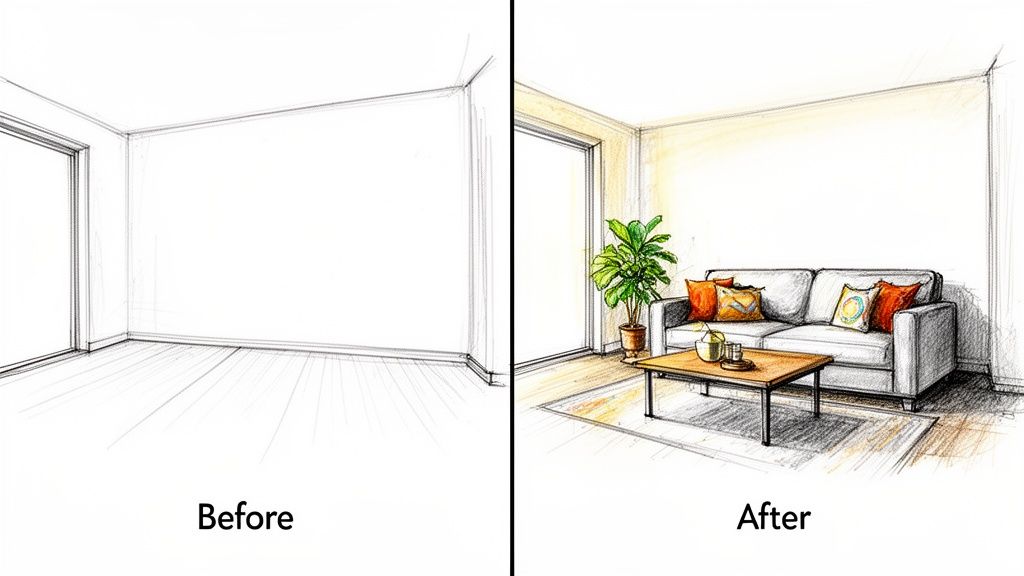
Virtual staging is a powerful tool that digitally furnishes and decorates photos of empty or outdated properties. Instead of physically moving heavy furniture, this method uses software to insert realistic items into a photo, transforming a vacant room into a warm, inviting home. It’s a game-changer for new constructions, empty rentals, or homes that need a modern touch without the expense of physical staging. The resulting "staging before and after" transformation is often dramatic, helping buyers emotionally connect with a space they’ve only seen online.
Why It Works: The Strategy Behind Digital Furnishing
An empty room is a question mark for potential buyers. They struggle to visualize where their sofa would go, guess the room's size, or imagine their life there. Virtual staging answers these questions instantly, removing the guesswork.
- Defines Purpose: That awkward spare room can become a beautiful home office, a cozy nursery, or a yoga space, targeting specific buyer needs.
- Shows Scale: Digitally adding a queen-sized bed or a sectional sofa clearly demonstrates how much space is available.
- Saves Money: It’s a budget-friendly alternative to physical staging, which can cost thousands. Virtual staging is a one-time fee, making it accessible for any listing, from a small apartment to a large family home.
Key Takeaway: Virtual staging is a strategic tool that defines a room's purpose, demonstrates its scale, and builds an emotional bridge with potential buyers before they even step inside.
Actionable Tips for Effective Virtual Staging
To get the best results from your virtual staging efforts, follow these practical steps:
- Prioritize Key Rooms: Focus your budget on the living room, master bedroom, and kitchen. These are the rooms that influence decisions the most.
- Target Your Buyer: Choose a design style that appeals to your likely buyer. For a downtown condo, try a sleek, minimalist design. For a suburban house, a modern farmhouse style might resonate more with families.
- Use AI to Visualize First: With an AI Interior Designer, you can test different styles—like Japandi (a mix of Japanese minimalism and Scandinavian warmth) or Industrial—on your photos in seconds. This helps you choose the perfect look before paying a virtual staging company.
- Be Transparent: Always disclose that the images are virtually staged. Including a few "before" photos of the empty space builds trust and manages expectations.
2. Airbnb and Vacation Rental Listing Optimization
For Airbnb hosts, strategic staging is essential for maximizing bookings and commanding higher nightly rates. Unlike selling a house, rental staging must create a compelling promise of an experience. It’s about styling a property to not only look beautiful in photos but also to function perfectly for guests. The goal is to transform a standard space into a desirable destination. A well-executed staging before and after can dramatically elevate a listing's appeal, making it stand out in a crowded market.
Why It Works: The Strategy Behind a "Bookable" Vibe
Potential guests scroll through hundreds of listings, making snap judgments based on photos. Strategic staging helps you control the narrative, showcasing a lifestyle, not just a room.
- Builds Trust: A clean, warm, and inviting aesthetic helps travelers envision themselves relaxing in your space.
- Justifies Higher Prices: A beautifully staged property looks more premium, justifying a higher price point and leading to more 5-star reviews.
- Creates a Brand: It’s a powerful tool for building a consistent brand, especially for hosts with multiple listings.
Key Takeaway: For vacation rentals, staging is a core marketing strategy that sells an experience. The goal is to stop the scroll, create an emotional response, and convert lookers into bookers.
Actionable Tips for Effective Vacation Rental Staging
To make your Airbnb or vacation rental listing irresistible, implement these tips:
- Highlight Unique Features: Use furniture to draw attention to your property's best assets. Place a cozy armchair by a window with a great view or set up a stylish coffee station on a beautiful kitchen counter.
- Create Design Variations with AI: Want to appeal to different travel seasons? Use an AI Interior Designer to create multiple style concepts. Showcase a cozy winter retreat and a bright summer escape using the same room photos, without any physical changes. This helps you visualize updates before you buy new decor, saving time and money.
- Photograph at the "Golden Hour": Schedule your photoshoot during the early morning or late afternoon when natural light is soft and warm. This makes spaces feel more inviting and luxurious.
- Update Imagery Seasonally: Keep your listing fresh. A few festive pillows in winter or a bright floral arrangement in summer shows you’re an attentive host.
3. Interior Design Concept Boards and Client Presentations
Concept boards are essential for interior designers to visually communicate their vision to clients. This process involves transforming a client's "before" photo into a detailed, photorealistic "after" rendering. By showcasing proposed changes in furniture, color, lighting, and layout, these presentations bridge the gap between abstract ideas and a tangible design. This is a critical step in any project, ensuring everyone is excited and aligned before any physical work begins.
Why It Works: The Strategy Behind Visualizing the Future
Clients often struggle to imagine how paint swatches, fabric samples, and furniture ideas will come together. A detailed rendering eliminates this uncertainty.
- Builds Confidence: It allows clients to "see" the finished room, understand the flow and scale, and make informed decisions with confidence.
- Prevents Costly Mistakes: Securing client buy-in early prevents expensive changes down the line.
- Showcases Expertise: Instead of vague descriptions, designers can present several complete "after" scenarios, from a minimalist Scandinavian retreat to a bold, eclectic living space.
Key Takeaway: Concept presentations are a strategic communication tool that de-risks the design process. They translate a designer's vision into a clear language that clients can understand and approve.
Actionable Tips for Effective Design Presentations
To create compelling presentations that win over clients, consider these best practices:
- Show the "Before": Always present the original photo alongside the proposed rendering. This direct comparison makes the "staging before and after" transformation more impactful.
- Offer Choices with AI: Use an AI Interior Designer to quickly generate 3-5 unique design directions. This lets clients explore different styles instantly, making them an active participant in the creative process and reducing your design time.
- Keep It Real: Use realistic 3D models of furniture and decor that are actually available for purchase within the client's budget.
- Provide Detailed Specs: Accompany your renderings with lists of materials, paint colors, and furniture specifications to create a clear roadmap for implementation.
4. Renovation Project Planning and Visualization
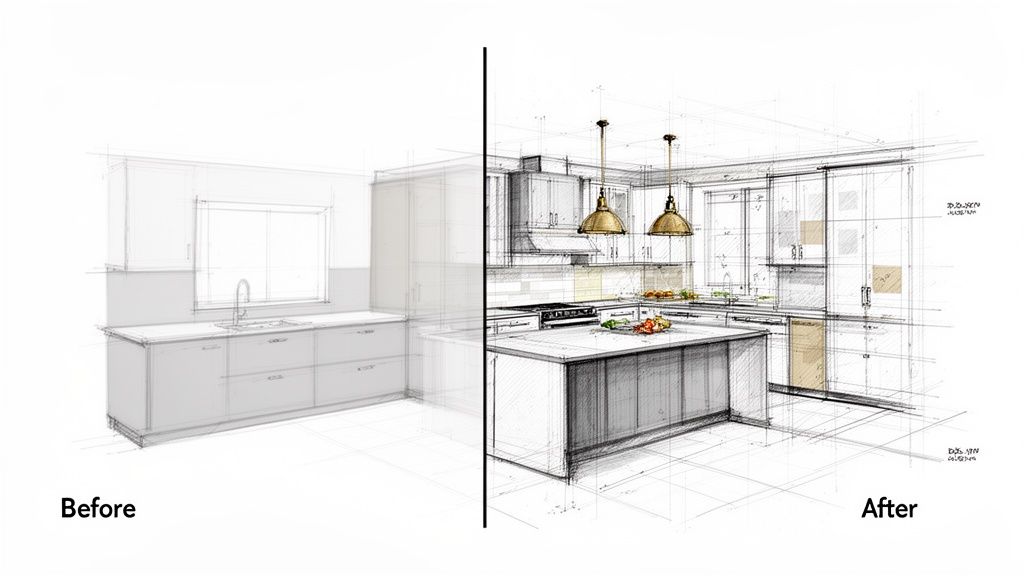
Beyond sales, staging before and after visuals are an essential tool for homeowners planning major renovations. This approach uses digital renderings to visualize proposed changes to layouts, materials, and fixtures before a single wall is touched. It bridges the gap between a blueprint and the final product, helping you make confident decisions about expensive projects like a kitchen remodel or basement finishing. This visualization turns abstract ideas into a tangible preview of your future space.
Why It Works: The Strategy Behind Pre-Visualization
A renovation is a big financial and emotional investment. Visualizing the "after" removes the guesswork and reduces the risk of costly mistakes.
- Reduces Decision Stress: Instead of trying to imagine how different countertop materials will look with specific cabinet colors, you can see multiple combinations side-by-side.
- Saves Time and Money: AI tools can generate different layouts in minutes, helping you finalize your plan faster and avoid expensive change orders during construction.
- Improves Communication: A clear visual ensures you and your contractor are on the same page, preventing misunderstandings.
Key Takeaway: Renovation visualization is a strategic risk-management tool. It transforms abstract plans into a concrete vision, aligning homeowner expectations with contractor execution to save time, money, and prevent regrettable design choices.
Actionable Tips for Effective Renovation Visualization
To ensure your planning leads to a successful project, use these visualization best practices:
- Test Ideas with AI: Before hiring a contractor, upload a photo of your space to an AI Interior Designer. Experiment with removing a non-structural wall, changing flooring from wood to tile, or testing different kitchen cabinet styles. This helps you explore possibilities without any commitment.
- Start with Accuracy: Use precise measurements of your current space as the foundation for your renderings. This ensures the final plan is realistic and buildable.
- Design Within Your Budget: Create renderings that reflect materials and fixtures you can actually afford. This prevents falling in love with a design that is out of reach.
- Collaborate with Professionals: Share your "staging before and after" visualizations with your contractor or designer. They can provide crucial feedback on feasibility and cost before you finalize decisions.
5. Commercial Space and Office Redesign Presentations
Beyond homes, staging before and after visuals are critical in the corporate world. Commercial staging involves creating detailed renderings of offices, retail shops, or hospitality spaces to illustrate how a redesign will enhance functionality, productivity, and brand identity. These presentations help justify significant investment by showing stakeholders a tangible vision of the future. This transforms a boring floor plan into a compelling story about improved employee well-being and business outcomes.
Why It Works: The Strategy Behind Corporate Visualization
An outdated office directly impacts employee morale and productivity. Visual staging bridges the gap between blueprints and reality, showcasing the "after" to demonstrate the return on investment.
- Justifies Budgets: It turns abstract concepts like "improved workflow" into a clear, visual reality, whether it's a tech office designed for collaboration or a retail store with an optimized customer flow.
- De-risks Decisions: By presenting a photorealistic before-and-after, designers can gather crucial feedback from employees and leadership early in the process.
- Aligns Stakeholders: It ensures the final design meets strategic goals, from attracting top talent to increasing retail sales.
Key Takeaway: Commercial staging is a strategic business tool for validating investment, aligning stakeholders, and proving how a physical environment can drive measurable business results.
Actionable Tips for Effective Commercial Presentations
To ensure your commercial redesign proposal is persuasive, follow these best practices:
- Define and Visualize Metrics: Don't just show a beautiful space. Illustrate how the new design achieves specific goals. For example, show a "collaboration hub" to represent a 20% increase in team interaction.
- Show Functional Variations: Create different versions of the same space. Present one layout optimized for focused work and another for team-based projects to show the design's flexibility.
- Involve Stakeholders Early: Use initial AI-generated visualizations to gather quick feedback from the employees who will actually use the space. This fosters a sense of ownership and ensures the final design is practical.
- Integrate Technology: Your renderings should include integrated tech, like video conferencing stations and smart boards, to show you are designing for future needs.
6. Home Staging for Traditional Property Sales
Traditional home staging is the art of physically furnishing and decorating a property to appeal to the highest number of potential buyers. This method involves bringing real furniture, art, and accessories into a home to create a tangible, immersive experience. It transforms a vacant or personalized space into a market-ready product designed to sell faster and for a better price. The goal is to highlight a home's best features, allowing buyers to walk in and immediately feel at home.
Why It Works: The Strategy Behind the Physical Transformation
Buyers often lack the imagination to see past an empty room or a seller's personal decor. Physical staging solves this by creating a universally appealing lifestyle that buyers can literally step into.
- Creates an Emotional Connection: Buyers can touch the furniture, see how light fills the space, and understand the room’s scale in a way photos cannot convey.
- Justifies the Asking Price: This method is particularly effective for high-end properties, where creating a premium, move-in-ready feel can justify a higher price.
- Drives Foot Traffic: Professionally staged homes photograph beautifully, leading to more compelling online listings that attract more in-person visits.
Key Takeaway: Traditional staging is a strategic investment that creates an emotional connection by allowing buyers to physically experience their potential new life, making a property feel less like a house and more like a home.
Actionable Tips for Effective Physical Staging
To maximize the impact of your traditional staging, focus on these proven strategies:
- Focus on High-Impact Rooms: Concentrate your budget on the living room, kitchen, and primary bedroom. A welcoming entryway also sets a positive first impression.
- Neutralize and Depersonalize: Use a neutral color palette on walls and in decor. Remove personal items like family photos so buyers can envision their own belongings in the space.
- Hire a Professional: A professional stager has an inventory of on-trend furniture and an expert eye for what sells in your market.
- Enhance with Photography: Once staged, invest in high-quality professional photography. A skilled photographer will capture the essence of the staged rooms, ensuring your online listing showcases the dramatic staging before and after transformation.
7. Social Media and E-Commerce Product Showcase Staging
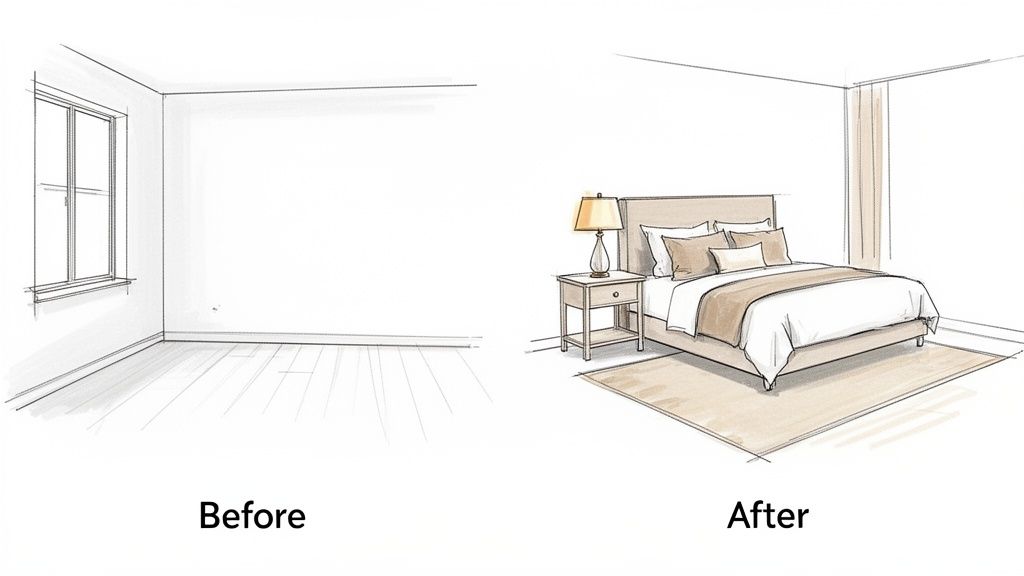
Product showcase staging transforms how items are sold online. Instead of just showing a chair on a white background, this method stages it within a complete, beautifully designed room setting. This contextual approach demonstrates how furniture and decor integrate into a real-life environment, helping customers visualize the item in their own home. The staging before and after here showcases a lifestyle, not just a product.
Why It Works: The Strategy Behind Lifestyle Context
A standalone product photo provides information, but a staged scene creates inspiration. Customers don't just buy a sofa; they buy the idea of a cozy evening with family.
- Reduces Buyer Uncertainty: Staging removes the guesswork of scale, color pairing, and style coordination, making the purchase decision easier.
- Boosts Engagement: In the digital marketplace where customers can't physically touch a product, context is everything. Beautifully staged scenes on social media are highly shareable and drive sales.
- Tells a Story: This method gives a product personality and a sense of place. This is where advanced solutions like product to model technology can be a game changer for e-commerce.
Key Takeaway: Product staging is a narrative tool that sells a vision. By showing how an item fits within a curated lifestyle, you transform a simple product into an essential piece of a customer's dream home.
Actionable Tips for Effective Product Showcase Staging
To maximize the impact of your product showcases on Instagram, Pinterest, or your own e-commerce site, follow these tips:
- Create Relatable Scenarios: Stage products in settings that reflect your target customers' lives. Showcase a durable dining table in a busy family kitchen or a sleek desk in a compact, work-from-home apartment nook.
- Maintain Brand Consistency: Use a consistent photography style and color palette across all staged images to build a strong, recognizable brand.
- Leverage AI for Rapid Prototyping: Before an expensive photoshoot, use an AI Interior Designer to quickly test different product placements, color schemes, and decor pairings. This allows you to explore dozens of creative concepts in minutes, ensuring the final shot is perfectly optimized to drive sales.
- Provide Context and Details: In your listings, include room dimensions and scale references. On social media, tag other decor items in the photo to inspire followers and drive additional sales.
Before vs After Staging: 7 Scenarios
| Item | Implementation complexity | Resource requirements | Expected outcomes | Ideal use cases | Key advantages |
|---|---|---|---|---|---|
| Virtual Home Staging for Real Estate Listings | Low–Moderate — mainly digital photo processing and AI tools | Quality listing photos, AI staging software, low per-listing cost ($500–$2k) | Faster listings; higher buyer interest; modest perceived value uplift (+5–10%) | Vacant properties, new construction, foreclosures, quick market listings | Fast, cost-effective, multiple style options, removes clutter |
| Airbnb and Vacation Rental Listing Optimization | Moderate — combines pro photography with ongoing digital updates | Professional photographer, AI styling tools, seasonal content refresh | Higher booking rates (≈30–50%), ability to command higher nightly rates | Short‑term rentals, multi‑property managers, seasonal markets | Increases bookings/revenue, brand consistency, design testing |
| Interior Design Concept Boards and Client Presentations | Moderate–High — photorealistic renderings and client workflows | High‑quality rendering/AI software, designer time, capable hardware | Improved client comprehension, fewer revisions, faster decisions | Client proposals, custom residential and commercial design projects | Clear visualization, rapid iteration, supports premium fees |
| Renovation Project Planning and Visualization | Moderate — requires accurate plans and realistic renderings | Photos, floor plans/measurements, contractor input, AI tools | Better planning and prioritization, reduced regret, higher satisfaction | Home remodels (kitchen, bath, layout changes), financing discussions | Tests materials/layouts, reduces costly mistakes, aids contractor alignment |
| Commercial Space and Office Redesign Presentations | High — complex integrations and multi‑stakeholder coordination | Advanced visualization tools, stakeholder workshops, technical specs | Higher stakeholder buy‑in, budget justification, improved space utilization (+15–25%) | Offices, retail, hospitality, corporate rollouts, multi‑site programs | Justifies investment, tests configurations, aligns stakeholders |
| Home Staging for Traditional Property Sales | High — logistics of physical staging and in‑person setup | Furniture rental, professional stagers, photography; higher costs ($1.5k+) | Authentic in‑person appeal, strong emotional impact, traditional credibility | Luxury homes, open houses, model homes, high‑end markets | Tangible experience, proven effectiveness for showings |
| Social Media and E‑Commerce Product Showcase Staging | Moderate — consistent styling and scalable content production | Inventory/props, photo/video teams, marketing resources, optional AI | Higher engagement and conversions (20–40%), reduced returns | E‑commerce listings, social campaigns, influencer and product launches | In‑context product visualization, improved conversions, shareable content |
Your Turn: Create Your Own 'After' in Seconds
We've seen how powerful a great staging before and after can be. The magic isn't just in the beautiful pictures; it's in the strategy. From decluttering a living room to reveal its true size, to swapping dark furniture for light pieces that brighten the space, the core principles are simple and effective.
The common thread in every success story is selling a lifestyle, not just a space. It’s about creating an emotional connection that allows a buyer or guest to envision themselves thriving within those walls.
From Inspiration to Action: Your Key Takeaways
The most successful staging projects rely on proven strategies you can replicate. Here are the most crucial takeaways:
- Decluttering is Non-Negotiable: This is more than tidying up. It’s strategically removing personal items and excess furniture to create a blank canvas for the buyer's imagination.
- Neutrality Sells: Bold, personal colors can be polarizing. A neutral palette of grays, beiges, and off-whites appeals to the widest audience and makes spaces feel larger and brighter.
- Define Every Space: Give every area a clear purpose. An ambiguous corner becomes a cozy reading nook; an empty room becomes a functional home office. This helps people see the full potential of the floor plan.
- Light is Your Best Friend: Maximize natural light and add layered artificial lighting (ambient, task, and accent) to make a home feel warm, inviting, and more valuable.
Mastering these concepts turns staging from a daunting task into a smart investment with a clear return.
The Power of Prototyping: Visualize Your 'After' with AI
In the past, visualizing these changes required expensive consultations or a very active imagination. Today, technology has closed that gap. The biggest barrier to a great staging before and after is often the fear of making the wrong choice. What if that paint color looks terrible? What if that new sofa is too big?
This is where an AI Interior Designer becomes your secret weapon. Instead of committing time and money to an idea you're unsure about, you can test it in seconds. Upload a photo of your current "before" space and let AI generate dozens of professional "after" scenarios.
- Explore different styles, from minimalist Japandi to cozy modern farmhouse.
- Test new furniture layouts or visualize removing a non-structural wall.
- Find the perfect color palette with zero risk and zero stress.
While AI is a powerful launchpad for inspiration, remember its role. Use it to generate and refine ideas, then combine the best concepts with your personal taste. For complex projects, its visualizations are a crucial tool for communicating your vision to a professional. You no longer have to guess what your home could look like; you can see it, refine it, and confidently create your own stunning 'after'.
Ready to stop guessing and start visualizing? Instantly reimagine your room from a photo or sketch by trying Interior Redesigne AI today. Upload a photo and generate dozens of professional staging and redesign concepts to create your perfect "after" in just a few clicks.