
That dusty, unfinished attic isn't just wasted space—it's a hidden opportunity waiting to be claimed. For homeowners craving more room, real estate agents looking to highlight a home's potential, or Airbnb hosts needing extra storage for supplies, tackling the attic is a game-changer. But where do you begin with exposed beams, uneven floors, and fluctuating temperatures?
This guide is your roadmap to transforming that forgotten zone into a functional, organized asset. We’ll break down practical unfinished attic storage ideas that anyone can tackle. You'll discover how to maximize vertical space, create safe walkways, and protect your belongings from the attic environment.
This isn't just about decluttering. To truly unlock your attic's potential and go beyond simple organization, you might eventually explore a comprehensive guide to loft storage conversion that details the structural steps involved. For now, let's focus on creating immediate, high-impact storage solutions that work for any budget.
Throughout this list, we’ll also show you how an AI Interior Designer can help you visualize these changes before you start. This allows you to test different layouts without lifting a single hammer, saving you from costly mistakes and decision stress. Let's get started on turning that cluttered upper level into one of your home’s most valuable storage areas.
1. Ceiling-Mounted Storage Racks and Joist Hangers
Of all the unfinished attic storage ideas, using the vertical space above your head is one of the most efficient. Ceiling-mounted storage racks are systems designed to attach directly to the exposed roof joists, creating "floating" shelves that keep the floor clear. This approach is perfect for items you don't need daily, like seasonal decorations, camping gear, or keepsake boxes.
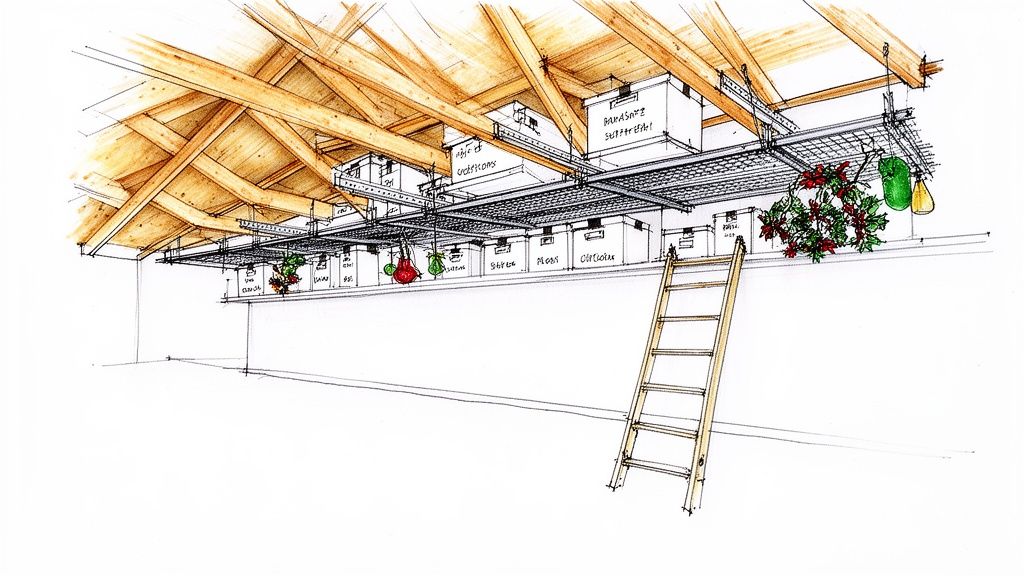
This method shines in attics without proper flooring, as it doesn't require you to lay down plywood first. It leverages your home's structure to create valuable storage from thin air.
Why This Matters for Your Space
- Maximizes Space: Overhead systems use your attic's cubic footage, not just its square footage. Hoisting storage up preserves the floor for walkways or heavier items.
- Budget-Friendly Start: It’s a quick, high-impact win that’s much cheaper than installing a full attic floor.
- Maintains Access: This is especially beneficial for homeowners who need to keep access to HVAC units, vents, or electrical boxes located on the attic floor.
Visualize Before You Buy: Wondering how racks will fit around ductwork? Upload a photo of your attic to an AI Interior Designer. You can instantly see different rack configurations, helping you map out the most efficient layout without guesswork. This saves time and prevents you from buying a system that doesn't fit.
Practical Tips:
- Measure First: Check the spacing between your ceiling joists before buying. Most systems are designed for standard 16-inch or 24-inch spacing.
- Respect Weight Limits: Distribute weight evenly across multiple joists. Keep heavier items closer to the main support beams.
- Use Waterproof Bins: Protect contents from potential roof leaks and humidity with durable plastic bins that have locking lids.
- Plan for Safe Access: A sturdy attic ladder or a stable A-frame ladder is non-negotiable for safely accessing overhead storage.
- Label Everything: Clearly label all sides of your bins. When you're looking up from a ladder, you'll be glad you can quickly identify what you need.
2. Modular Plastic Shelving Units
For a simple, no-install solution, modular plastic shelving units are one of the most practical unfinished attic storage ideas. These free-standing systems are made from durable resin, making them resistant to the moisture, temperature extremes, and pests often found in attics. Unlike wood, they won't rot or warp, and unlike metal, they won't rust.
This method is perfect for attics with some flooring, even if it's just a simple plywood walkway. The units can be assembled in minutes without tools, offering an immediate and flexible storage boost.
Why This Matters for Your Space
- Renter-Friendly: Because they require no installation, these shelves are perfect for rental properties or anyone who wants a solution they can take with them when they move.
- Adaptable & Scalable: Start with one unit and add more as your storage needs grow. The shelves are adjustable, so you can customize the height for bulky items or small boxes.
- Boosts Listing Appeal: For real estate agents or Airbnb hosts, a neatly organized attic with sturdy shelving shows potential buyers or guests that the home is well-maintained and offers ample storage.
AI-Powered Layout Planning: Not sure how many units to buy? An AI Interior Designer can help. Upload a photo of your attic and place virtual shelving units to see how they fit around trusses and ductwork. This helps you purchase the right number and size for maximum efficiency, saving money and reducing stress.
Practical Tips:
- Create a Stable Base: Ensure the unit is level, even on a floored surface. An uneven shelf can become unstable when loaded with heavy items.
- Weight Distribution is Key: Always place the heaviest boxes on the bottom shelves. This lowers the center of gravity and makes the unit much more stable.
- Pair with Clear Bins: Use clear, labeled plastic bins on the shelves to protect belongings from dust while letting you see what's inside at a glance.
- Ensure Airflow: Leave a few inches of space between the shelving unit and any walls to help with air circulation.
- Keep it Clean: The streamlined look of these shelves fits a minimalist approach. For more inspiration, you can explore minimalist furniture ideas.
3. Clear Plastic Storage Bins with Labeling Systems
One of the most foundational unfinished attic storage ideas is creating an organized system with clear plastic bins. This simple method involves using transparent, stackable containers to protect belongings from dust, moisture, and pests. The see-through design lets you quickly identify contents, while a good labeling strategy eliminates guesswork.
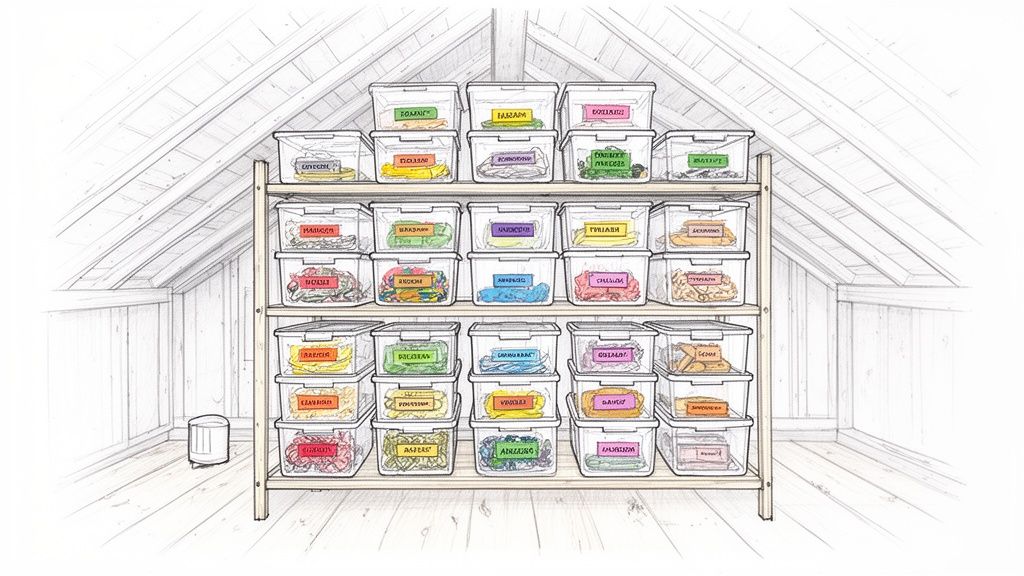
This approach is perfect for everything from seasonal clothing to family memorabilia. It transforms a chaotic space into a functional, easy-to-navigate archive. The visual order it brings is so effective that professional stagers use this method to showcase storage potential when selling a home.
Why This Matters for Your Space
- Protects Valuables: Unlike cardboard boxes that degrade in humidity and attract pests, sturdy plastic bins create a durable barrier, safeguarding your items for years.
- Saves Time & Reduces Stress: A clear bin and label system saves you from opening a dozen boxes to find one item. This organization makes seasonal swaps (like holiday decor or winter clothes) quick and painless.
- Great for Families: It enforces discipline, encouraging everyone to sort and categorize items before storing them, which is a lifesaver for busy households.
Visualize Your Organized Space: Feeling overwhelmed? An AI tool can help you see the light at the end of the tunnel. Upload a photo of your attic and generate images of the space with different shelving and bin arrangements. This helps you determine the ideal container sizes and layouts before you spend any money.
Practical Tips:
- Standardize Your Bins: Whenever possible, buy bins of the same brand. Uniform containers stack more safely and create a cleaner, more stable storage wall.
- Create a Master Inventory: For maximum organization, use a simple spreadsheet that lists each bin number and a summary of its contents. This is a lifesaver for locating specific items.
- Level Up Your Labeling: To find the best way to label storage bins, think durability. Use a label maker with tape that can withstand temperature changes. You can also assign colors to categories (e.g., green for holiday decor).
- Stack Safely: Always place heavier bins on the bottom. Lighter, less-used items can go on top.
- Photograph the Contents: For important boxes, take a quick photo of the contents before sealing the lid and tape it to the outside for an instant visual cue.
4. Wall-Mounted Pallet Racking Systems
For attics with strong, accessible wall framing, wall-mounted pallet racking systems offer a heavy-duty storage solution. This approach involves securing sturdy racks, sometimes made from repurposed wood pallets or metal frameworks, directly to wall studs. This creates robust shelving that uses vertical wall space without taking up the floor area—a common challenge in attics. It’s an ideal system for bulky, heavy items like large holiday decorations, off-season tires, or archival boxes.
This method leverages the often-ignored perimeter walls, turning them into a primary storage zone.
Why This Matters for Your Space
- Handles Heavy Loads: Unlike freestanding shelves that can be unstable on uneven attic floors, these systems anchor directly into your home's structure for maximum stability.
- Solves Awkward Angles: This strategy is particularly effective in A-frame attics, where you can fit custom-sized racks into the lower wall sections that are otherwise difficult to use.
- Industrial Chic: The raw, functional look can be a design feature in itself, fitting well with loft-style or modern industrial aesthetics.
Test the Look with AI: The industrial look of pallet racking isn't for everyone. Before you commit, see how it will look in your space. Use an AI design tool to upload a photo of your attic and render a realistic image of the installed racks. You can even try different finishes, like stained wood or painted metal, to ensure the style fits your home.
Practical Tips:
- Locate the Studs: Use a stud finder to precisely locate wall framing. Racks must be anchored securely into studs, not just drywall, to support the weight.
- Use Heavy-Duty Fasteners: Secure the racks with lag bolts rated to handle the combined weight of the system and its contents.
- Assess Load-Bearing Walls: If you plan to store extremely heavy items, it’s wise to use a load-bearing wall. For older homes, consulting a structural engineer can prevent accidental damage.
- Plan for Clearance: Install racks to avoid blocking access to HVAC units, electrical panels, or vents. Measure and mark out the placement before drilling.
- Add Shelf Liners: Consider adding non-slip shelf liners to prevent bins and boxes from sliding around.
5. Hanging Storage Hooks, Rods, and Pegboard Systems
Instead of letting vertical wall space go to waste, transform it into highly organized storage. Wall-mounted systems using hooks, rods, and pegboards are excellent unfinished attic storage ideas for keeping items off the floor and within easy reach. This is ideal for oddly shaped items that don't fit well in bins, like tools, sports equipment, wreaths, or out-of-season clothing on hangers.
Pegboards, in particular, offer incredible flexibility, allowing you to reconfigure your layout as your needs change without drilling new holes.
Why This Matters for Your Space
- Grab-and-Go Access: This is a game-changer for frequently used items. Unlike deep bins, hooks and pegboards keep individual items separate and identifiable, eliminating digging.
- Perfect for Hobbies: This system is great for homeowners who store hobby supplies, workshop tools, or sports gear in the attic.
- Frees Up Floor Space: By getting bulky items onto the walls, you keep the floor clear for safe movement and larger storage containers.
AI-Powered Pegboard Planning: The visual organization of a pegboard can be surprisingly complex. Before drilling, use an AI design tool to get a clear picture of your layout. Upload a photo of your attic wall and experiment with different pegboard sizes and item arrangements to create a functional and aesthetically pleasing setup. This visual preview helps you optimize your space and avoid a cluttered look.
Practical Tips:
- Mount Securely: Always mount pegboards, rods, and heavy-duty hooks directly into wall studs to ensure the system can safely support the weight.
- Create Zones: Group similar items together. Designate one area for gardening tools, another for holiday decorations, etc., to make finding things easier.
- Paint for Protection: Apply a coat of primer and paint to raw pegboard before installation. This seals the material, making it more resistant to humidity.
- Use a Variety of Hooks: Invest in an assortment of pegboard hooks (J-hooks, L-hooks, baskets) to hang items of all shapes and sizes. You can find inspiration from these office and study room ideas.
- Outline Your Tools: For a super-organized system, trace the outline of tools directly onto the pegboard with a marker. This shows exactly where each item belongs, making cleanup quick for anyone.
6. Attic Flooring and Platforms with Under-Structure Storage
For a more robust solution, installing raised flooring or platforms is one of the most transformative unfinished attic storage ideas. This involves laying sturdy plywood or OSB panels across the attic joists to create a solid, walkable surface. It effectively turns a hazardous area into a functional storage loft.
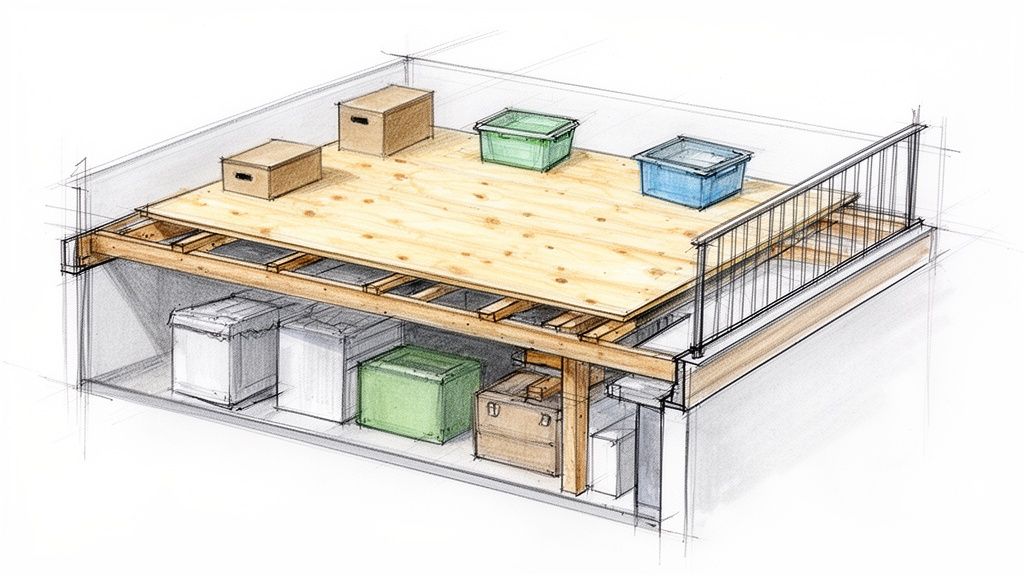
This method provides a stable floor for stacking boxes and safely navigating the space. By elevating the platform slightly, you can preserve the space between the joists for insulation and create an under-structure area perfect for stashing long, flat items like artificial Christmas trees or skis.
Why This Matters for Your Space
- Safety First: A platform creates a solid foundation to move around on instead of balancing precariously on joists, making attic access far safer for your family.
- Foundation for the Future: This is the ideal solution for those who plan to access their attic frequently or are considering a future conversion into a living space.
- Adds Home Value: For real estate agents, a properly floored attic is a huge selling point, showcasing expanded, usable square footage.
Visualize Future Potential: A platform is a big step. Before you build, use an AI interior design tool to see how it could evolve. Upload a photo of your attic and visualize how a finished platform could one day become a home office or playroom. This helps ensure your storage platform is designed with future possibilities in mind, preventing costly changes later.
Practical Tips:
- Consult a Structural Engineer: Before laying a board, have a professional assess your attic joists to ensure they can support the combined weight of the flooring and your items. This is a critical safety step.
- Prioritize Ventilation: Ensure your platform design doesn't block soffit vents or obstruct airflow, which is essential to prevent moisture and mold.
- Plan for Access: Design the platform around key access points for HVAC units or junction boxes. Create intentional pathways or removable panels.
- Integrate Lighting: Install lighting during construction. Running wires is much easier before the floor is sealed, and good lighting is non-negotiable for safety.
- Add Safety Railings: If your platform is near the attic hatch, install a sturdy railing to prevent falls.
- Think Ahead: When planning, think about how the space could be repurposed. This is similar to how you might reimagine a closet as a built-in bookcase, where initial planning opens up future design possibilities.
7. Climate-Controlled Storage Closets and Enclosed Shelving Units
For possessions that are too sensitive for the extreme temperatures of a typical attic, creating a micro-environment is a brilliant solution. A climate-controlled closet is a purpose-built structure within your attic designed to protect items from temperature swings, humidity, and dust. This is one of the most advanced unfinished attic storage ideas, perfect for safeguarding heirlooms, electronics, and documents.
These isolated spaces act like a safe within your attic, offering a stable environment where you can store items that would otherwise be damaged.
Why This Matters for Your Space
- Protects Delicate Items: An unfinished attic can experience drastic temperature fluctuations. A climate-controlled closet mitigates these extremes, protecting vintage clothing, important papers, vinyl records, or artwork from damage.
- Creates Peace of Mind: For families with irreplaceable heirlooms or real estate agents staging a home with valuable decor, this solution offers secure, archive-quality storage.
- Expands Storage Options: This method dramatically expands what you can safely keep in your attic, turning a hazardous area into a secure archive.
AI for Smart Placement: Building a closet will impact your attic's layout and airflow. Before you start, use an AI Interior Designer to virtually place the closet. Experiment with different sizes and locations to ensure it doesn't block access to essential systems like HVAC units or vents, saving you from a major headache later.
Practical Tips:
- Insulate Thoroughly: Use high-quality insulation (R-19 or higher) for the walls, ceiling, and door to create a strong thermal barrier.
- Monitor the Environment: Install a digital hygrometer/thermometer inside to keep an eye on humidity and temperature.
- Manage Climate Actively: For ultimate protection, consider adding a small dehumidifier or a portable AC unit vented to the outside.
- Plan for Power: Have a professionally installed electrical outlet inside or nearby to safely power climate control devices.
- Use Archival Materials: Store documents and photos in acid-free, archival-quality boxes within the closet to prevent long-term degradation.
- Seal the Deal: Use weather stripping around the door frame to create a tight seal, preventing dust and unconditioned air from entering.
8. Rolling Carts and Mobile Shelving
While many attic solutions focus on fixed storage, embracing mobility offers a uniquely flexible approach. Rolling carts and mobile shelving introduce a dynamic element to your unfinished attic storage ideas. This strategy is perfect for homeowners whose storage needs change with the seasons or for renters who need solutions that can move with them.
Instead of a rigid layout, these mobile units allow you to reconfigure your space on the fly. You can roll a cart of seasonal decorations closer to the attic hatch or easily shift units to access an HVAC system for maintenance.
Why This Matters for Your Space
- Ultimate Flexibility: This is the best solution for an evolving space. Mobile units can be moved aside to create a temporary workspace or a clear path for a project.
- Great for Renters: A low-commitment, high-impact method that works even on partially-floored surfaces and can be taken with you when you leave.
- Easy Reorganization: Mobile carts make it simple to reorganize your attic without having to unload every shelf, reducing physical strain and saving time.
Test Layouts with AI: Before investing in fixed shelving, use rolling carts to physically test different layouts. To take it a step further, upload a photo of your attic and use an AI interior design tool to virtually place different mobile units. This helps you visualize traffic flow and determine the optimal number and size of carts before you buy.
Practical Tips:
- Choose Industrial-Grade Casters: Opt for sturdy, lockable caster wheels that can handle the weight and roll smoothly. Locking the wheels is crucial for safety.
- Organize by Category: Dedicate specific carts to categories like hobby supplies or sporting equipment. This makes finding items a simple grab-and-go process.
- Pair with Clear Bins: Use transparent, stackable bins on your mobile shelves to enhance visibility.
- Create "Parking Zones": Designate specific areas where each cart "lives" when not in use to maintain order.
- Check for Level Ground: If your attic floor is sloped, use shims under a small section of plywood to create a level parking area for your carts.
Unfinished Attic Storage: 8-Option Comparison
| Storage Solution | Implementation Complexity | Resource Requirements | Expected Outcomes | Ideal Use Cases | Key Advantages |
|---|---|---|---|---|---|
| Ceiling-Mounted Storage Racks and Joist Hangers | Moderate — requires structural assessment and safe ladder access; may need pro install | Low–Moderate — racks, hangers, mounting hardware; compatible joists needed | Frees floor space; accessible seasonal storage; limited per-unit weight | Unfinished attics with exposed joists; holiday decor and lightweight boxes | Maximizes vertical space; cost-effective; customizable |
| Modular Plastic Shelving Units | Low — tool-free assembly and reconfiguration | Minimal — shelving units, level; affordable and movable | Durable, moisture-resistant shelving that occupies floor space | Renter-friendly attics; humid/temperature-variable spaces; flexible needs | Reconfigurable; moisture/rust resistant; easy setup |
| Clear Plastic Storage Bins with Labeling Systems | Very low — stack and label; no installation | Low — bins, labels, optional airtight lids; pairs with shelving | Visible, dust- and moisture-protected organization; simple inventory | Seasonal items, clothing, memorabilia; used with shelving or platforms | See contents at a glance; stackable; protects from dust/pests |
| Wall-Mounted Pallet Racking Systems | High — advanced DIY or professional install; permanent | High — heavy-duty racks, stud mounting, lag bolts; higher cost | Very high load capacity and durable wall storage; permanent footprint | Storing bulky/heavy items; loft/industrial-style attic conversions | High weight capacity; durable; supports large items |
| Hanging Storage Hooks, Rods, and Pegboard Systems | Low–Moderate — simple mounting; need studs for heavy loads | Low — pegboard/rods/hooks and basic hardware | Highly visible and accessible organization for tools and gear | Tools, sports equipment, frequently accessed items; workshop-style attics | Flexible reconfiguration; cost-effective; excellent visibility |
| Attic Flooring and Platforms with Under-Structure Storage | Very High — structural engineer/contractor often required | Very High — plywood, joist reinforcement, permits, lighting/ventilation | Creates safe walking/storage platform and concealed underspace; foundation for finishing | Long-term conversions, bulk storage, prepping attic for living space | Provides usable floor, concealed storage, supports future finishes |
| Climate-Controlled Storage Closets and Enclosed Shelving Units | High — construction, insulation, HVAC/electrical work required | Very High — insulation, climate control equipment, cabinetry, permits | Stable, dust-free environment protecting valuables and sensitive items | Documents, electronics, collectibles, archival storage | Temperature/humidity protection; lockable; professional appearance |
| Rolling Carts, Mobile Shelving, and Portable Organization Units | Very Low — ready to use; minimal setup | Low–Moderate — carts or mobile shelves with casters; may need shims | Portable, reconfigurable storage that occupies floor space | Renters, temporary or seasonal storage, narrow or awkward joist layouts | Fully portable; adaptable; no permanent installation |
Your Attic is Ready for Its Transformation
Your attic’s story is just beginning. We've explored a range of unfinished attic storage ideas, from simple shelving to complete platforms. The potential locked away above your head is immense. Your attic isn't a forgotten void; it's a blank canvas waiting for a strategic plan.
A functional attic is born from thoughtful preparation. Prioritizing a solid foundation with proper flooring and walkways is non-negotiable. Understanding your attic's structural limits, ensuring adequate ventilation, and sealing it against pests are the essential first steps. These steps aren't just about storage; they're about preserving your home and the value of the items you keep.
Key Takeaways for Your Attic Makeover
Here is a clear action plan to get you started:
- Zone Your Space: Don't treat your attic as one big pile. Create dedicated zones: a "deep storage" zone for seasonal items, an "accessible zone" near the hatch for frequently needed things, and a "delicates zone" for sensitive items. This simple layout strategy prevents the dreaded "attic avalanche."
- Embrace Verticality: The most valuable real estate in an unfinished attic is often vertical. Ceiling-mounted racks and wall-mounted pegboards lift your belongings off the floor, maximizing usable space and improving airflow.
- A System is Your Best Friend: The best unfinished attic storage ideas are worthless without a system. This means clear bins, a consistent labeling protocol, and maybe even a master inventory list. This ensures you can find anything in minutes, not hours.
- Safety First, Always: Before a single shelf is installed, focus on safety. Reinforce flooring, install proper lighting, and never overload the joists. A consultation with a structural engineer for significant projects is a small investment that provides invaluable peace of mind.
From Blueprint to Reality: Your Next Steps
Feeling inspired? Start small. Begin by decluttering your attic to create a clean slate. Next, take measurements and sketch a rough layout of your desired zones. Finally, select the storage solutions that best fit your needs and budget, whether it's a simple set of modular shelves or a comprehensive ceiling rack system.
An organized attic reduces stress, protects your belongings, and can even increase your property's appeal. For real estate agents and Airbnb hosts, a clean, accessible storage area is a tangible selling point. For homeowners, it’s about reclaiming control and creating a more functional living environment. This project is an investment in your home and your peace of mind.
Don't leave your attic's potential to guesswork. Visualize your new layout, test different shelving configurations, and see your ideas come to life before you ever lift a hammer. With Interior Flux Studio AI, you can upload a photo of your current attic and instantly apply different storage solutions to see what works best. Transform your vision into a concrete plan by visiting Interior Flux Studio AI today.