Let's be honest, when you're selling your home or listing your Airbnb, every dollar counts. The idea of spending more money on staging can feel like a gamble, but it's one of the smartest investments you can make. The typical cost to stage a house runs from $1,500 to $7,000, but a great rule of thumb is to budget about 1% of your home's asking price.
Think of it less as an expense and more as a powerful marketing tool that helps you sell faster and for a better price.
Is Home Staging Actually Worth The Money?
When you’re preparing to sell, it's tempting to cut corners. But skipping the staging budget is almost always a mistake. It’s like dressing for a job interview; you put on your best outfit to make a stellar first impression. Staging does exactly that for your home, helping potential buyers or guests connect with the space and truly picture themselves living there.
The whole point is to generate a solid Return on Investment (ROI). You want the money you put into staging to come back to you—and then some—in the form of a higher final sale price or more bookings for your rental.
A well-staged home doesn't just look better; it performs better on the market. It sells an aspirational lifestyle that buyers fall in love with, and that emotional connection often translates directly into higher offers and fewer days sitting on the market.
This visual breakdown really drives home the value proposition of staging, showing how a relatively small investment can lead to significant gains.
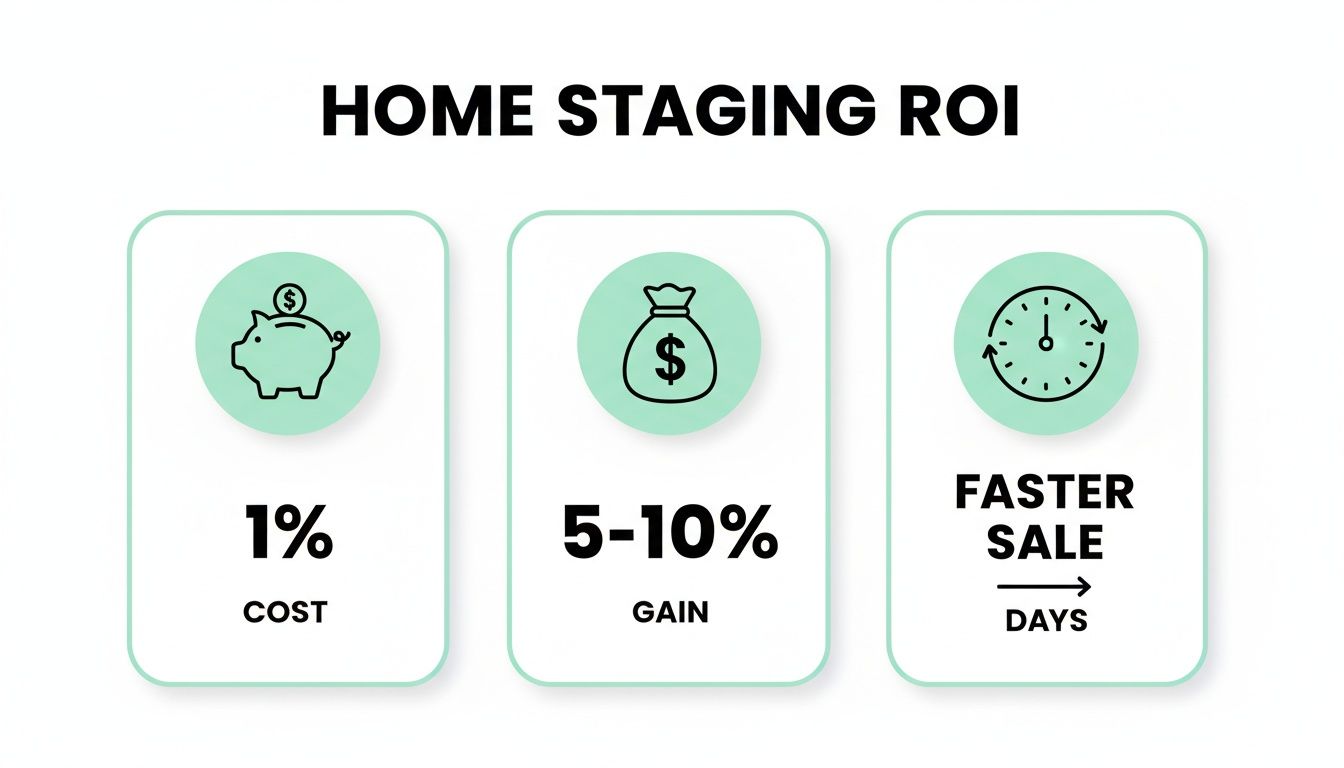
As you can see, dedicating around 1% of your home's value to professional staging can result in a 5-10% increase in the sale price. That's a fantastic return that can put thousands more in your pocket.
The Psychology Behind Why Staging Works
This isn't just theory; the impact of staging is backed by hard numbers. The National Association of Realtors' 2025 report found that nearly 29% of agents saw a 1% to 10% increase in the dollar value offered for staged homes compared to similar unstaged ones. Even more compelling, 49% said it dramatically reduced the time the property spent on the market.
When you consider that the median cost for professional staging is just $1,500, the financial argument becomes crystal clear.
Here’s how staging works its magic:
- It Highlights the Good Stuff: Expert staging draws a buyer's eye directly to your home's best features, whether that's a stunning fireplace or a wall of sunny windows. It makes the space feel special.
- It Hides the Quirks: It can cleverly minimize or distract from any awkward layouts or small imperfections you'd rather buyers not focus on.
- It Builds an Emotional Bridge: Most importantly, staging helps buyers move past a logical checklist and into an emotional "I want to live here" mindset. This is what drives higher offers.
Great staging is also non-negotiable for creating scroll-stopping listing photos. To get started, it helps to understand all your options. For more practical advice, you can learn how to stage a home to sell faster and for more money. Once you weigh the pros and cons of professional services, DIY, or virtual staging, you'll be able to make a smart decision for your property and your budget.
Breaking Down Professional Staging Costs
When you hire a professional stager, you’re not just renting nice furniture. You're hiring a property marketing expert whose job is to get you the best possible price. Let's pull back the curtain on what's included in that final number.
Understanding the breakdown is the first step to seeing staging as a strategic investment, not just another cost.
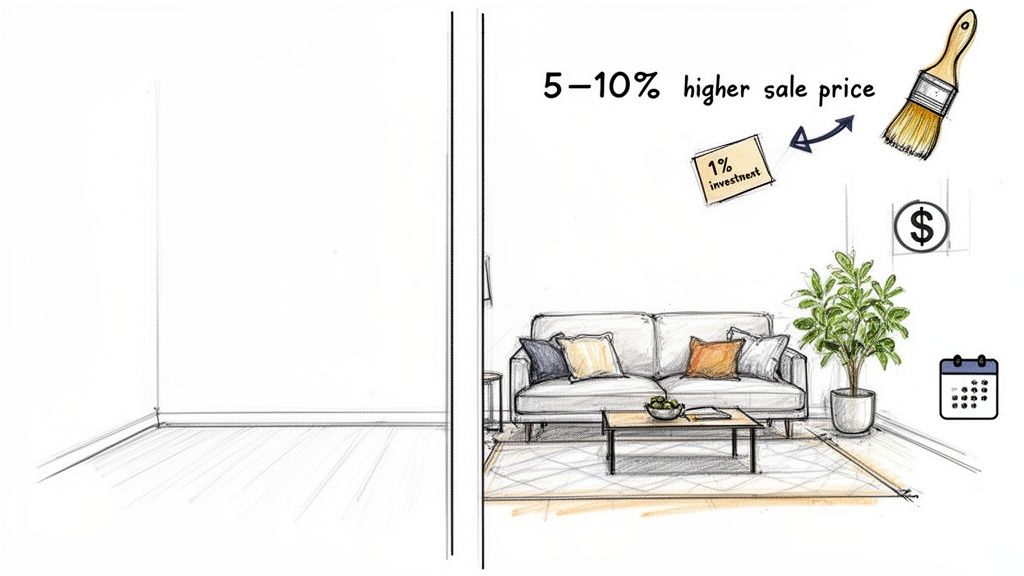
The process kicks off with an initial consultation. This is where a stager walks through your home with a buyer's eye, spotting opportunities and potential issues you might have overlooked.
The Initial Consultation Fee
Think of this as the game plan for your home's transformation. A professional eye will figure out how to highlight your home’s best features and forge an emotional connection with buyers from the moment they walk in.
- Average Cost: Expect to pay between $300 and $600 for this critical first step.
- What You Get: This isn't just a quick chat. You'll receive a detailed, room-by-room report with actionable recommendations—everything from paint colors and furniture placement to decluttering checklists.
- Why It Matters: On a tight budget? This report alone can be your DIY roadmap. You get the benefit of an expert's eye and can do the hands-on work yourself to save money.
Good news: most stagers will credit this fee toward the full cost if you decide to hire them for the complete staging project.
Furniture and Decor Rental Costs
This is where the bulk of the budget goes. It covers all the physical items—furniture, rugs, art, and accessories—that will turn your house into a show-ready home. A vacant home will naturally cost more to stage than an occupied one, where a stager can often incorporate some of your existing pieces.
For a typical 2,000 sq. ft. home, the monthly rental fee usually falls between $2,000 to $5,000. This isn't one-size-fits-all; several key factors influence this price.
Key Takeaway: The price of staging isn't arbitrary. It’s directly tied to the scale of the project—the number of rooms staged, the quality and quantity of furniture required, and the logistical effort involved in transforming the space.
Here’s what moves the needle on rental costs:
- Home Size: More rooms and bigger spaces mean more furniture is needed, which drives up the monthly fee.
- Property Value: A luxury home needs high-end furnishings to match its price tag. That premium furniture comes with a higher rental cost.
- Number of Rooms: You can control costs by focusing on high-impact areas. Staging the living room, primary bedroom, and kitchen will be far more affordable than staging every single room.
Often, preparing for staging involves other services. For example, understanding professional carpet cleaning costs is important, as clean floors are a non-negotiable first step.
Logistics and Labor Fees
Finally, you have the costs for all the heavy lifting. These one-time fees cover the physical work of getting everything into your home and, eventually, taking it all out.
- Delivery and Setup: This fee pays for the moving crew, the truck, and the stagers' time to perfectly place every chair and hang every picture.
- De-Staging: Once your home sells (congratulations!), this fee covers the team coming back to carefully remove all the rented items, leaving the property clean for the new owners.
These logistical charges typically add another $500 to $1,000 to the total bill, depending on how much stuff is being moved. By seeing each line item, it becomes clear that professional staging is a calculated investment designed to deliver a faster, more profitable sale.
Your Blueprint for DIY Home Staging
Ready to roll up your sleeves and save some serious money? Great choice. A do-it-yourself approach is a fantastic, budget-friendly way to make your home shine for potential buyers or renters.
DIY staging is more than just a quick tidy-up; it's a strategic marketing effort. The magic lies in making smart, high-impact changes using what you already have, maybe with a few thoughtful new pieces. The goal is simple: create a clean, inviting, and neutral space where people can easily imagine their own lives unfolding.
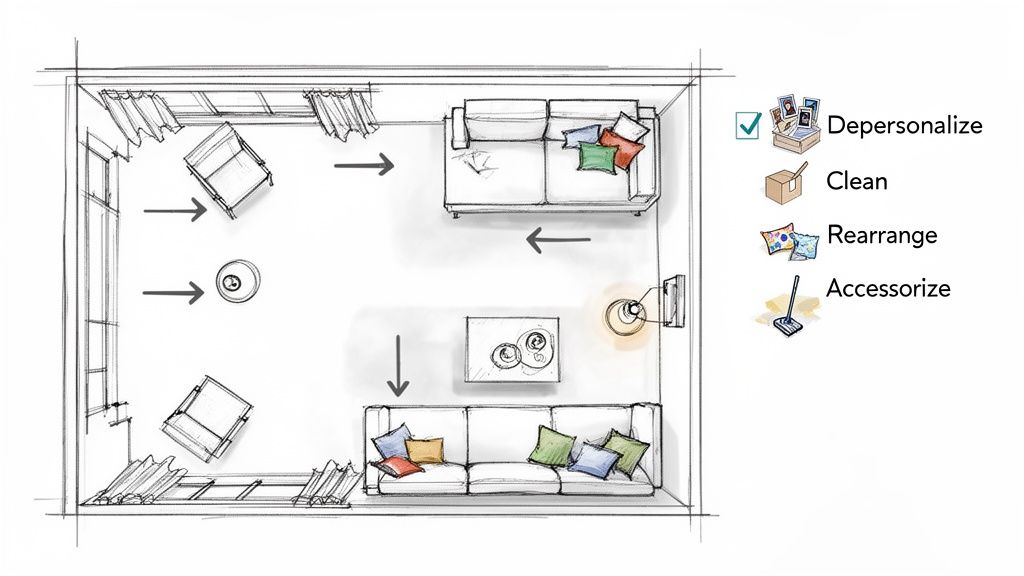
The process boils down to four key pillars. If you work through each one, you can transform your home from a personal space into a highly desirable product.
The Four Pillars of Effective DIY Staging
Think of these steps as your winning formula for staging any room in your house like a pro.
- Depersonalize: This can be the hardest step, but it’s critical. Pack away family photos, kids’ artwork, and personal collections. You’re creating a neutral canvas so buyers aren't distracted by your life and can start picturing theirs.
- Declutter Ruthlessly: Clutter eats equity. It's that simple. Go through every room and aim to remove at least 30-50% of your belongings. Clear off all countertops in the kitchen and bathrooms. This instantly makes rooms feel larger and signals that the home is well-maintained.
- Deep Clean Everything: This means going beyond a standard weekend clean. We’re talking baseboards, ceiling fans, window tracks, and grout lines. A sparkling home communicates value and care. If your budget is tight, this is the single most important place to invest your time and energy.
- Rearrange for Flow: Get furniture off the walls! Pulling pieces away from the perimeter creates inviting conversation areas and makes a room feel more dynamic. Ditch any bulky furniture that blocks walkways. Your main objective is to improve flow and show off the room’s true size.
Your Secret Weapon for Planning a Perfect Layout
Staring at a heavy sofa and feeling unsure where to move it? An AI tool like Interior Redesigne AI can be your best friend. Instead of guessing, you can visualize different layouts before you lift a single thing.
Just upload a photo of your room to test new furniture arrangements in seconds. It’s a powerful way to see how the space could look with better flow, helping you make confident decisions that save time, money, and stress. You can dive into more practical ideas by reading our complete guide on staging home interiors.
Room-Specific Staging Examples
Let's walk through some practical examples for the most important spaces in a home.
The Living Room: Your First Impression
- Create a Focal Point: Arrange furniture to highlight the room's best feature—a fireplace, a beautiful window, or a piece of art. Don’t just push everything against the walls; float the sofa and chairs to create a cozy conversation hub.
- Add Warmth & Texture: A few neutral throw pillows and a soft blanket make the space feel welcoming.
- Maximize Light: Open all curtains and blinds. A great trick is to place a mirror opposite a window to bounce more natural light around the room.
The Bedroom: A Peaceful Retreat
- Create a Sanctuary: The goal is to make the primary bedroom feel like a calm, hotel-like escape.
- Focus on Bedding: Use crisp, white, or neutral linens, fluffy pillows, and a nice throw blanket. This one change can make a huge difference.
- Clear the Clutter: Tidy nightstands, leaving only a lamp and maybe a single book.
The Kitchen & Bathroom: Clean and Functional
- Show Off Counter Space: Clear everything off your countertops. This makes the kitchen and bathroom feel twice as big and far more usable.
- Add a Touch of Life: A bowl of fresh lemons or a small green plant can add a pop of color and freshness.
By following this blueprint, you can dramatically cut your staging costs while still achieving a polished, professional look that wows buyers.
Virtual Staging: The Low-Cost, High-Impact Alternative
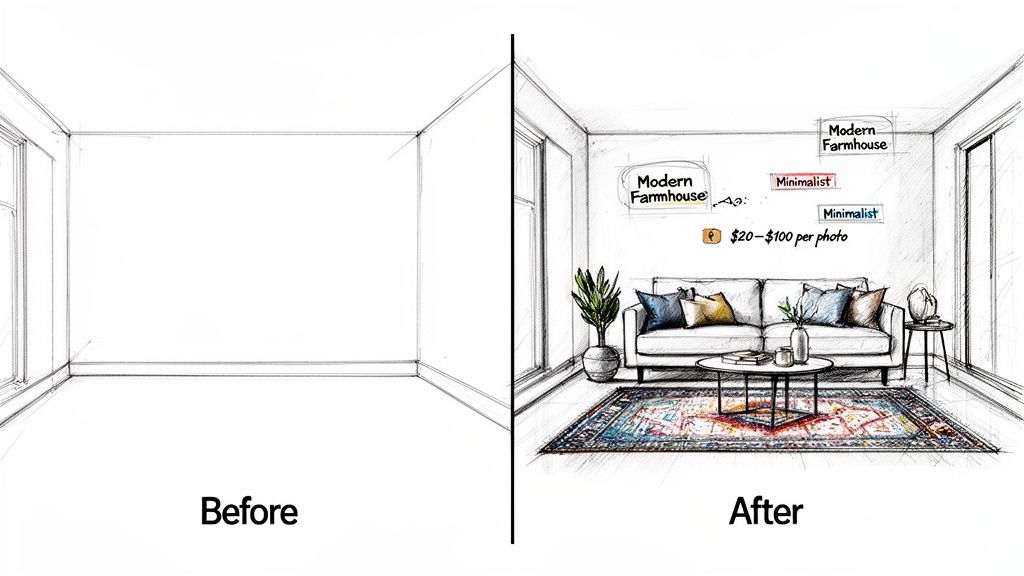
Imagine perfectly furnishing an empty room in minutes, for less than the price of a few coffees. That's the magic of virtual staging. Instead of lugging heavy furniture into a house, this approach uses digital tools to add stylish couches, tables, and decor right into photos of your empty spaces. It's a game-changer, especially for online listings where that first impression is everything.
This technology creates realistic images that help potential buyers form an emotional connection with a property before they even set foot inside. For vacant homes or rental properties, virtual staging fills the space with personality, instantly making it feel like a welcoming home.
A Fraction Of The Cost, A Ton Of The Impact
The most compelling reason to consider virtual staging is the incredible savings. While traditional staging can easily climb into the thousands of dollars, virtual staging offers a powerful alternative for a tiny fraction of the price. It completely changes the cost of staging a house.
To put it in perspective, the median cost for physical staging is around $1,500. You can virtually stage a single room for just $20 to $100. This makes professional-level staging accessible to everyone, from individual sellers to Airbnb hosts and real estate agents. You can "furnish" an entire home online for less than one month's rent on physical furniture.
The Power Of AI In Virtual Staging
AI-powered tools have made virtual staging faster, more creative, and surprisingly easy. No design degree required!
Here's how Interior Redesigne AI helps you:
- Instant Visualization: Upload a photo of an empty room and see dozens of design concepts almost immediately.
- Style Exploration: Not sure what look will appeal to buyers? Test multiple styles in seconds. See how a room looks in "Modern Farmhouse," "Minimalist," or "Japandi" (a blend of Japanese and Scandinavian design) to find the perfect vibe.
- Risk-Free Decisions: Experiment with different layouts, colors, and furniture without spending a dime. It completely removes the guesswork and stress from the design process.
Key Takeaway: AI-driven virtual staging puts the power of a professional design studio at your fingertips. It allows you to create high-quality, buyer-focused listing photos quickly and affordably, giving you a serious competitive edge online.
Cost and Time Comparison: Physical vs. Virtual Staging
Putting traditional and virtual staging side-by-side shows a stark contrast in cost, time, and effort.
| Factor | Physical Staging | Virtual Staging |
|---|---|---|
| Typical Cost | $500 - $6,000+ | $20 - $100 per photo |
| Turnaround Time | Days to weeks | Minutes to hours |
| Logistics | Movers, furniture rental, insurance | Upload photos, select styles |
| Flexibility | Limited to available inventory | Nearly infinite design options |
| Revisions | Costly and time-consuming | Quick and inexpensive |
As you can see, virtual staging eliminates the logistical headaches and high costs of physically preparing a home, delivering professional results in a fraction of the time.
Practical Applications For Everyone
Virtual staging isn't just for luxury homes. Its flexibility makes it a powerful tool for all kinds of properties. For a deeper look, check out our guide on how virtual staging AI is changing real estate.
- For the Airbnb Host: Instantly refresh your listing photos with modern decor to attract more bookings, all without buying new furniture.
- For the Real Estate Agent: Help buyers overcome the "empty room" dilemma. A virtually staged photo illustrates the scale and potential of a space.
- For the Homeowner: Got an awkward bonus room? Use virtual staging to showcase its potential as a home office, gym, or playroom, sparking buyers' imaginations.
Virtual staging helps properties sell faster and often for a better price. It’s a smart, effective strategy that delivers professional results without the hefty price tag.
How to Prioritize Your Staging Budget
When working with a real budget, you have to be smart about where every dollar goes. The secret isn't spreading your money evenly across every room. Instead, pour your resources into the spaces that pack the biggest emotional punch and convince a buyer to make an offer.
Think of it as a hierarchy of importance. Some rooms do the heavy lifting to win over buyers, while others just support the story. By focusing on high-impact areas first, you ensure your investment is working as hard as possible.
The Three Most Important Rooms to Stage
Talk to any seasoned real estate agent, and they'll tell you the same thing: three rooms consistently make or break a buyer's decision. If your budget is tight, focus here for the best bang for your buck.
- The Living Room (First Impression Central): This is where buyers form their most lasting impression. It sets the mood for the whole tour.
- The Primary Bedroom (The Personal Retreat): Buyers want to picture a calm, relaxing escape from the world.
- The Kitchen (The Heart of the Home): A clean, bright kitchen can single-handedly seal the deal.
Making these three areas your top priority creates a huge impact without staging the entire house.
Staging the Living Room for Maximum Impact
- Goal: Create a bright, welcoming space that showcases the room's size and flow.
- Budget Focus: A stylish area rug, modern throw pillows, and some neutral artwork.
- Practical Tip: Pull furniture away from the walls to create a conversation area. This simple move can make a room feel significantly larger. If a piece of furniture blocks a walkway, remove it.
Staging the Primary Bedroom as a Sanctuary
- Goal: Evoke feelings of comfort, luxury, and calm.
- Budget Focus: Hotel-quality bedding is non-negotiable. Think crisp, white linens, fluffy pillows, and a nice throw blanket.
- Practical Tip: Clear everything off your nightstands except for a simple lamp. This instantly makes the space feel more serene and hotel-like.
Key Insight: A jam-packed closet sends a clear message: "There's not enough storage here." By removing at least 50% of the items from your closet, you create the illusion of ample space—a massive selling point for almost every buyer.
Staging the Kitchen to Showcase Functionality
- Goal: Emphasize counter space, storage, and cleanliness above all else.
- Budget Focus: Inexpensive under-cabinet lighting, updated cabinet pulls, and a single bowl of fresh fruit.
- Practical Tip: Clear everything off your countertops except for a high-end coffee maker or a knife block. This simple act makes the kitchen feel twice as big.
Staging Your Outdoor Spaces
Don't forget curb appeal and outdoor living spaces! They are often the first and last things a buyer sees.
- Goal: Present an inviting, low-maintenance area for relaxing or entertaining.
- Budget Focus: A fresh welcome mat, a couple of healthy potted plants, and a power wash for the walkway.
- Practical Tip: Even a small patio can be a huge asset. Add a simple bistro set to help buyers see it as a true extension of the living space.
By following this hierarchy, you can build a smart staging plan that works for your budget while making your home look its absolute best.
Common Questions About Home Staging Costs
Even with a good plan, practical questions about staging costs can feel overwhelming. Let’s walk through the most common concerns to give you the clarity you need.
Is Staging Always Worth It?
In my experience, the answer is almost always yes. The real question isn't if you should stage, but how. It's a marketing tool that works.
In a seller's market, staging makes your home stand out and helps you snag the highest offer. In a buyer's market, it can prevent your property from sitting for months. The key is to match the method to the property:
- High-end vacant home? Professional physical staging is a must.
- Occupied family home? A smart DIY approach can generate an incredible return.
- Empty rental unit? Virtual staging is a game-changer for creating gorgeous online listings.
The data shows that money you put into staging comes back to you through a higher sale price and less time on the market.
Do I Have to Stage Every Single Room?
Absolutely not. Smart staging is strategic. Focus on the "big three" rooms that carry the most emotional weight:
- The Living Room
- The Primary Bedroom
- The Kitchen
By zeroing in on these key areas, you help buyers make that crucial emotional connection. Other spaces like secondary bedrooms often just need a good declutter, a deep clean, and maybe a fresh coat of neutral paint.
How Can AI Help Lower My Staging Costs?
AI has become an incredible ally for making staging more affordable and less intimidating. It removes expensive guesswork and puts powerful design tools in your hands.
The Big Idea: AI-powered tools make good design accessible to everyone. You can test professional-level concepts for a fraction of the cost, saving you time, stress, and money on the total cost of staging a house.
Here are two main ways AI saves you cash:
- For DIY Staging: Instead of paying for a consultation, use a tool like Interior Redesigne AI to upload a photo of your room and get layout and style ideas instantly. See how a new paint color will look before you buy it. While AI provides fantastic inspiration, always combine its ideas with your own personal taste to create a space that feels authentic.
- For Vacant Properties: AI-driven virtual staging lets you create stunning, fully furnished listing photos for just a few dollars per image. You save thousands on furniture rental and draw in more online traffic. Learn more about virtual staging for real estate.
Can I Live in My House While It Is Staged?
Yes, you can—and most sellers do! It takes discipline, but it’s totally doable and saves you the expense of moving out before your home sells.
Professional stagers are pros at working with occupied homes. They’ll start by editing what you already own, rearranging your best pieces, and then bringing in key rental items—like updated art and accessories—to elevate the look.
The biggest challenge is keeping the house in "show-ready" condition. You have to live like you're in a model home, which means staying on top of cleaning and clutter. It’s a short-term commitment that pays off big when buyers walk through the door.
Ready to see how your space could look without lifting a finger or spending a dime on furniture? Try Interior Redesigne AI to instantly reimagine your room from a simple photo or sketch. Visualize your perfect design in seconds at https://www.interiorredesignai.com.