Staging is the art of preparing a home to appeal to the widest possible audience of buyers. Think of it less as decorating and more as a marketing strategy. You’re not just cleaning up; you’re strategically arranging furniture and decor to help people truly see themselves living there. Why does this matter? Because this single step can lead to a quicker sale and a better offer.
This guide is for anyone looking to make their property shine—whether you're a homeowner, a real estate agent, an Airbnb host, or an interior designer. We'll cover practical, step-by-step tips that work for real spaces and budgets.
Why Staging Is Your Secret Weapon for a Top-Dollar Sale
Selling a property is a big deal. You're not just offloading brick and mortar; you're selling a dream. This is where staging transforms from a "nice-to-have" into an absolute necessity. The goal is to forge an emotional connection that turns a casual browser into a serious buyer, boosting your listing's appeal.
By swapping out personal photos and distinct decor for a more neutral, inviting look, you create a beautiful canvas. This allows potential buyers to mentally move their own belongings in and imagine their future in the space. It’s not about erasing personality, but about making the home’s best features—that sunny breakfast nook, the high ceilings—the real stars of the show. This helps reduce decision stress for buyers and makes them feel confident about their choice.
The Financial Impact of Smart Staging
The numbers don't lie. For every dollar you put into staging, you're likely to see a healthy return. A recent study by the Real Estate Staging Association (RESA) found an incredible average ROI: every $1 invested returned $23.34.
That's because a staggering 90% of real estate agents agree that a well-staged home sells faster and for more money. It’s a smart financial move and one of the most reliable ways to boost home value before listing. Staging pays for itself by helping you secure a higher price, making it a wise investment for any seller.
Key Benefits at a Glance
| Benefit | Impact on Your Property | Who This Helps Most |
|---|---|---|
| Higher Sale Price | Well-staged homes often sell for 1-5% more than unstaged ones. | Sellers aiming to maximize their profit and equity. |
| Faster Sale | Staged properties spend significantly less time on the market. | Sellers on a tight timeline, landlords, or Airbnb hosts. |
| Better Online Presence | Professional photos of a staged home attract far more online views. | Anyone selling in a competitive digital marketplace. |
| Helps Buyers Visualize | 82% of buyers' agents say staging helps clients see a property as their future home. | Sellers with vacant, dated, or oddly laid-out properties. |
| Highlights Key Features | Good staging draws attention to architectural details and minimizes flaws. | Owners of unique properties or homes with quirky layouts. |
Ultimately, these benefits work together to create a stronger, more compelling listing that gets noticed, sells faster, and saves you money in the long run.
From Guesswork to Great Results with AI
In the past, figuring out the best way to stage a room involved a lot of imagination and expensive trial-and-error. You’d have to rent furniture and hope it looked right. Now, you can take all the guesswork out of the process, saving time and money.
Staging is about making your property speak to buyers on an emotional level. It transforms a house into a home they can't wait to own.
Modern tools like Interior Redesign AI let you visualize ideas before buying anything. You can instantly see how different furniture layouts, paint colors, or decor styles will look in your actual room. This helps you try multiple styles quickly, reducing decision stress and ensuring your plan works for your budget and space. Once your staging is perfect, check out our guide on real estate photography tips to make sure your online listing is irresistible.
Building a Foundation for Flawless Staging
Before you place a single throw pillow, the real work of home staging begins. It's all about prepping the canvas. You wouldn't start a masterpiece on a dirty surface, and the same goes for a house. To make any design pop, you need a clean, flawless backdrop. This critical prep work boils down to three steps: decluttering, deep cleaning, and tackling minor repairs.
Why does this matter? Trying to stage a home without this foundation is like building a house on shaky ground—it just won't hold up. This isn’t about sinking a lot of money into the property. It’s about investing your time and effort to create a blank slate that lets a home’s best features shine. This is especially important in rentals or apartments where you can't make major changes.
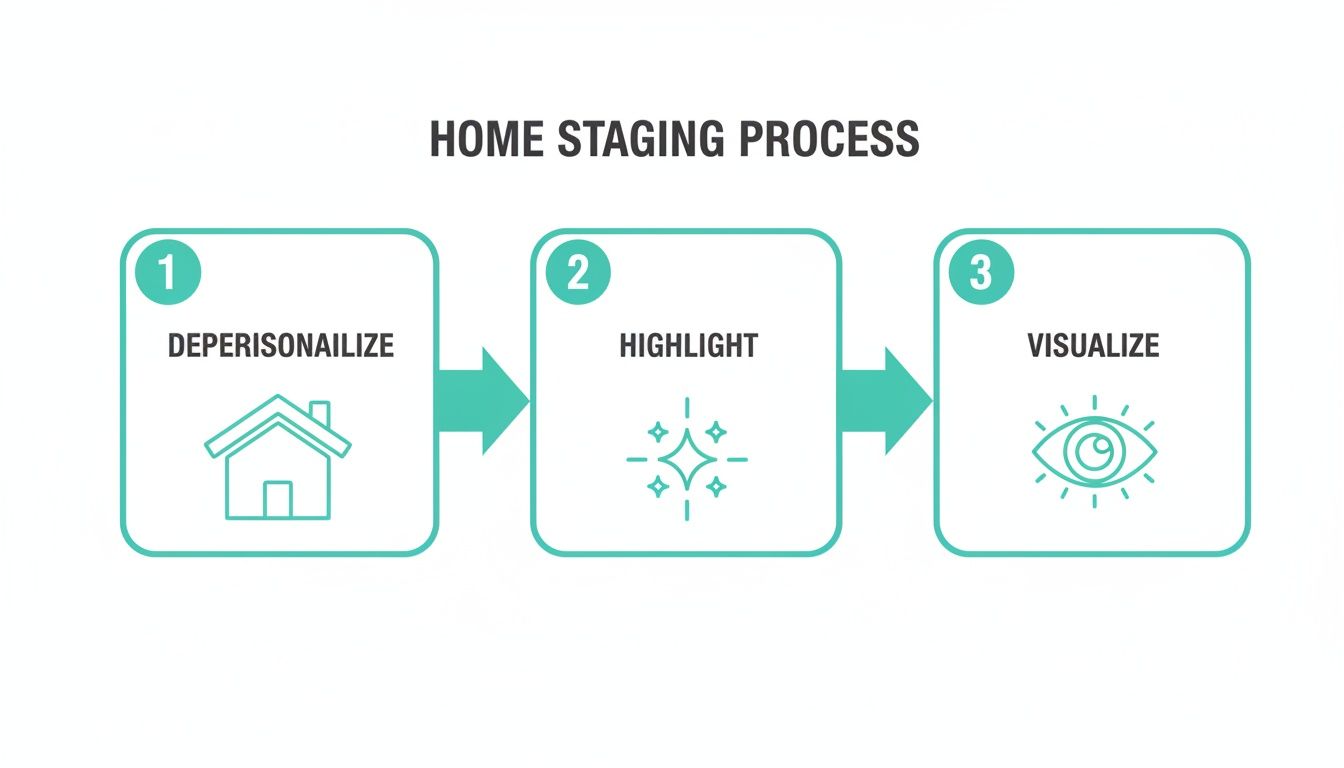
The goal is to shift the narrative from a space full of one family’s history to a home that offers a fresh start for the next owner.
Step 1: Strategic Decluttering
Decluttering for a sale is different from your average spring cleaning. The mission is to remove items to create a feeling of space and possibility. You want buyers to project their own lives onto the home, not feel like they're walking through yours.
- Depersonalize: Start by packing away personal items—family photos, quirky collections, souvenirs, and memorabilia. This helps buyers see the house as theirs.
- Clear Surfaces: Follow the 50% rule: clear at least half the items from every countertop, bookshelf, and table. This simple move creates instant visual breathing room and makes any space feel bigger and calmer. For families, this means temporarily storing toys and extra items.
Step 2: A Pro-Level Deep Clean
A staging deep clean goes way beyond the surface. Buyers notice everything, and a sparkling clean home signals that the property has been well-cared for. Focus on spots that make a huge difference.
- Windows and Mirrors: Make them gleam, inside and out. It’s the easiest way to maximize natural light, and a bright room always feels more welcoming.
- Baseboards and Light Switches: Wipe them all down. These details add up to create an impression of a well-maintained home.
- Kitchen and Bath Grout: Scrub grout lines until they look new. Dingy grout can make an otherwise pristine bathroom or kitchen feel dated.
- Odors: Neutralize any smells from pets, cooking, or smoke. A fresh, clean scent is non-negotiable. Simmering cinnamon sticks before a showing is a classic, budget-friendly trick that works.
Step 3: High-Impact, Low-Cost Repairs
Walk through the house with a buyer’s critical eye. Make a list of all those small, nagging issues like a dripping faucet, a sticking drawer, or a cracked light switch cover. To a buyer, a collection of small problems can signal neglect.
Fixing these small issues is one of the most cost-effective ways to build buyer confidence. It shows you’ve cared for the property, which is a major selling point.
A fresh coat of neutral paint is often the single best investment you can make. It instantly covers scuffs, brightens the space, and gives the home a cohesive feel. This is a realistic DIY project that offers a huge return. If you're stuck on which shade to use, our guide on how to choose paint colors for rooms can help.
Room-by-Room Staging Strategies
With the foundation set, let’s make each room shine. The goal isn't just to make things look good; it's to give every room a clear purpose and create an emotional connection that makes a buyer think, "I could live here." This is where smart, room-by-room staging turns a house into a home someone has to have, whether it’s a cozy apartment or a family house.
Living Room: An Inviting Welcome
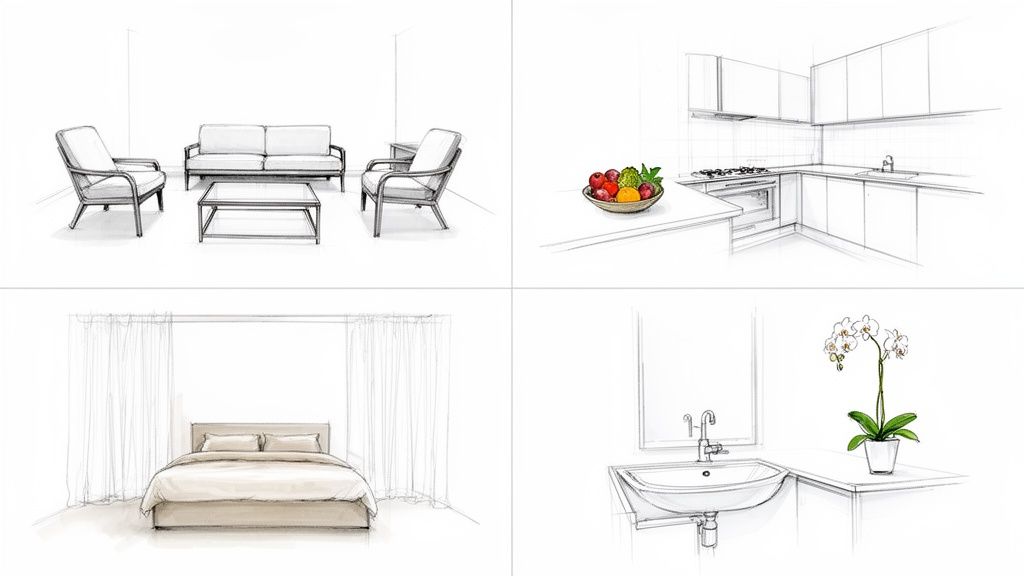
The living room is the first real impression buyers get, so it has to deliver. Your mission is to create a warm, welcoming space that makes people want to sit down and relax. The biggest mistake is pushing all the furniture against the walls. Instead, arrange it to encourage conversation.
- Create a Focal Point: Group your sofa and chairs around a central feature like a fireplace, a window, or a coffee table. This makes the layout feel intentional.
- Define the Space: An area rug anchors the conversation area. Make sure at least the front legs of your sofa and chairs are on the rug to pull everything together.
- Soften with Textiles: A few plush throw pillows and a soft blanket draped over a chair add texture and a sense of comfort.
Stuck on the layout? Snap a photo of your living room and use a tool like Interior Redesign AI to try different furniture arrangements and styles virtually. It lets you visualize ideas before you move anything, saving time and effort.
Kitchen: A Clean and Functional Hub
The kitchen can make or break a sale. The goal is to show off a space that’s incredibly clean and functional, with plenty of counter and storage space—even if it's small. You're selling the idea of an organized, effortless life.
Your countertops are prime real estate. Clear them of everything except for one or two thoughtful accents, like a bowl of fresh lemons or a small herb plant. The impact is immediate.
Remove all magnets and papers from the refrigerator. Hide away the toaster, blender, and coffee maker. An uncluttered kitchen sends a powerful message: "There is more than enough room for you here." This is a zero-cost tip that makes a huge difference.
Primary Bedroom: A Peaceful Retreat
The primary bedroom should feel like a sanctuary—a place to relax. To achieve this, create a serene escape that appeals to everyone, like a boutique hotel room. This is key for both home sales and Airbnb listings.
- Symmetry is Key: Flank the bed with matching nightstands and lamps. This classic designer trick creates a sense of calm and balance.
- Luxurious Bedding: Invest in a new, crisp white or neutral-toned duvet cover and fluffy pillows. A beautifully made bed is the star of the show.
- Soften the Light: Swap heavy drapes for sheer curtains. They diffuse natural light and give the room a soft, dreamy quality.
Bathroom: A Spa-Like Escape
Bathrooms should feel like a personal spa—spotlessly clean and relaxing. First, remove all personal items like toothbrushes and half-empty shampoo bottles. Tuck them into a basket you can easily hide before a showing.
- Add Simple Luxuries: Roll up some fluffy white towels and place them in a wicker basket.
- Bring in Nature: Add a single orchid for a pop of elegance or a small succulent for a touch of green.
- Refresh the Basics: Hang a fresh, clean shower curtain. These small, affordable touches create a polished, spa-like vibe that adds serious value in a buyer's mind.
Outdoor Spaces: An Extension of the Home
Don't forget patios, balconies, or yards! These are huge selling points. Make them look like an inviting extension of the living space, not an afterthought.
- Define a Zone: Even a small balcony can become a morning coffee spot with a small bistro table and two chairs.
- Clean and Green: Sweep the area, pressure wash if needed, and add a few potted plants for color and life.
- Add Comfort: Outdoor cushions and a simple outdoor rug can make the space feel cozy and usable.
Mastering Furniture Layout and Flow
How you arrange furniture can completely change how big and functional a space feels. When staging, you’re creating an intuitive path that guides buyers through the home, making it feel open, logical, and welcoming. This is especially critical in apartments and small homes.
A common mistake is shoving all furniture against the walls, which can make a room feel smaller and create an awkward empty space in the middle. Instead, pull your sofa and chairs away from the walls to create cozy conversation areas. This simple trick defines pathways and makes the room feel larger and more thoughtfully designed.
Defining Zones and Creating Breathing Room
A well-placed area rug is your secret weapon for defining a space. It can anchor a seating area or carve out a dining space in an open-concept floor plan. Just make sure the front legs of your main furniture are on the rug—it pulls everything together. This is a lifesaver in studio apartments; these smart studio apartment furniture layout ideas show how effective it can be.
Embrace negative space—the design term for the empty area around your furniture. It’s not wasted space; it’s what gives a room a calm, uncluttered, and luxurious feel.
By strategically leaving areas open, you allow the room to breathe. This tells buyers there’s more than enough space for their own lives, getting rid of any feeling of being cramped.
Visualize Your Layout Before You Lift a Finger
Figuring out the perfect arrangement often means frustrating trial and error. Shoving a heavy sofa back and forth is nobody’s idea of a good time. This is where AI can be a huge help, saving you from physical labor and costly mistakes.
You can use an AI Interior Designer to play with layouts digitally. Upload a photo of your room and start experimenting. See how a minimalist setup might open up your living area, or test different furniture placements in an awkwardly shaped bedroom. For inspiration, our guide on minimalist furniture ideas is a great place to start. This approach lets you find the best layout before you move a single thing.
Using AI to Perfect Your Staging Plan
Staging a home can feel like a big gamble. You're spending time and money based on a gut feeling. What if you could take the guesswork out of it? AI interior design tools can act as your personal staging assistant, helping you visualize changes before you lift a paintbrush or move furniture.
Ever been paralyzed by dozens of shades of beige in the paint aisle? Or wondered if a trendy style like Japandi (a mix of Japanese minimalism and Scandinavian function) would actually work in your living room? AI can show you realistic previews in seconds. It's a fantastic stress-reducer when you're already juggling a million things to get your house on the market.
Visualize Before You Commit
The magic of using AI is the freedom to experiment without risk. It helps you test "what if" scenarios and build confidence in your staging plan before you spend a single dollar.
- Test Paint Colors: Instantly see how different neutral shades look on your walls, in your home's unique lighting. No more tiny paint swatches!
- Try Different Styles: Experiment with looks from modern farmhouse to coastal chic to see what makes your home’s features pop.
- Perfect the Layout: Play with furniture arrangements to optimize flow and perceived size—much easier than moving a sofa three times.
- Visualize Materials: Not sure about a new countertop or flooring? AI can help you test different materials to see how they look in your space.
For vacant properties or rentals, AI is a game-changer. You can use it as virtual staging software for real estate to generate stunning, furnished photos that turn an empty shell into a warm, inviting home online.
A Simple AI Workflow for Staging
You don't need to be a tech wizard. Treat AI as a powerful brainstorming partner. The process is simple: upload a photo of your room, select a style that has broad appeal (bright, clean, and uncluttered usually works best), and generate a few versions.
While AI provides incredible inspiration, be honest about its limitations. The final look should feel authentic to the home. Always combine AI ideas with your own taste or consult a professional designer if you're making major decisions.
Ready to see your home's hidden potential? Give Interior Redesign AI a try and reimagine your space from just a photo.
The Finishing Touches That Make an Impression
You've done the heavy lifting—decluttering, painting, and arranging furniture. Now comes the fun part: the small, thoughtful details that elevate a staged house and make it feel like a home. This final layer appeals to the senses and creates an emotional connection that helps buyers see themselves living there.
These are the high-impact, low-cost secrets that make a space feel complete.
Create Visual Interest with Styling
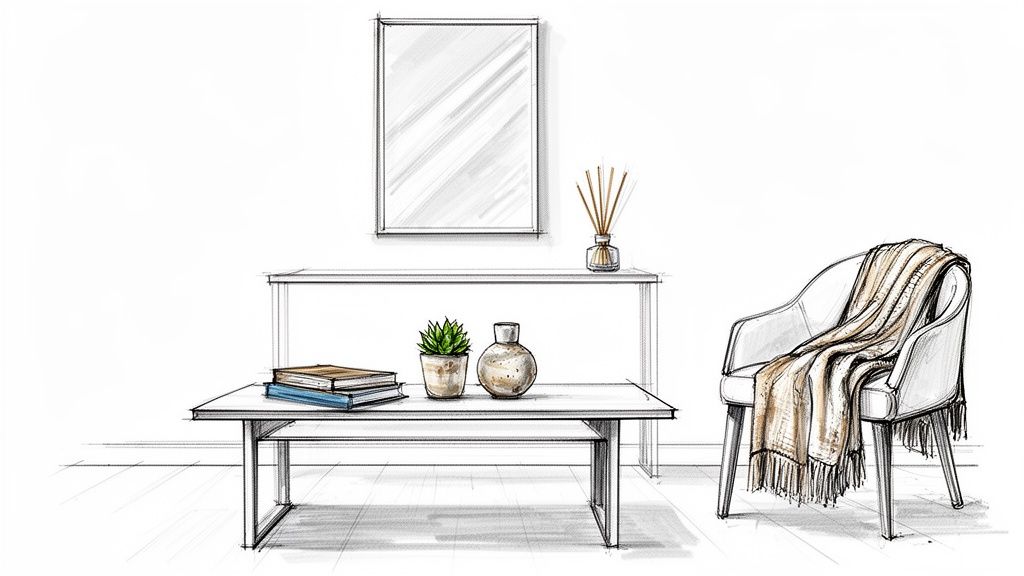
Styling surfaces is an art, but a few simple tricks always work. A great guideline is the "rule of three," which means grouping objects in odd numbers. For some reason, it’s more captivating to the eye.
- Vary Heights and Shapes: On a shelf, group three objects of different sizes—something tall (like a vase), something mid-sized (a book), and something small (a decorative object).
- Use Trays to Contain Clutter: Placing a few items on a tray on a coffee table or dresser makes the arrangement feel intentional, not messy.
- Layer with Light and Reflection: Good lighting is everything. Tuck a small lamp into a dark corner. Hang a mirror opposite a window—it will bounce natural light around and create an illusion of depth, perfect for small rooms.
Add Life and Texture
A room without texture can feel cold and uninviting. Bring in organic elements and soft materials to add warmth and life. This makes a space feel cozy and curated. If you need inspiration, browsing interior design mood board examples is a great way to gather ideas.
Adding plants, textiles, and subtle scents creates a multi-sensory experience that makes a property feel welcoming and cared for, turning a simple viewing into a memorable visit.
- Introduce Greenery: A few low-maintenance plants can completely change the vibe. A snake plant or pothos in an empty corner adds a pop of color and an organic touch.
- Layer Soft Textiles: A cozy throw blanket draped over a sofa, a couple of plush pillows, and a soft rug underfoot add layers of comfort. These textures invite buyers to imagine themselves relaxing.
- Engage the Sense of Smell: A subtle, clean scent leaves a powerful, positive impression. Skip strong plug-ins and go for a mild reed diffuser with a fresh linen or citrus scent.
Common Questions About Staging Home Interiors
Even with the best plan, questions always come up. Here are answers to some of the most common ones I hear from sellers, agents, and hosts.
What's the Real Cost of Home Staging?
The honest answer is: it depends. The cost can range from a few hundred dollars for a consultation to several thousand for renting furniture for an entire empty house. But thinking only about the expense misses the point. The real question is about the return on your investment.
You don't need to break the bank. Simple changes—a fresh coat of neutral paint, new throw pillows, or a ruthless decluttering session—can completely change a room's feel for very little money. This is where planning with an AI tool like Interior Redesign AI is a game-changer. It lets you visualize options and pinpoint which updates will give you the most bang for your buck, helping you manage your budget effectively.
Is Staging a Small Home or Apartment a Waste of Time?
Not at all—in fact, it’s even more crucial for smaller spaces. When every square foot counts, you have to make each one work hard. The right staging can make a tiny room feel surprisingly open and functional.
Staging a small home isn't just about making it look pretty; it's about solving the buyer's potential problems. It shows them how to live in the space, overcoming doubts about the size.
Think strategically:
- Use furniture that's properly scaled to the room.
- Place mirrors to bounce light and create an illusion of depth.
- Keep walkways clear and defined.
These techniques showcase a small home’s true potential and are essential for apartments and rentals.
Should I Bother with Physical Staging or Just Go Virtual?
This is a great question. Often, a hybrid approach works best. Virtual staging is an incredible tool for your online listing. It can grab a buyer's attention and get them excited to see the property, especially if it's vacant.
But you can't discount the power of the in-person experience. Physical staging is what creates that emotional connection when a buyer walks through the door. It’s what lets them feel the texture of a rug or see how the afternoon light fills the living room.
My advice? Use an AI tool to brainstorm and create scroll-stopping virtual images for your marketing. Then, bring the best of those ideas to life in the actual space to give buyers an unforgettable experience.
Ready to stop guessing and start visualizing? With Interior Redesign AI, you can instantly reimagine your room from a photo or sketch. Try it now and see how your space could look.