
Feeling overwhelmed by endless design choices? A mood board is your secret weapon. It’s a visual blueprint that helps you define your style, prevent costly mistakes, and communicate your vision clearly. This is true whether you're a homeowner tackling a weekend project, an Airbnb host aiming to boost bookings, or a real-estate agent staging a property to sell faster. Think of it as the first, most crucial step to creating a space you'll love.
But where do you start when faced with a blank canvas? This guide is designed to provide clarity and inspiration. We're breaking down eight diverse interior design mood board examples, packed with practical tips you can use right away. You’ll see exactly how a cohesive vision is built, from choosing a color palette to layering textures that feel just right.
We’ll show you not only what makes each mood board work but also how to recreate the look in a real home—even if you're on a budget or renting. For each example, you’ll find an analysis of its core elements and the feeling it aims to create. More importantly, you'll learn how to translate these concepts into your actual space.
We'll also explore how an AI tool like Interior Redesign AI can instantly bring your mood board to life. It lets you visualize different styles in your own room before you commit to a single paint color or furniture purchase, saving you time, money, and stress. Let's dive in and turn your design dreams into a realistic plan.
1. Scandinavian Minimalist Mood Board
A Scandinavian Minimalist mood board captures the essence of Nordic design: functionality, simplicity, and a connection to nature. This approach creates serene, uncluttered spaces that feel both cozy and airy. It’s a perfect choice for anyone looking to create a calm retreat, especially in smaller homes or apartments where maximizing light and space is key.
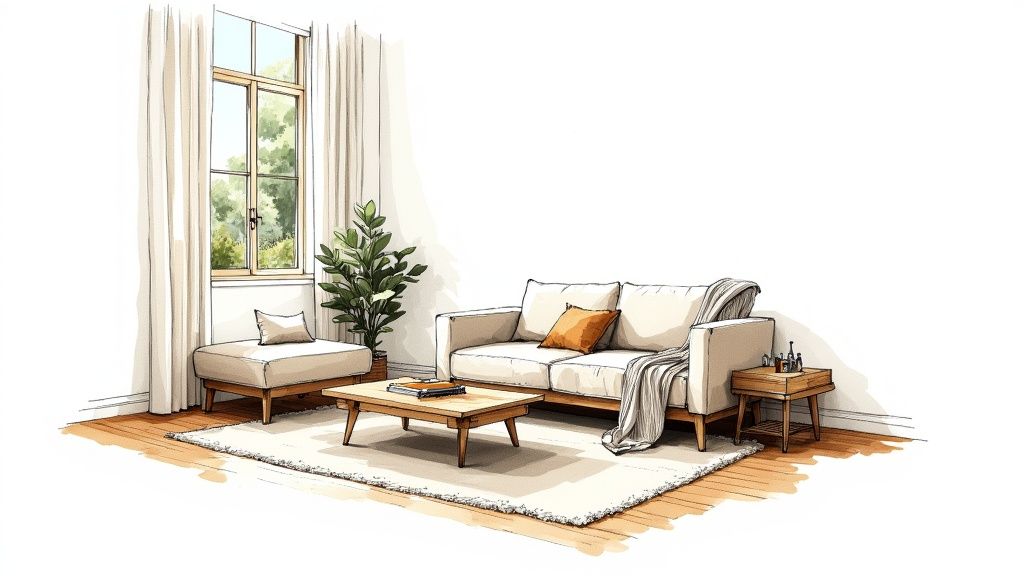
The core principle is hygge (a Danish concept of coziness and contentment), balanced with a "less is more" philosophy. This means every item on your board should have a purpose or bring you joy. This approach is one of the most popular interior design mood board examples because it's timeless, budget-friendly, and highly adaptable. Learn more about the fundamentals of creating an interior design mood board to get started.
Why It Matters for Your Space
- Saves Money: Focuses on quality over quantity, preventing impulse buys.
- Great for Small Spaces: The light color palette and lack of clutter make rooms feel larger and brighter.
- Timeless Appeal: This style won't look dated in a few years, making it a smart choice for homeowners and rental properties.
Strategic Breakdown
- Color Palette: Dominated by whites, soft grays, and light beiges to reflect natural light. Accents often include muted blues, dusty pinks, or earthy greens, with black used sparingly for contrast.
- Key Materials: Light-toned woods like pine, ash, and beech are essential for adding warmth. Complement them with natural textiles such as wool, linen, and sheepskin.
- Focal Elements: Look for furniture with clean, simple lines and no unnecessary ornamentation. A single, well-crafted piece, like a simple wooden dining table, often serves as the centerpiece.
- Lighting: Emphasize layered lighting with a mix of ambient, task, and accent sources. Think sculptural floor lamps, simple pendants, and plenty of candles.
Actionable Takeaways
To replicate this style, start by decluttering your space and building a neutral base. Embrace negative space (the empty areas around objects) to let key pieces stand out. Once you have your ideas, you can use an AI Interior Designer to visualize them.
AI Prompt Example: "Create a Scandinavian minimalist living room with white walls, a light oak hardwood floor, a gray linen sofa, a sheepskin throw, and a single large abstract art piece in black and white. Add plenty of natural light from a large window."
2. Bohemian Living Room Mood Board
A Bohemian (or "Boho") mood board celebrates free-spirited, unconventional design. This style is all about personal expression, layering textures, and mixing patterns to create a space that feels warm, lived-in, and full of character. It’s the perfect choice for artists, travelers, and anyone who wants their home to tell a story, rejecting rigid rules in favor of a relaxed and personal atmosphere.
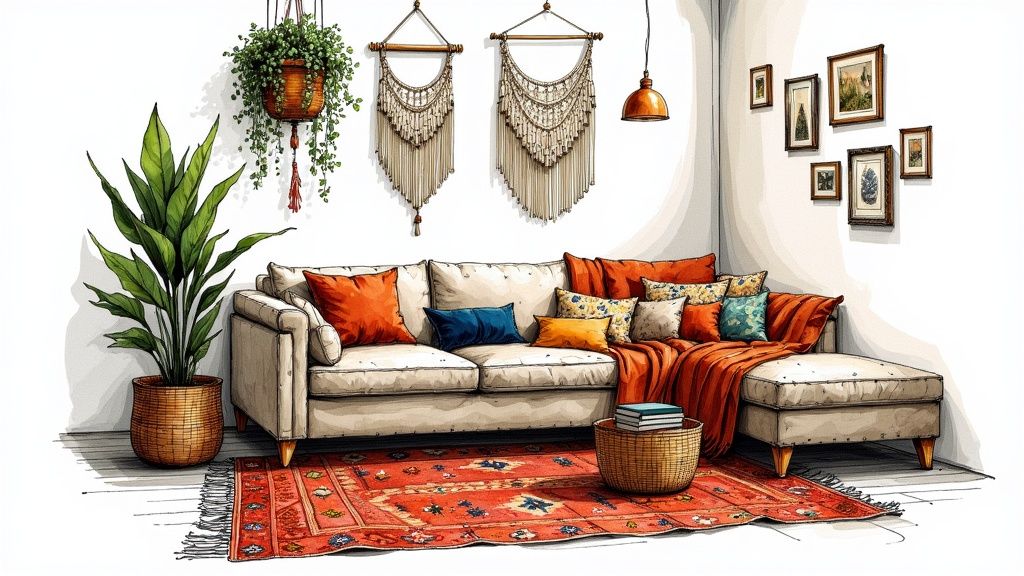
The core principle of Boho design is "more is more," but with intention. Your board should reflect a curated collection of meaningful objects, textiles, and plants that create a cozy, jungle-like retreat. As one of the most expressive interior design mood board examples, this style allows for immense creativity and is fantastic for incorporating thrift store finds and handmade items. To see how this fits into the broader world of decor, explore this detailed interior design styles guide.
Why It Matters for Your Space
- Budget-Friendly: Perfect for mixing new pieces with vintage and second-hand treasures.
- Hides Imperfections: The layered, "perfectly imperfect" look is forgiving in older homes or rentals.
- Boosts Rental Appeal: For Airbnb hosts, a well-done Boho room feels unique and inviting, leading to great photos and more bookings.
Strategic Breakdown
- Color Palette: Warm, earthy tones like terracotta, mustard yellow, and olive green form the base. These are often punctuated with jewel tones such as sapphire blue, ruby red, and amethyst purple.
- Key Materials: Natural materials are essential. Think rattan, wicker, macramé, distressed wood, and leather. Layer textiles heavily with Moroccan-style rugs, patterned pillows, and soft throws.
- Focal Elements: A low-slung, comfortable sofa piled with cushions often anchors the space. Other key pieces include unique vintage furniture, a gallery wall of eclectic art, and an abundance of houseplants.
- Lighting: Create a cozy, ambient glow with varied light sources. Opt for rattan pendant lights, beaded chandeliers, salt lamps, and string lights to add a touch of whimsy and warmth.
Actionable Takeaways
Start by choosing a warm, foundational color palette and then layer on patterns and textures. Don’t be afraid to mix and match; just vary the scale of your patterns to avoid overwhelming the eye. A great tip is to layer from the ground up: start with a rug, then add furniture, textiles, plants, and finally, wall art.
AI Prompt Example: "Generate an image of a Bohemian living room with terracotta-colored walls, a layered Moroccan rug on a dark wood floor, a plush velvet green sofa with patterned pillows, and many hanging plants. Add a wicker peacock chair and a gallery wall with eclectic art."
3. Modern Industrial Bedroom Mood Board
A Modern Industrial Bedroom mood board captures the raw, utilitarian aesthetic of warehouses and factories, refining it with modern comforts. This style celebrates exposed materials like brick and concrete, mixing them with raw and refined finishes. It's an excellent choice for loft apartments or any home where you want to create a bold, character-rich bedroom that feels both edgy and inviting.
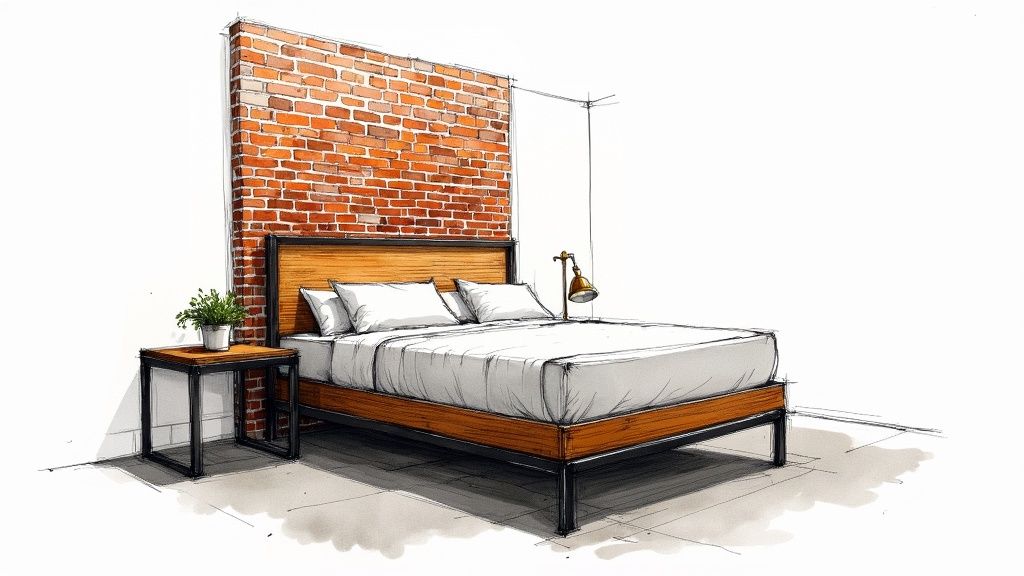
The core principle is the honest use of materials, where function dictates form. This look bridges the gap between rugged utility and high-end comfort. This is one of the more impactful interior design mood board examples because it creates a strong, memorable atmosphere with a minimal color palette and a focus on texture.
Why It Matters for Your Space
- Durable & Low-Maintenance: Materials like concrete, brick, and metal are tough and easy to care for, making them great for high-traffic areas or rentals.
- Works with Existing Features: If your apartment has exposed ductwork or brick walls, this style leans into those features instead of hiding them.
- Creates a "Wow" Factor: This style has a strong personality, perfect for a feature room or an Airbnb listing that stands out.
Strategic Breakdown
- Color Palette: A foundation of neutrals like charcoal gray, black, and concrete tones. Warmth is introduced through cognac leather, natural wood, and the rich reds of exposed brick.
- Key Materials: Exposed brick, concrete (floors or accent walls), and unfinished wood are central. These are contrasted with sleek metals like black steel, brass, or copper in lighting and furniture.
- Focal Elements: A statement bed with a metal or reclaimed wood frame is a common centerpiece. Other key features include Edison bulb light fixtures, large-scale abstract art, or a vintage leather armchair.
- Lighting: Layered lighting is critical to soften the hard surfaces. Use a mix of track lighting, metal sconces by the bed, and accent lighting to highlight details like brick walls.
Actionable Takeaways
To achieve this style, focus on balancing hard and soft textures. A plush area rug can instantly soften a concrete floor, while linen bedding adds comfort to a metal bed frame. Texture is your primary tool for adding depth without relying on lots of color. Before you start, use an AI tool to test how these contrasting elements will look together in your room.
AI Prompt Example: "Create a modern industrial bedroom with an exposed red brick accent wall, a polished concrete floor, and a black steel canopy bed. Add a cognac leather armchair, a large gray wool area rug, and hanging Edison bulb pendants on either side of the bed."
4. Coastal Beach House Mood Board
A Coastal mood board captures the essence of seaside living with bright, airy interiors and a soothing, sandy palette. This style uses natural textures like whitewashed wood, woven jute, and breathable linens to bring the beach home, creating a space that feels like a permanent vacation.
This approach is fantastic for making small homes or apartments feel larger and more open. For Airbnb hosts or real-estate agents, it has huge appeal, creating a calming retreat that guests and potential buyers instantly connect with. It’s about bottling that relaxed, holiday feeling.
Learn more about choosing paint colors for coastal rooms on interiorredesignai.com
Why It Matters for Your Space
- Enhances Natural Light: The light color palette makes any room feel brighter and more spacious.
- High Appeal for Rentals: Coastal-themed properties are incredibly popular on vacation rental sites like Airbnb.
- Creates a Relaxing Atmosphere: This style is proven to reduce stress and promote a sense of calm.
Strategic Breakdown
- Color Palette: Base of soft whites and sandy neutrals; accent with navy, seafoam green, or coral. Stick to a simple, clean palette.
- Key Materials: Weathered or whitewashed woods, driftwood accents, woven rattan, and linen or cotton fabrics for a breathable feel.
- Focal Elements: A driftwood coffee table or rope-wrapped mirror can anchor the room, while striped rugs or coral artwork add visual interest.
- Lighting: Maximize daylight with large windows and sheer curtains. Add coastal fixtures like glass pendants or lantern-style lamps.
Actionable Takeaways
- Start with neutral walls and light wood floors to reflect sunlight.
- Incorporate real coastal finds—like shells or driftwood—for authenticity.
- Choose washable slipcovers for sofas and chairs, which are practical for families and rentals.
- Use mirrors strategically to boost brightness in smaller spaces.
AI Prompt Example: "Create a coastal living room with whitewashed hardwood floors, a linen sofa with seafoam green pillows, a driftwood coffee table, woven rattan pendant lighting, and a large round mirror reflecting nautical artwork."
5. Maximalist Eclectic Dining Room Mood Board
A Maximalist Eclectic mood board is a celebration of abundance, personality, and artistic expression. This approach is the opposite of minimalism, embracing bold patterns, rich colors, and a curated collection of objects that tell a story. It's the perfect choice for homeowners who want a dining room that sparks conversation and exudes vibrant energy.
The core principle is "more is more, but with intention." It’s not about clutter; it’s about layering meaningful pieces, from high-end furniture to quirky vintage finds. This style is one of the most expressive interior design mood board examples because it prioritizes personality over rigid rules, making it ideal for creating a truly memorable home.
Why It Matters for Your Space
- Showcases Personality: Allows you to display your collections, art, and favorite objects without holding back.
- Flexible and Evolving: The style can grow with you as you acquire new pieces you love.
- Creates an Unforgettable Experience: Perfect for spaces used for entertaining, leaving a lasting impression on guests.
Strategic Breakdown
- Color Palette: Rich jewel tones like emerald green, sapphire blue, and ruby red are foundational. These are often paired with metallics like gold or brass and grounded with dramatic neutrals like charcoal.
- Key Materials: Velvet, silk, and lacquered wood bring a sense of luxury. Mix these with unexpected textures like animal prints, patterned wallpaper, and large-scale plants.
- Focal Elements: A statement dining table or a dramatic chandelier often serves as the anchor. Gallery walls featuring a mix of art styles and frames are also key features.
- Lighting: Lighting is theatrical. Think multi-armed chandeliers, ornate table lamps, and wall sconces that highlight artwork to create a moody, layered ambiance.
Actionable Takeaways
To create this look without it feeling chaotic, start with a cohesive color story to tie everything together. Focus on intentional layering by mixing different eras, styles, and textures. An AI tool like Interior Redesign AI can help you visualize and balance the composition before you start buying.
AI Prompt Example: "Create a maximalist eclectic dining room with deep teal walls and a large Persian rug. Include a vintage mahogany dining table, mismatched velvet chairs in jewel tones, a large gilded mirror, and a crystal chandelier. Add a gallery wall with ornate frames and abstract art."
6. Mid-Century Modern Home Office Mood Board
A Mid-Century Modern Home Office mood board channels the iconic design of the 1950s and 60s, emphasizing clean lines, organic curves, and functional elegance. This style is perfect for creating a sophisticated and productive workspace that feels both timeless and uncluttered. It’s an excellent choice for anyone who appreciates classic design and wants an office that seamlessly blends form and function.
The philosophy behind this style is that beautiful objects can also be practical. Your board should celebrate the marriage of natural materials, like warm woods, with manufactured ones, like molded plastic or metal. This approach is ideal for home offices because it creates an environment that is inspiring and organized. For those just starting out, exploring interior design software for beginners can be a great first step in bringing these ideas to life.
Why It Matters for Your Space
- Investment Pieces: The furniture is classic and holds its value well over time.
- Promotes Focus: The uncluttered, functional design helps create a distraction-free work environment.
- Blends with Other Styles: Mid-century pieces can easily be mixed into other design schemes.
Strategic Breakdown
- Color Palette: A warm and earthy base of teak, walnut, and mustard yellow is common. These are often paired with pops of vibrant color like burnt orange, avocado green, or teal.
- Key Materials: Warm wood tones are the star, particularly teak and walnut. These are complemented by materials like leather, tweed, and metals such as brass.
- Focal Elements: Furniture with tapered legs and gentle curves is key. Think of an Eames-style lounge chair, a sleek wooden desk, or a distinctive sputnik chandelier.
- Lighting: Layered lighting is crucial, featuring iconic designs like arc floor lamps or sculptural table lamps.
Actionable Takeaways
Start with a statement piece of furniture, like a classic desk or chair, and build the room around it. Embrace the style’s connection to nature by incorporating houseplants and maximizing natural light. Don’t be afraid to mix authentic vintage finds with high-quality reproductions to stay on budget.
AI Prompt Example: "Generate a Mid-Century Modern home office with a walnut desk featuring tapered legs, an Eames-inspired black leather office chair, and a large window with a view of green trees. Add a brass sputnik chandelier and a low, long credenza against a teal accent wall."
7. Luxury Spa Bathroom Mood Board
A Luxury Spa Bathroom mood board translates the indulgent, restorative experience of a high-end resort into a personal sanctuary at home. This design prioritizes tranquility and wellness, using a sophisticated mix of materials, lighting, and amenities. It's the perfect choice for homeowners looking to create a daily escape or add significant value to their property.
The central idea is to blend the functionality of a modern bathroom with the soul-soothing atmosphere of a spa. Every element is chosen to contribute to a serene environment. As one of the most aspirational interior design mood board examples, it focuses on sensory details that promote calm. You can explore a gallery of inspiring bathroom designs to see how these elements come together.
Why It Matters for Your Space
- Increases Home Value: A well-executed spa bathroom offers a high return on investment.
- Promotes Wellness: Creates a dedicated space for relaxation and self-care, reducing stress.
- Timeless Luxury: The use of classic, high-quality materials ensures the design won't quickly go out of style.
Strategic Breakdown
- Color Palette: A soothing and sophisticated palette is key. Think soft whites, creamy beiges, warm grays, and deep charcoals. Metallic accents in brushed gold or matte black add a touch of glamour.
- Key Materials: Natural stone like marble or travertine is fundamental for floors and walls. Pair these with the organic warmth of teak or bamboo for vanities and accessories.
- Focal Elements: A freestanding soaking tub or a spacious walk-in shower with a rainfall showerhead often serves as the main focal point.
- Lighting: Layered lighting is non-negotiable. This includes dimmable ambient light, bright task lighting at the vanity, and soft accent lighting.
Actionable Takeaways
Focus on creating a clutter-free environment with high-quality, durable materials. Invest in the elements you touch every day, such as faucets and shower controls. Before committing to expensive finishes, use an AI tool like Interior Redesign AI to test different combinations of tiles and fixtures.
AI Prompt Example: "Design a luxury spa bathroom with a freestanding white soaking tub against a wall of large-format Calacatta marble tiles. Include a floating teak wood double vanity with matte black faucets, warm recessed LED lighting on a dimmer, and a large frameless glass steam shower."
8. Contemporary Minimalist Kitchen Mood Board
A Contemporary Minimalist Kitchen mood board creates a space that is clean, functional, and highly sophisticated. This approach strips the kitchen down to its essentials, focusing on streamlined design and smart storage to eliminate visual clutter. It’s perfect for homeowners who crave an organized cooking environment and appreciate the beauty of simplicity.
This style is defined by what it lacks: unnecessary hardware, ornate details, and countertop clutter. The goal is a seamless look where appliances blend into cabinetry. As one of the most sought-after interior design mood board examples for renovations, this approach elevates the kitchen to a refined, calming centerpiece of the home.
Why It Matters for Your Space
- Easy to Clean: Fewer details and seamless surfaces mean less time spent cleaning.
- Maximizes Storage: This style relies on clever, integrated storage solutions to keep the space tidy.
- Increases Property Value: A modern, minimalist kitchen is a huge selling point for potential buyers.
Strategic Breakdown
- Color Palette: A restrained palette is key. Think monochrome schemes of white, black, and gray, or warm neutrals like greige and muted wood tones.
- Key Materials: Focus on sleek materials like matte or high-gloss cabinetry, solid surface countertops (like quartz), and stainless steel.
- Focal Elements: The focus is on the overall architectural form. Handle-less, flat-panel cabinetry, integrated appliances, and a statement island serve as the main visual anchors.
- Lighting: Layered, integrated lighting is crucial. Under-cabinet LED strips provide task lighting, while recessed ceiling lights offer ambient illumination. A single sculptural pendant over an island can add interest.
Actionable Takeaways
Prioritize integrated solutions and a "less is more" philosophy. Invest in smart storage like pull-out pantries and deep drawers to keep countertops clear. When planning, use an AI tool to test different cabinet finishes and backsplash materials to see how they look in your actual space before making a final decision.
AI Prompt Example: "Generate a contemporary minimalist kitchen with flat-panel, handle-less cabinets in a matte dark gray finish. Include a white quartz waterfall island, integrated stainless steel appliances, and a seamless marble slab backsplash. Add under-cabinet LED lighting for a warm glow."
8-Style Interior Mood Board Comparison
| Style | Best For... | Budget Friendliness | Key Advantage |
|---|---|---|---|
| Scandinavian Minimalist | Small apartments, budget-friendly makeovers | High | Makes spaces feel larger and brighter. |
| Bohemian Living Room | Creative homes, rentals, eclectic personalities | High | Budget-friendly and great for thrifted finds. |
| Modern Industrial Bedroom | Lofts, urban apartments, creating a bold look | Medium | Extremely durable and low-maintenance. |
| Coastal Beach House | Airbnb rentals, homes needing more light | Medium | Creates a relaxing, vacation-like feel. |
| Maximalist Eclectic | Entertaining spaces, collectors' homes | Low-High | Highly personal and visually unforgettable. |
| Mid-Century Modern | Home offices, timeless design lovers | Medium-High | Classic pieces hold their value. |
| Luxury Spa Bathroom | Master bathrooms, high-end renovations | Low | Significantly increases home value and comfort. |
| Contemporary Minimalist Kitchen | Modern homes, open-plan living | Low | Easy to clean and highly functional. |
Ready to Bring Your Mood Board to Life?
A well-crafted mood board is more than just a collage of pretty pictures; it’s a strategic blueprint for creating a space that feels intentional, cohesive, and uniquely yours. By defining your color palette, materials, and overall feeling beforehand, you save time, avoid costly mistakes, and reduce decision-making stress. You now have eight distinct interior design mood board examples to use as a launchpad for your own creativity.
From Inspiration to Reality with AI
The biggest challenge after creating the perfect mood board is uncertainty. Will that dark green paint actually work in your living room? Does that sofa overwhelm your small space? This is where the gap between a 2D plan and 3D reality can feel risky.
This is where technology like Interior Redesign AI becomes an essential tool. Instead of guessing, you can see how the elements from your mood board will look in your actual room.
- Visualize Before You Buy: Upload a photo of your room and test different styles, colors, and furniture layouts.
- Try Multiple Ideas Quickly: Experiment with a Coastal color palette or an Industrial material mix in seconds.
- Design with Confidence: Validate your vision and ensure the final result is exactly what you dreamed of, risk-free.
Your mood board provides the vision, and AI provides the confidence to make it a reality. While AI is a powerful tool for visualization, remember to combine its ideas with your personal taste. For complex projects, consulting a professional designer is always a great option.
Ready to stop guessing and start visualizing? Take the brilliant ideas from your mood board and see them come to life in your own space. Visit Interior Redesign AI and upload a photo or sketch of your room to instantly reimagine it.