
Feeling a bit lost in a sea of design inspiration? You're not alone. This guide is your friendly compass for navigating the world of interior design styles, helping you find a look that feels genuinely you. We'll explore the most popular styles—from the clean lines of Minimalist to the free-spirited vibe of Bohemian—so you can confidently create a space you love.
Finding Your Perfect Interior Design Style
Choosing an interior design style is more than just picking furniture; it's about creating an atmosphere that reflects your personality and supports your daily life. A clear style acts as your guide, preventing impulse buys that don't quite work and ultimately saving you time, money, and decision stress.
This is a game-changer for Airbnb hosts and real estate agents. A space with a cohesive, memorable look stands out in online listings, capturing the attention of potential guests or buyers. In fact, a thoughtfully designed rental can directly increase Airbnb bookings and boost a property's appeal.
The best part? You don’t need to be a design pro. It's simply about discovering what makes you feel comfortable and inspired in your own home.
Start with Your Personal Vibe
Before you get caught up in trends, think about the feeling you want your home to have. Do you crave a calm, quiet retreat? A timeless, elegant space? Or a bold, expressive environment full of energy? Answering this one question can point you in the right direction.
There's a reason the residential interior design sector now makes up over 60% of the global market. We're all looking to create homes that are a true extension of ourselves. This decision tree can help you see how your core vibe maps to specific design styles.
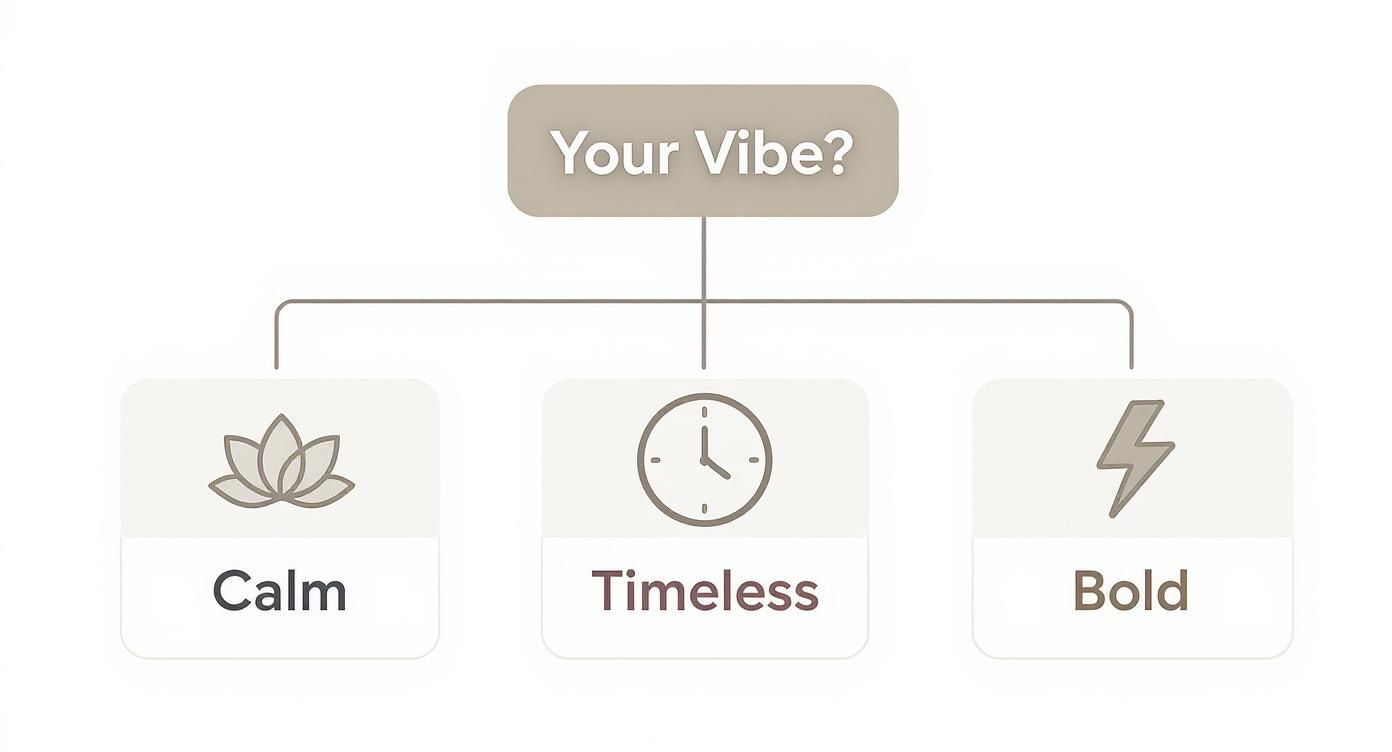
As you can see, your gut feeling about how a room should feel is your best guide to choosing a style you'll love for years.
Embracing Clean and Simple Design
If you thrive in open, calm, and uncluttered spaces, you’ll likely love Minimalist or Scandinavian design. Both champion simplicity, but with a key difference: Minimalism is the pure art of "less is more," while Scandinavian design is its cozier, more approachable cousin.
Minimalism strips a room down to its essentials, creating a visually quiet space where every object has a purpose. Scandinavian design takes that same clean aesthetic and adds warmth, texture, and a sense of lived-in comfort—a concept the Danes call hygge (pronounced "hoo-gah"), which means a feeling of cozy contentment.
Why it matters: For anyone in a small apartment or home, both styles are lifesavers. Their focus on light colors and smart functionality can make a room feel significantly larger and less stressful.
The Core of Minimalist Design
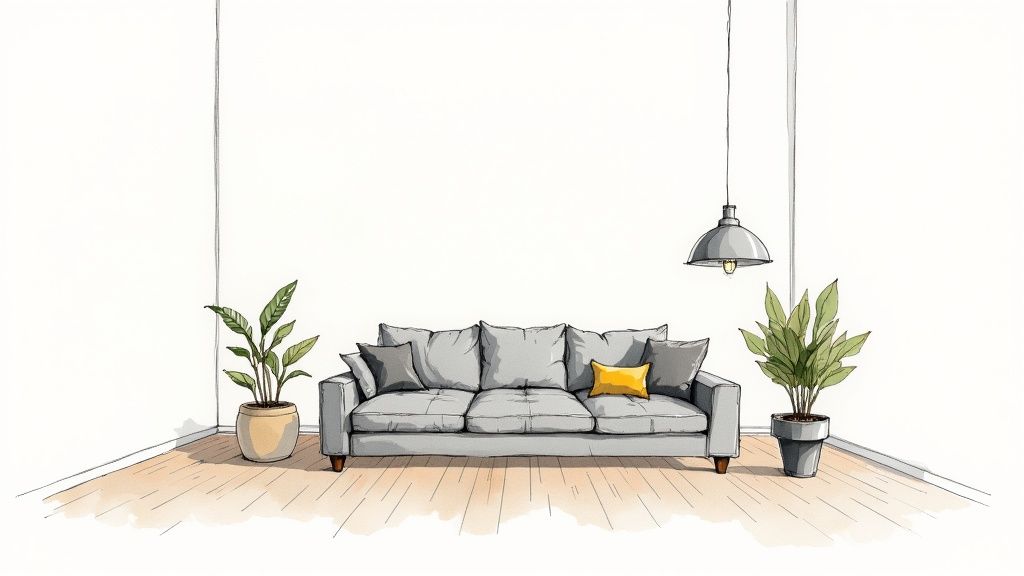
At its heart, Minimalism is driven by the idea that an uncluttered home leads to an uncluttered mind. It's about quality over quantity, focusing on a few well-made pieces that are both beautiful and functional.
This style masterfully uses negative space—the empty areas around objects. This isn't just about owning less; it's a deliberate choice that makes the items you do have stand out, creating a powerful sense of calm that's a game-changer in compact living areas.
- Color Palette: A neutral foundation of whites, soft grays, and creams, often with sharp black accents for contrast.
- Furniture: Clean, unadorned lines and simple geometric forms. Multi-functional pieces, like a storage ottoman, are a staple.
- Materials: Smooth surfaces like polished concrete and metal, balanced with a single, simple texture like a plain linen curtain to avoid feeling cold.
Creating Coziness with Scandinavian Style
While sharing a similar uncluttered look, Scandinavian (or "Scandi") design feels much warmer. Born from the long, dark winters in Nordic countries, it's all about maximizing natural light and creating a cheerful, comfortable haven.
Why it matters for rentals: Scandi design is a fantastic choice for Airbnb or real estate listings. Its neutral palette and functional furniture create an inviting backdrop that helps prospective tenants or guests easily imagine themselves in the space, boosting its appeal.
Practical Tips for Your Home
Ready to try a clean and simple look? Here are some realistic, step-by-step ideas.
- Living Room: Start by clearing all surfaces. Swap a bulky sofa for one with clean lines and add warmth with a wool throw. A light-wood coffee table and one large, simple piece of art can tie the room together.
- Bedroom: Aim for a serene escape. Use light-colored bedding in natural materials like linen. Keep bedside tables clear of everything but the essentials—a lamp and a book.
- Kitchen: Get small appliances off the countertops. Simple, handle-less cabinets and a neutral backsplash will instantly create a Scandi-minimalist feel.
Struggling to visualize the perfect layout? This is where an AI tool like Interior Redesign AI shines. Upload a photo of your room to test different furniture arrangements without any heavy lifting, saving you time and stress.
Try a prompt like, "Redesign my bedroom in a cozy Scandinavian style with white walls, light oak furniture, and a soft gray rug," to get instant visual ideas.
4. Creating Warm and Timeless Spaces
If all-white rooms leave you feeling cold, the inviting warmth of Modern and Mid-Century Modern (MCM) design might be your perfect match. These styles create spaces that feel both elegant and genuinely livable, hitting that sweet spot between beautiful form and everyday function.
Modern design began in the early 20th century as a break from ornate decor, focusing on simplicity and natural materials. Mid-Century Modern, popular from the 1940s-60s, took those clean lines and injected them with organic curves, playful patterns, and a deep connection to the outdoors.
Why it matters: The timeless appeal of these styles means your home won't look dated in a few years. It's a smart investment that holds its value, which is why the interior design market, valued at around USD 178.95 billion, continues to grow.
Hallmarks of Mid-Century Modern Design
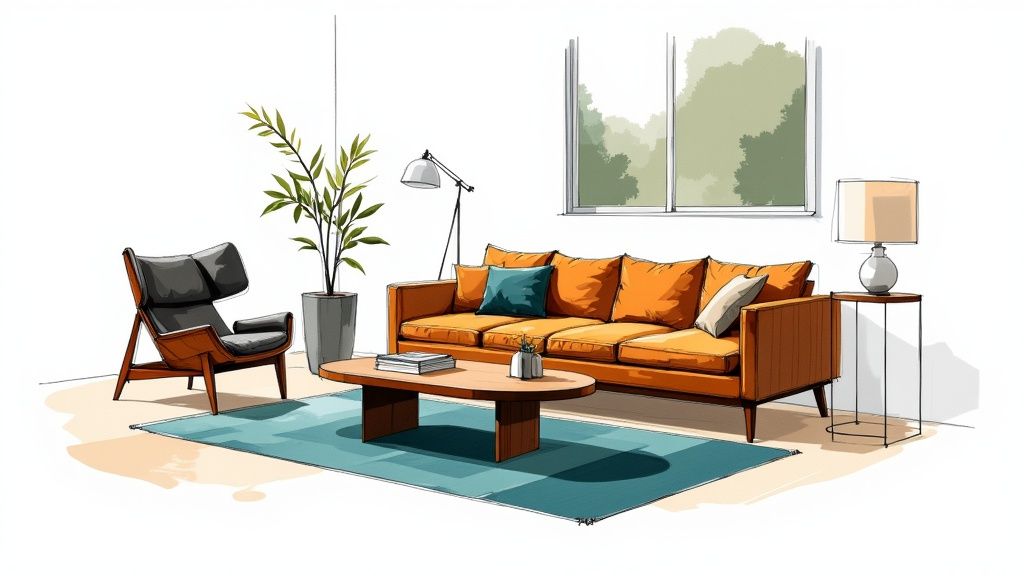
MCM is instantly recognizable thanks to its iconic furniture and optimistic feel. It's a brilliant choice for anyone who wants a space with personality and a retro vibe that still feels fresh today.
Here are the key ingredients:
- Iconic Furniture: Signature pieces with slim, tapered legs, gentle curves, and beautiful wood grains (like teak and walnut).
- Organic and Geometric Patterns: Bold, graphic patterns like starbursts and clean repeating shapes on textiles and artwork.
- A Connection to Nature: Big windows and a heavy use of natural materials like wood, leather, and stone blur the lines between inside and out.
The color palette mixes rich, earthy tones—like olive green and burnt orange—against a calm backdrop of white or gray. For help striking this balance, check out our guide on how to choose paint colors for rooms.
Modern vs Mid-Century Modern At a Glance
Here’s a quick comparison to help you spot the differences.
| Element | Modern | Mid-Century Modern |
|---|---|---|
| Philosophy | "Form follows function." Emphasis on simplicity. | Blends function with playful, organic aesthetics. |
| Shapes | Strong, clean, geometric lines. | A mix of geometric lines with soft, organic curves. |
| Color Palette | Primarily neutral: white, black, gray. | Earthy neutrals paired with bold accents like orange and olive. |
| Materials | Industrial materials like metal, chrome, and glass. | Natural materials like wood (teak, walnut), leather, and stone. |
| Furniture Legs | Often straight or blocky. | Signature slim, tapered, or hairpin legs. |
Room-by-Room MCM and Modern Ideas
Weaving these styles into your home is simpler than it seems.
- Living Room: An MCM-style sofa with tapered legs can anchor the whole room. Add a simple, low-profile coffee table for a sophisticated focal point.
- Kitchen: For a sleek Modern look, choose flat-panel cabinets and minimal hardware. A simple tile backsplash in a geometric pattern can add a pop of MCM flavor.
- Bedroom: A wooden platform bed with a clean-lined headboard is the perfect anchor. Finish with drum-shade lamps and a textured throw in an earthy color.
Practical tip for renters: You can't change the architecture, but you can bring in the MCM spirit with decor. A statement arc lamp, a sunburst mirror, or cushions with a geometric print are easy, non-permanent ways to get the look.
Wondering how that dream credenza will look in your space? This is where an AI visualizer becomes your best friend. With Interior Redesign AI, you can snap a photo of your living room and see exactly how those pieces will fit, saving you from expensive guesswork.
Try a prompt like: "Place a Mid-Century Modern teak sideboard against the main wall and add a geometric area rug." You can instantly test different arrangements, giving you the confidence to make choices you’ll love.
3. Designing with Edgy and Rustic Character
If you believe a home should tell a story, the raw, character-filled looks of Industrial and Rustic styles are for you. These designs celebrate materials with history and texture, creating spaces that feel authentic, grounded, and deeply personal.
Industrial design was born from converting old factories and warehouses into homes, proudly displaying a building’s structural bones. Rustic design pulls its inspiration from nature, delivering a warm, cabin-like feel with raw wood, stone, and cozy fabrics.
Why it matters: For homeowners, renters, or Airbnb hosts, these styles create a memorable, high-impact look that feels both curated and effortlessly cool.
The Unfinished Appeal of Industrial Style
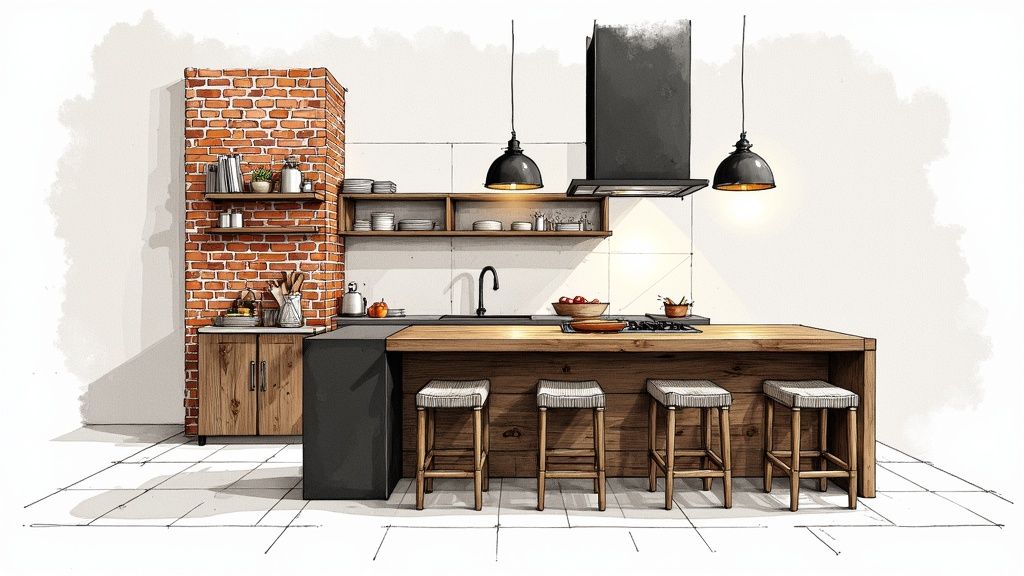
Industrial design embraces the raw and real, finding beauty in things other styles hide, like exposed brick, visible ductwork, and concrete floors. It’s a chic, urban vibe that’s impossible to ignore.
The trick to making this style work in a typical home (not a huge loft) is balance. You need soft textures like a plush rug or a leather sofa to counteract the hard surfaces and prevent the room from feeling cold.
- Key Elements: Exposed brick (or realistic faux panels), weathered wood, and metals like steel and iron.
- Furniture: Functional, utilitarian pieces, often mixing wood and metal, like a dining table with a cast-iron base or a distressed leather sofa.
- Lighting: Statement pieces are a must—think metal pendant lights over a kitchen island or vintage-style Edison bulbs.
Grounding Your Home with Rustic Design
While Industrial style is urban, Rustic design is pure countryside. It feels warm, inviting, and connected to the natural world, making it perfect for a cozy family home or a sought-after Airbnb escape.
Why it matters for families: Rustic design is incredibly forgiving. A scratch on a reclaimed wood table just adds to its character, making it a practical, stress-free choice for busy homes with kids or pets.
Bringing Character to Your Rooms
You don't need a barn to pull off these looks. A few smart additions can infuse any room with charm.
- Kitchen: For an Industrial feel, install open metal shelving and hang a pot rack. For a Rustic vibe, a butcher-block countertop or a classic farmhouse sink works wonders.
- Bedroom: Create a feature wall with faux brick or reclaimed wood panels behind your bed. Pair it with soft, neutral bedding to keep the space feeling serene.
- Bathroom: A concrete vanity top gives an instant industrial edge. For a rustic touch, a vanity made from weathered wood paired with stone-like floor tiles creates a natural, spa-like feel.
Worried about committing to a bold look? Seeing these styles in your own space is easy with an AI tool. With Interior Redesign AI, you can upload a photo and instantly see how your kitchen would look with a brick backsplash.
Try a prompt like: "Redesign my living room in an industrial chic style with a distressed leather sofa and black metal accents." It lets you experiment completely risk-free. See more transformations in our AI interior design gallery.
7. Crafting a Free-Spirited and Eclectic Home
If you believe a home should tell your unique story, then Bohemian and Eclectic styles will feel like coming home. These designs champion creativity, freedom, and the beautifully imperfect, mixing rich colors, patterns, and meaningful objects.
Bohemian (Boho) creates a relaxed, personal, and slightly untamed atmosphere, like the home of a world traveler filled with layered textiles, rattan, and plants. Eclectic is the art of intentionally mixing different eras and styles—like a vintage armchair next to a modern sofa—to create a look that is uniquely yours.
Why it matters: For a homeowner, these styles are the ultimate form of self-expression. For an Airbnb host, they create a memorable, one-of-a-kind space that stands out from the crowd.
The Heart of Bohemian Design
Boho is more a feeling than a formula: warm, inviting, and carefree. It's perfect for a home that feels lived-in and comfortable from the moment you walk in. The key is to layer textures, patterns, and objects in a way that feels organic, not messy.
Why it works for renters and budgets: Boho thrives on flea market finds, handmade items, and pieces with personal history, making it an incredibly forgiving and affordable style to achieve.
- Color Palette: Earthy tones like terracotta are a great base, but don't be afraid of saturated jewel tones—ruby red, sapphire blue—for a vibrant energy.
- Materials and Textures: Layering is everything. Mix chunky knit throws, velvet cushions, shaggy rugs, and woven wall hangings. Natural materials like rattan and jute keep the look grounded.
- Furniture: Comfort is key. Look for relaxed, low-profile pieces like a low-slung sofa, floor cushions, and vintage poufs. Nothing should feel too formal.
Mastering the Eclectic Mix
Eclectic design is the art of creating harmony from chaos. It's a thoughtful blend of different styles, periods, and colors. Unlike the free-flowing nature of Boho, a good Eclectic room needs a common thread—like a consistent color palette or a repeated texture—to feel curated, not cluttered.
A practical approach: A great way to start is with the 80/20 rule. Let one dominant style make up about 80% of the room, then use the remaining 20% to introduce contrasting elements that pop. This gives the space a clear point of view while still feeling dynamic.
Tips for a Rule-Breaking Room
Ready to create a space that’s all you? Here are realistic ideas for any home.
- Living Room: Start with a neutral sofa, then go wild with textiles. Layer a vintage Persian rug over a larger jute one. Pile on pillows with a mix of patterns that share a common color or two.
- Bedroom: Turn your bedroom into a cozy sanctuary with layered bedding, a macrame wall hanging as a headboard, and plenty of plants. Your bedside tables don't need to match!
- Outdoor Space: Create a Boho patio oasis with an outdoor rug, string lights, floor cushions, and potted plants of varying heights.
Worried your mix of patterns will clash? An AI tool can be your creative playground. Use Interior Redesign AI to upload a photo and test your boldest ideas without risk. See how that vibrant wallpaper looks with your striped armchair before you commit.
Try a prompt like: "Redesign my living room in a cozy Bohemian style with layered rugs, lots of plants, and a terracotta accent wall." You'll get an instant look at your vision, saving you from costly mistakes.
How to Visualize Your Perfect Style with AI
Feeling inspired but a little stuck on how to start? An AI Interior Designer is a powerful tool that closes the gap between the ideas in your head and the reality of your room, letting you see your vision come to life before you pick up a paintbrush.
The process is simple: snap a photo of your space, and you can instantly "try on" any of the styles we've just covered. Transform your living room into a serene Minimalist retreat or a vibrant Boho paradise in seconds.
Why it matters: This ability to visualize is a huge benefit for any home project, saving you from decision paralysis and costly mistakes. It's why AI is becoming an essential part of the modern design process, especially as the global interior design market is expected to reach USD 175.74 billion by 2030.
From Blank Canvas to Finished Concept
An AI tool is your personal design playground. Instead of just wondering if that dark green accent wall will work, you can see it for yourself instantly. This lets you move beyond just picking a style and start fine-tuning the details.
- Test Out Materials: See how marble countertops would look in your kitchen versus a warm butcher block.
- Play with Color Palettes: Instantly swap a neutral color scheme for a bold one to see which mood fits your home better.
- Arrange Furniture Virtually: See how a new sofa or a different rug would look without spending a dime or straining your back.
Writing Prompts That Actually Work
The secret to getting great results from AI is writing clear, descriptive prompts. The more specific you are, the better the tool can grasp your vision.
Instead of a vague request like "make it modern," try something with more detail:
Prompt Example: "Redesign my living room in a warm Scandinavian style with light oak wood floors, a cozy gray fabric sofa, and a large jute rug."
This level of detail helps the AI generate a design that’s much closer to what you’re picturing, like a super-fast, digital mood board. If you're new to that idea, our guide on what a mood board is in interior design can help.
Just remember, while AI is an incredible tool for generating ideas, it has its limits. Always filter its suggestions through your own personal taste and consider combining AI concepts with your own unique twist or consulting a professional designer for large-scale projects.
Ready to see your own design ideas come to life? Grab a photo of your room and let Interior Redesign AI instantly reimagine your space from a photo or sketch.
Answering Your Biggest Questions About Interior Design Styles
Diving into interior design styles can bring up a few questions. Let's clear the air so you can move forward with confidence.
Can I Mix and Match Different Styles?
Absolutely! Some of the most personal and beautiful rooms don't stick to a single rulebook. This approach, known as Eclectic design, is about curating a space that tells your unique story.
The key to making it work is finding a common thread to tie everything together. This could be a unified color palette, the consistent use of a material like warm wood, or furniture pieces that share a similar scale.
Which Interior Design Style is Truly Timeless?
While trends are fun, nobody wants their home to feel dated in a few years. Styles with real staying power are built on simplicity, quality craftsmanship, and natural materials.
A few standouts include:
- Traditional: Its classic lines and focus on comfort always feel right.
- Modern: Its commitment to clean, uncluttered spaces is perpetually fresh.
- Scandinavian: The blend of function, light, and natural warmth makes it a perennial favorite.
These styles provide a solid foundation that you can easily update with trendy accessories over the years without a complete overhaul.
How Do I Pick a Style for a Small Apartment?
For small spaces, the right design style can make a tiny room feel surprisingly open and bright. Scandinavian, Minimalist, and Mid-Century Modern are excellent choices. They all emphasize light colors and furniture with a low visual weight—like pieces with slim legs that let you see the floor underneath. Multi-functional furniture, like an ottoman with hidden storage, is also your best friend.
Why it matters: An AI interior designer is a secret weapon for small-space planning. It lets you virtually test different layouts to find the perfect fit before you buy anything, saving you from costly returns and headaches.
If you have more questions about how our tool works, check out our frequently asked questions about AI interior design.
How Can AI Help Me Figure Out My Personal Style?
An AI interior design tool is your personal design playground. It removes the guesswork and financial risk, giving you the freedom to experiment. Upload a photo of your room and watch as it’s instantly transformed into dozens of different looks.
You can see your exact space reimagined in Industrial, then Boho, then Minimalist—all in seconds. It's a visual, side-by-side comparison that helps you move from "I think I like that" to "I know I love this." This process makes the whole journey less stressful and way more fun.
Ready to stop guessing and start seeing? Snap a photo of your room and let Interior Redesign AI instantly reimagine your space from a photo or sketch.