Designing a condominium isn't just about picking out nice furniture; it's a masterclass in making every square inch count. For homeowners, real estate agents, and Airbnb hosts, the real art lies in crafting a space that feels open, organized, and truly special, all while navigating the unique challenges of condo living—think shared walls, building rules, and often, a more compact footprint.
A well-designed condo is more than just beautiful; it's a smart, functional home that boosts your quality of life, increases rental appeal, and maximizes resale value.
Unlocking Your Condominium's Design Potential
So, you’re ready to transform your condo. Where do you even begin? It’s a common question, and the answer isn't to just start buying things you like. Tackling a condo design project requires a thoughtful approach that balances your vision with the practical realities of the space.
This guide provides a clear, step-by-step framework to help you avoid common missteps and the dreaded decision fatigue. With a solid plan and some clever tools, you’ll see that a condo's limitations can actually spark the most creative solutions.
Why A Smart Plan Is Non-Negotiable
Putting in the work upfront to create a strategic plan is the single best way to prevent expensive mistakes and save money down the road. It forces you to think like a designer, identifying your condo's best assets—like a killer city view or great natural light—and figuring out how to make them the star of the show.
If you’re totally new to this, learning how to start the interior design process for a room is a great primer that applies here, too.
For condo projects specifically, your plan absolutely must account for:
- Space Limitations: In a condo, every single square foot has a job to do. A good plan ensures none of it goes to waste, which is crucial for comfort and functionality.
- Budget Constraints: Getting real about your numbers from day one keeps you from overspending and helps you invest in elements that will make the biggest impact, like quality flooring or lighting.
- Building Rules: This one is huge. Before you even dream of knocking down a wall or changing plumbing, you need to know your condo association's rules inside and out to avoid fines and costly rework.
Condo Design Essentials At A Glance
This table gives you a snapshot of the key areas to focus on right from the beginning of your condo design journey.
| Focus Area | Why It Matters In A Condo | Actionable Tip |
|---|---|---|
| Space Planning | Maximizing a smaller footprint is crucial for flow and function, making the unit feel more spacious and livable. | Measure your space meticulously. Sketch out a floor plan (even a rough one) or use an AI tool to test furniture placement. |
| Multifunctional Furniture | Items that do double duty save valuable space, a must-have for studio apartments or condos with families. | Look for an ottoman with hidden storage, a coffee table that lifts into a desk, or a sleeper sofa for guests. |
| Building Regulations | Condo boards have strict rules that can impact your design choices. Ignoring them can lead to fines or stop-work orders. | Get a copy of the bylaws before you start. Pay close attention to rules on flooring, electrical, and construction hours. |
| Budgeting | A clear budget prevents scope creep and financial stress, ensuring your project stays on track. | Create a spreadsheet with all anticipated costs, and add a 15-20% contingency fund for unexpected issues. |
Nailing these four areas early on will set a solid foundation for the rest of your project, making the entire process smoother and more successful.
Visualize Your Ideas Before Committing
One of the toughest parts of any design project is trying to picture how it will all come together. Will that dark green paint make the room feel like a cave? Is that sofa too big for the wall? This is where technology can be a huge help.
AI interior design tools let you take a photo of your actual room and see it reimagined in different styles almost instantly.
This isn't just a gimmick—it's an incredibly practical planning tool. It lets you test-drive layouts, color schemes, and furniture styles with zero risk, saving you a ton of time and money while reducing decision stress.
Feeling stuck for ideas? Browsing an AI interior design gallery can show you what’s possible and provide a jolt of inspiration. It helps you shift from seeing a small, tricky unit to a stylish canvas full of potential.
Mastering Your Condo's Layout And Rules
Before you fall in love with a color palette or start sofa shopping, let’s talk about the single most important first step in any interior design condominium project: understanding exactly what you’re working with.
This isn't the glamorous part, but getting this foundational work right ensures your creative vision is actually possible and will save you from massive headaches down the road.
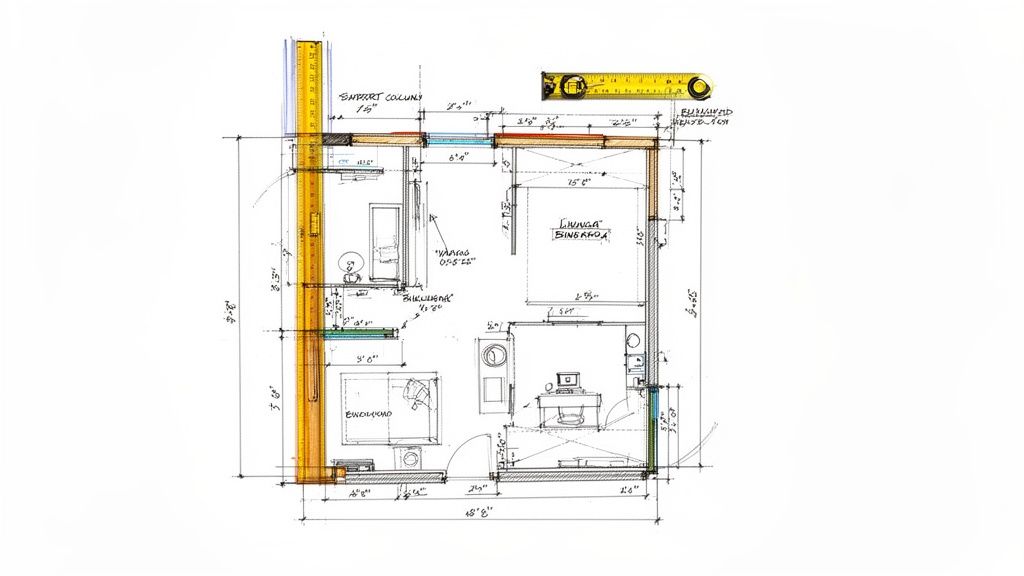
First, you need to get to know your space intimately. Grab a tape measure and document everything. Note the placement of windows, ceiling heights, and where every outlet and light switch lives. Look for unchangeable architectural quirks, too—that random support column or the low bulkhead hiding ductwork. These aren't obstacles; they're simply the constraints you have to design around.
Decoding Your Condo Association's Rulebook
Living in a condo means you're part of a community with its own set of rules. Ignoring these regulations is one of the costliest mistakes you can make. The condo board or homeowners' association (HOA) has guidelines that can dictate everything from the type of flooring you can install to the hours contractors can make noise.
Violating these rules can lead to fines, stop-work orders, or being forced to tear out your beautiful new work. A quick chat with your property manager is absolutely non-negotiable.
Key Questions To Ask Your Condo Board
To sidestep any nasty surprises, get clear answers on these points before you start your project:
- Structural Changes: Are you allowed to move or alter walls? Most condos have iron-clad rules about touching anything structural.
- Flooring Requirements: Many buildings mandate a specific type of underlayment for hard flooring (like wood or tile) to cut down on noise for the unit below.
- Plumbing and Electrical: What's the approval process for work involving plumbing or electrical? This almost always requires a licensed and insured pro.
- Contractor Rules: Are there set working hours? Do all contractors need to be pre-approved or show proof of insurance to management?
- Window Treatments: Some buildings maintain a uniform look from the outside, which could limit your choice of blinds or curtains.
- Renovation Approval Process: What exact paperwork do you need to submit? And just as important, how long does the approval process usually take?
Get these answers in writing. It’s your best defense against any future disputes and gives you a clear roadmap of what’s allowed, empowering you to plan a project that's both beautiful and compliant.
This level of planning is more important than ever. The global interior design services market is projected to reach USD 204.23 billion by 2031, a boom driven largely by urban condo developments. You can dig into the numbers in the full interior design market report.
For smaller spaces, which are common in city condos, grasping these layout constraints is even more critical. If you’re looking for some inspiration, check out these clever studio condo design ideas.
Nail Your Style and Make Every Square Foot Count
Alright, you’ve done the grunt work—measuring, checking rules, and understanding the bones of your space. Now comes the fun part: infusing your personality into the design and making it a place you truly love. This is where we blend your personal aesthetic with the practical realities of condo life.
Finding your "style" is less about picking a name from a magazine and more about deciding how you want your home to feel. Do you want a calm, bright retreat to unwind in, or a cozy, dramatic vibe for entertaining?
Find a Style That Plays Nicely with Condo Living
Some design aesthetics are practically made for condos. They naturally lean into principles that make smaller spaces feel bigger, brighter, and more functional.
A few styles that work wonders in condos are:
- Scandinavian: A classic for a reason. It’s all about bright spaces, neutral colors, and natural materials like pale woods. The simple, clean-lined furniture instantly creates a sense of openness.
- Japandi: A perfect marriage of Japanese minimalism and Scandinavian functionality (Japan + Scandi = Japandi). It’s ideal for creating a serene, peaceful atmosphere with a focus on natural textures and "negative space"—intentionally leaving areas open so the room can breathe.
- Mid-Century Modern: Famous for its clean lines and organic shapes, this style has a secret weapon for small spaces: furniture with raised legs. Elevating sofas and chairs off the floor makes a room feel instantly larger and less cluttered.
The key is to pull inspiration that enhances your condo's layout, rather than fighting it. For a deeper dive, check out our guide to minimalist room designs.
Master the Art of the Open-Concept Layout
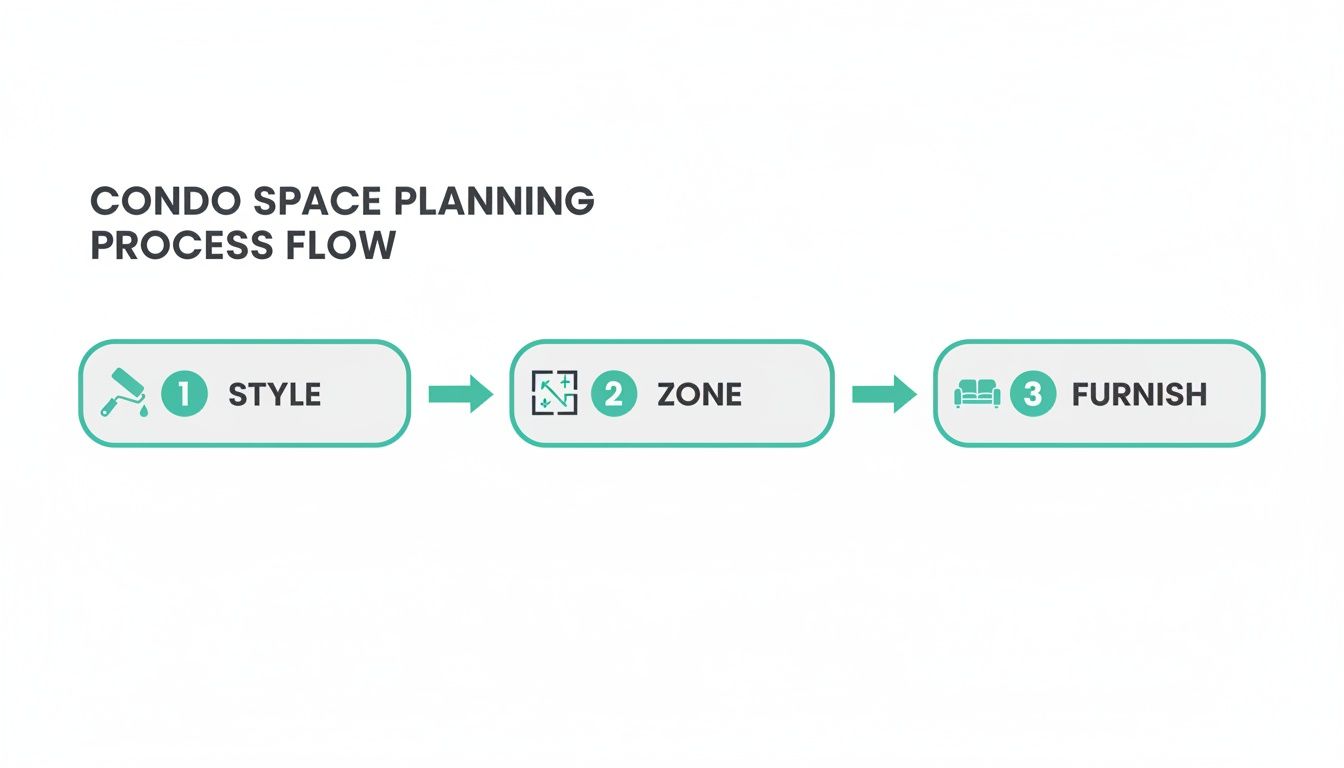
Most modern condos have an open flow between the living, dining, and kitchen areas. While great for light, it can quickly turn into one big, jumbled mess without a smart plan. The secret is creating distinct "zones" for different activities.
- Living Room: Use a large area rug to anchor your living room furniture, creating a clear visual boundary.
- Dining Area: A stylish pendant light hanging over the dining table can define the space.
- Entryway: Place a console table behind your sofa to carve out a subtle separation and a handy drop-zone for keys.
The most underrated element of great condo design? A clear path. You should be able to walk through the main living areas without bumping into anything. This single detail makes a space feel less cramped and far more livable.
If you’re having trouble visualizing this, this is a perfect time to fire up an AI interior design tool. Just upload a photo of your empty space and play around. You can test different furniture layouts and rug sizes to find what works best before you ever lift a heavy box.
Choose Furniture That Pulls Double Duty
In a condo, every piece needs to earn its spot. This is where multifunctional furniture becomes your greatest asset.
Look for a storage ottoman that can hide blankets while serving as extra seating. A dining table with an extendable leaf is a game-changer, letting you host friends without sacrificing floor space day-to-day. Industry trends point toward smarter use of our main living areas, with kitchens projected to become the top priority by 2026. You can read more about these evolving interior design trends.
By picking a style that complements your space and furniture that serves more than one purpose, you’re not just designing a condo—you’re creating a home that’s both beautiful and effortlessly livable.
Visualize Your Dream Condo With AI Design
Ever feel stuck between a dozen different ideas for your space? It happens to everyone. The gap between what’s in your head and a realistic plan can feel massive, especially when trying to picture how different colors, furniture, and textures will actually look together in your condo.
This is where AI interior design tools come in, and they're a total game-changer for homeowners and real estate professionals alike.
Imagine snapping a quick photo of your living room and, within moments, seeing it completely transformed. You could flip from an industrial loft vibe to a breezy coastal look, then to a serene Japandi retreat—all without moving a single piece of furniture. It’s not about letting a robot call the shots; it’s about giving yourself the freedom to explore every possibility without any risk.
This is your chance to test your boldest ideas. Wondering if a deep navy accent wall will make your bedroom feel cozy or just cramped? Curious if that light oak flooring will truly brighten up the kitchen? Now you can see it for yourself before committing your time and budget.
See It Before You Build It
This visual experimentation takes so much stress out of any interior design condominium project. The guesswork is gone. You’re no longer relying on tiny paint swatches to make huge decisions.
Instead, you can compare realistic images of your actual space. This simple step can help you avoid costly mistakes, like ordering a sofa that overwhelms the room or picking a countertop that clashes with your cabinets. It puts you in control and makes the design process genuinely fun.
For real estate agents and Airbnb hosts, the benefits are even more direct. Creating stunning 4K renders can show a property’s true potential, helping it sell or rent much faster. You can virtually stage an empty unit to help buyers imagine their life there or show a renter how the space can be optimized for both style and comfort, boosting your listing's appeal.
How AI Streamlines Your Condo Design Workflow
An AI tool like Interior Flux Studio AI turns a complex creative process into a few clear, manageable steps. It bridges the gap between abstract ideas and concrete visuals, giving you the confidence to make the right call. For more details, check out our complete guide on using AI for room design.
The real power here is speed and iteration. You can generate dozens of variations in the time it would take to create a single manual mood board. This allows for a much richer exploration of your creative options.
Practical Applications For Condo Owners
Let’s get specific. Think about the unique challenges of a condo—that awkward corner you have no idea what to do with, or the struggle to carve out a functional home office nook.
- Test Layouts: Upload a photo and ask the AI to show you different furniture arrangements. See if a sectional sofa works better than a traditional three-seater.
- Experiment with Materials: Instantly compare how marble countertops look next to quartz in your kitchen, or test-drive different tile patterns for your bathroom floor.
- Visualize Color Palettes: Try out a bold, moody color scheme or a light, airy one to see how it genuinely changes the feel of the room before you ever pick up a paintbrush.
While AI is an incredible tool for brainstorming and visualization, it’s important to be honest about its limitations. The best results always come from blending the creative concepts generated by AI with your personal taste and, if needed, the expertise of a professional designer.
Choosing The Right Colors, Materials, and Lighting
This is where the real artistry begins. The right blend of color, materials, and lighting is what elevates a basic unit into an inviting home. These three elements must work in harmony to set the mood, create a sense of spaciousness, and inject your personality into every corner.
Crafting a Smart Condo Color Palette
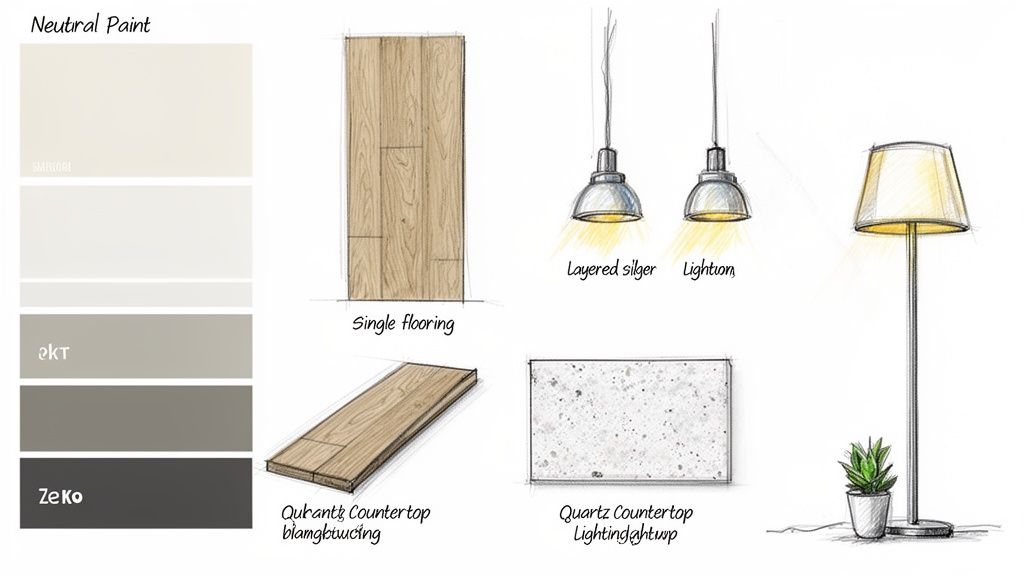
In a condo, color isn't just decoration—it's a tool for shaping the space. Lighter, neutral colors are your secret weapon because they bounce light around, making even the coziest rooms feel bigger and brighter. Think of a palette of soft whites, warm greys, and muted beiges as your foundation.
But neutral definitely doesn't mean boring. Personality comes from strategic pops of color. A deep teal accent wall behind the sofa or vibrant dining chairs can bring energy to a room without making it feel crowded. The trick is to keep it cohesive. Wondering if a bold choice will pay off? Use an AI tool to test it out. Upload a photo of your room to see exactly how that daring color will look on your walls.
Selecting Durable and Stylish Materials
Your material choices have to pull double duty in a condo: they need to look great and stand up to daily life, whether for your family or for rental tenants. Focus on materials that are durable, low-maintenance, and contribute to that feeling of spaciousness.
- Flooring: Engineered hardwood or luxury vinyl plank (LVP) offers the warmth of real wood with better resistance to scratches and moisture. In kitchens and bathrooms, large-format tiles mean fewer grout lines, creating a cleaner, more seamless look.
- Countertops: Quartz is the undisputed champion for condo kitchens. It’s non-porous, practically stain-proof, and comes in countless styles that can mimic natural stone without the fussy maintenance.
- Furniture: For high-use pieces like a sofa, look for performance fabrics that are easy to clean—a lifesaver if you have kids, pets, or plan to rent out your unit.
The Power of Layered Lighting
Please, don't underestimate the impact of good lighting. A single overhead fixture is the fastest way to make a room feel flat and small. The secret to professional-looking design is to layer your lighting.
Layering light means using multiple sources to create a balanced, functional, and inviting atmosphere. It's one of the most effective ways to make your condo feel larger and more luxurious without moving a single wall.
Think of lighting in three distinct layers:
- Ambient Lighting: This is your main, all-over light, like recessed pot lights or a modern flush-mount fixture. It sets the baseline brightness.
- Task Lighting: This is focused, functional light for specific activities. Think under-cabinet strips in the kitchen, a reading lamp by your armchair, or vanity lights in the bathroom.
- Accent Lighting: This is the jewelry of the room. It’s used to highlight things you love, like artwork or plants. A picture light over a favorite print can add so much depth and drama.
Scale is also critical. A massive chandelier will overwhelm a small dining nook. An AI tool can help you visualize how different fixtures will look in your space, ensuring you get the scale and style just right before you call the electrician.
Finishing Touches That Make A Difference
Alright, the heavy lifting is done. You've nailed the layout, colors, and lighting. Now for the details that take your condo from a nicely designed space to a place that truly feels like home. This is all about adding personality and warmth without clutter—a tricky balance in any interior design condominium project.
This final layer pulls the entire design together. It’s the magic that makes a space feel curated, complete, and authentically yours.
Accessorizing Without The Clutter
When accessorizing a condo, be intentional. Every object should be beautiful, functional, or make you happy. If not, it's just taking up valuable real estate.
Here are a few practical tips for big impact:
- The Right Rug: A good area rug anchors a living space. Make sure, at the very least, that the front legs of your sofa and chairs are on the rug. It pulls everything together instantly.
- Meaningful Artwork: Instead of a chaotic gallery wall of tiny frames, consider one or two large, statement pieces. A pro tip is to hang art at eye level—the center of the piece should be about 57 inches from the floor.
- Living Greenery: Plants literally breathe life into a space. A tall fiddle-leaf fig can draw the eye upward and add height to a corner, while a trailing pothos on a bookshelf can soften hard lines.
- Mirrors: A large mirror placed opposite a window is a classic trick to make a room feel larger and brighter by reflecting light and views.
Room-by-Room Examples
- Living Room: Use a storage ottoman as a coffee table to hide blankets and remotes. Wall-mounted shelves free up floor space.
- Bedroom: A bed frame with built-in drawers is a lifesaver for storing extra linens. Use vertical space with tall, narrow dressers.
- Kitchen: Maximize cabinet space with organizers, shelf risers, and magnetic spice racks.
- Bathroom: Install floating shelves above the toilet for towels and toiletries. A mirrored medicine cabinet adds storage and reflects light.
- Outdoor Space: For balconies, use weather-resistant, foldable furniture that can be easily stored. Vertical planters can create a lush garden without sacrificing floor space.
Staging For Sale or Rental Success
If you're getting your condo ready for the market, the goal is to help potential buyers or renters immediately see it as their home. This is where staging comes in.
First, depersonalize. Tuck away personal items like family photos or quirky collections. You want buyers focused on the great light and beautiful floors, not your vacation snaps. A well-staged condo should feel both welcoming and aspirational—you're selling a lifestyle. This effort can make a huge difference in the final sale price and how fast the property moves.
Before you start hauling furniture, use an AI tool like Interior Flux Studio AI to mock up different staging ideas. Want to see how a minimalist look would open up the space? You can visualize it all and create a solid plan before you lift a finger.
Ready to see how a few simple changes could transform your space? Try Interior Flux Studio AI to instantly reimagine your room from a photo or sketch.
Your Top Condo Design Questions, Answered
When you're staring at the blank canvas of a new condo, a lot of questions pop up. Whether you're a new homeowner, an Airbnb host, or a real estate pro, getting the right answers is your first step. Let's tackle some of the most common ones.
How Do I Make My Tiny Condo Feel Bigger Than It Is?
The secret is to fool the eye with smart choices about light and scale.
- Light, neutral paint colors on walls and ceilings bounce light around, creating a sense of openness.
- A large mirror placed opposite a window creates an illusion of depth.
- Furniture with raised legs makes the space feel lighter and more airy because you can see the floor underneath.
- Sheer curtains let in maximum daylight, which is crucial for small spaces.
What Are the Biggest Design Mistakes People Make in Condos?
The most common one is buying furniture that’s way too big for the space. That massive sectional that looked great in the showroom can swallow your living room whole. Always measure your space twice before you shop.
Another classic mistake is relying on a single overhead light, which creates harsh shadows. Layer your lighting with lamps, sconces, and task lighting. And please, for your own sanity and wallet, don't forget to check the condo board's rules before you start any work. It can save you from a world of headaches and fines.
Are AI Interior Design Tools Actually Worth It for a Condo?
Absolutely. For a condo where every inch matters, they're a game-changer. These tools let you play around with different layouts, paint colors, and even flooring in a virtual model of your exact room before you spend any money. It's the perfect way to test a bold idea—like that dramatic accent wall you've been dreaming of—without any of the risk.
For Airbnb hosts and real estate agents, they're even more powerful. You can whip up stunning virtual staging concepts in minutes to show a unit's true potential, helping it rent or sell faster.
What’s the Smartest Way to Sneak More Storage into a Small Condo?
The golden rule here is to think vertically. Floor-to-ceiling bookshelves or a wall of floating shelves give you a ton of storage while drawing the eye upward, making the room feel taller.
Your other secret weapon is furniture that does double duty. Look for pieces like:
- A coffee table with hidden drawers or a lift-up top.
- A bed frame with built-in storage drawers underneath.
- A dining bench with a hinged top for stashing linens.
Ready to stop guessing and start visualizing? Instantly reimagine your room from a photo or sketch with Interior Redesigne AI. Find out more and get started.