Feeling overwhelmed by clutter? You’re not alone. Minimalist room designs offer a refreshing escape, creating spaces that feel intentional, calm, and deeply personal. The core idea is simple but powerful: "less is more." By focusing on clean lines, purposeful furniture, and what designers call "negative space"—the empty areas that let your room breathe—you can craft a home that’s both beautiful and easy to live in.
It’s a perfect fit for modern life, whether you're a homeowner in a small apartment, an Airbnb host looking to boost appeal, or a real-estate agent staging a property to sell.
What is Minimalist Design, Really?
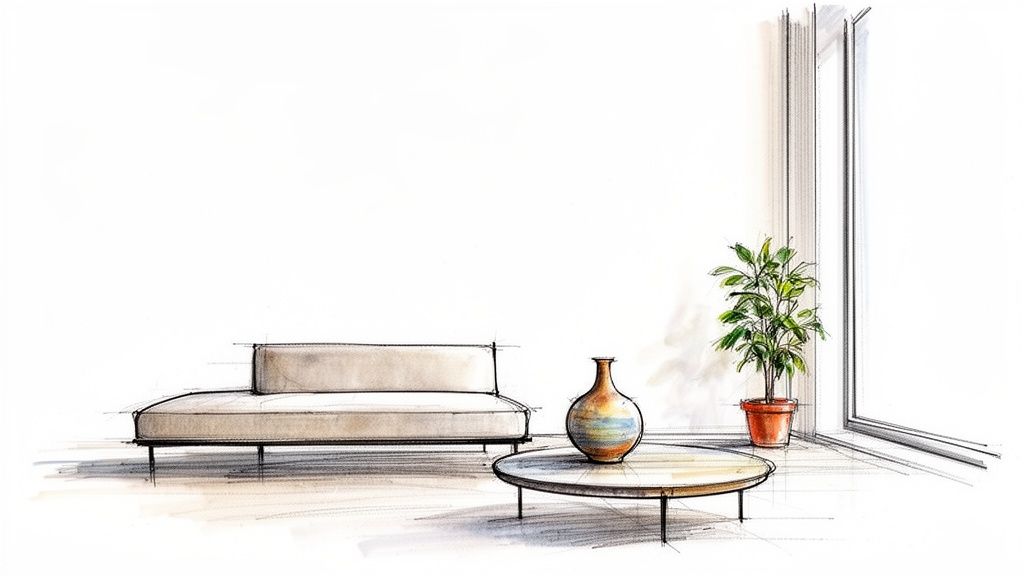
Minimalism is more than just an aesthetic; it's a philosophy that prioritizes simplicity and function. Every single item in a minimalist room should have a clear purpose, contributing to a harmonious and stress-free environment. For anyone trying to make the most of limited square footage, this approach isn't just stylish—it's a total game-changer.
This design philosophy is booming. The market for minimalist furniture was valued at a massive USD 49.66 billion in 2023 and is set to keep growing. You can explore the full minimalist furniture market report for the details, but the trend is clear: people want simpler living spaces that support their well-being, especially as urban homes get cozier.
To get started, let’s break down the core principles.
The Core Principles of Minimalist Design
Here are the key ideas behind minimalist interiors and why they matter for your real-life space.
| Principle | What It Means | Why It Matters for Your Space |
|---|---|---|
| Simplicity | Keeping forms and structures simple, without ornate details. Think clean lines and basic shapes. | This creates a visually calm environment, making your room feel larger and more organized, which is a huge plus for small apartments or rentals. |
| Functionality | Every piece of furniture or decor must have a purpose. Nothing is there "just because." | This forces you to be intentional, reducing clutter and saving money on unnecessary items. It’s perfect for families who need practical, livable rooms. |
| Quality Over Quantity | Investing in a few well-made, durable items instead of many cheaper, disposable ones. | You'll have pieces you love for years, saving money in the long run and creating a space that feels curated, not cluttered. |
| Intentional Color Palette | Using a limited, often neutral, color scheme to create a cohesive and serene atmosphere. | A controlled palette unifies the space and prevents visual chaos. This makes listings more appealing for Airbnb hosts and real-estate agents. |
| Negative Space | Intentionally leaving areas empty. This "breathing room" is just as important as the objects themselves. | This makes your room feel less crowded and more restful, drawing attention to the beautiful items you did choose to include. |
Minimalism isn’t about having an empty, cold room. It’s about creating a space that works for you, filled only with things you truly need and love.
The Real-World Benefits
Choosing a minimalist path offers practical advantages that go beyond looks. When you focus on essential, high-quality pieces, you naturally sidestep clutter and avoid impulse buys that drain your budget.
For real-estate agents and Airbnb hosts, a minimalist design is a secret weapon. It creates a clean, spacious look that helps potential buyers or renters easily imagine themselves living there. This powerful staging tool makes a huge impact without a massive budget, boosting your listing’s appeal and value.
Can't Picture It? Let AI Help
The biggest hurdle for most people? Imagining how these principles will actually look in their room. It’s one thing to see a photo on Instagram, but it's another to commit to a new paint color or sofa without knowing if it will work.
This is where technology becomes your creative partner. An AI Interior Designer lets you visualize ideas before you buy, try different layouts risk-free, and test materials without spending a dime.
Tools like Interior Redesign AI are made for this. Just upload a photo of your current room and instantly see it reimagined in various minimalist styles. Play with layouts, test color palettes, and swap furniture until you find a look you love. This process saves time, reduces decision stress, and ensures your final design is a true reflection of you.
If you're still exploring different looks, our complete interior design styles guide is a great place to start.
Your Step-by-Step Plan for a Minimalist Room
Before you start shopping, the first step is a solid plan. Think of this as a blueprint for intentional living—a way to ensure every choice contributes to a space that’s both peaceful and perfectly functional for your life.
This process starts with decluttering. But try to reframe it: you’re not just getting rid of stuff, you're curating your home. You're editing your environment down to the things that truly add value, serve a purpose, or bring you joy. This is essential for anyone living in an apartment or a smaller home where every inch matters. Even a simple ‘one in, one out’ rule can be a game-changer for a busy family.
As you start planning, you might find that expert tips for downsizing to smaller homes offer valuable insights. Adopting that "less is more" mindset is key to making the most of your square footage.
Step 1: Find Your Room’s Focal Point
Once you've cleared out the noise, identify your room's focal point—the anchor that naturally draws your eye. When you know what it is, all other design decisions become easier, preventing the space from feeling chaotic or aimless.
A great focal point can be an existing feature or something you add. Here are a few practical examples:
- A large window with a view: Don't overdress it. Simple curtains or even leaving it bare draws the eye outside and floods the room with natural light.
- A single piece of art: One large-scale painting makes a much stronger statement than a cluttered gallery wall, saving you money and hassle.
- An architectural detail: Have a fireplace, exposed brick, or built-in shelves? That's your natural centerpiece. Make it shine!
- Statement furniture: A beautifully crafted sofa, a unique armchair, or an interesting light fixture can easily become the functional and visual heart of the room.
For real-estate agents and Airbnb hosts, establishing a clear focal point is a powerful staging trick. It gives a room instant personality and helps potential buyers or guests form an immediate connection, which can seriously boost its appeal. Our guide on essential living room layout ideas has practical strategies for arranging furniture around any focal point.
Step 2: Visualize the Potential Before You Lift a Finger
Let’s be honest—this planning stage can feel overwhelming, especially when you’re staring at a room filled with years of belongings. It’s tough to imagine a serene, minimalist haven when you’re surrounded by clutter.
The biggest hurdle is envisioning the end result. Seeing a clean, redesigned version of your own room makes the whole decluttering process feel exciting and, most importantly, achievable.
This is where a tool like Interior Redesign AI becomes your best friend. Instead of just trying to imagine what your space could look like, you can actually see it in seconds.
Just snap a photo of your room as it is—clutter and all. Upload it, select the minimalist style, and let the AI generate design concepts that show you what’s possible. Seeing a version of your own living room with a clean layout can be the exact motivation you need to start sorting. It cuts through decision fatigue and helps you build a clear, actionable plan, saving you from costly design mistakes.
Building a Palette with Color and Texture
Let’s bust a common myth: minimalist design is not about living in a sterile, all-white box. A great minimalist room gets its soul from a thoughtful palette and inviting textures. It’s about creating depth and personality with a focused selection of colors and materials, not stripping them away.
The key is often found in 'warm minimalism,' a style that uses soft grays, warm beiges, and muted earthy tones. This approach creates a space that feels both clean and deeply comfortable. As more of us live in smaller, urban homes, the need for serene, uncluttered spaces has never been greater. This is perfectly captured by the rise of warm minimalism.
So, how do you keep a neutral space from feeling bland? The secret is layering in a variety of natural materials.
Weaving in Warmth with Natural Materials
Texture is how a minimalist room speaks. It's the difference between a room that just looks good and one that feels good. It’s the comforting weight of a wool blanket, the organic grain of an oak coffee table, or the soft light filtering through linen curtains. Each material adds a layer of quiet sophistication.
Here are a few practical examples:
- Living Room: Pair a sleek sofa with a rough-hewn wooden side table and a soft, high-pile rug. The contrast between smooth and coarse creates interest.
- Bedroom: Layering different linen textures on a bed is a simple trick with a huge payoff. It instantly creates a cozy, inviting look perfect for a family home or a high-end rental.
- Kitchen: Contrast modern, matte-finish cabinets with a slightly uneven, handmade ceramic backsplash. Or let the natural veining in a stone countertop become the room's art.
The goal is to engage more than just the eyes. A room that feels good to touch is a room that feels good to live in. This is a game-changer for real-estate agents and Airbnb hosts creating an immediate sense of comfort and quality.
Choosing Your Core Colors
Your palette should be simple and cohesive. My advice is to stick to three or four complementary neutrals. This creates a calm backdrop that lets your furniture and textures shine.
Whites, creams, grays, and beiges are classics for a reason—they're timeless and versatile. If you're stuck, our guide on how to choose paint colors for rooms has practical advice.
Once your base is set, bring in a single, subtle accent color, like a muted sage green, a dusty blue, or a warm terracotta. Use it sparingly on things like throw pillows, art, or a vase. It’s just enough to add personality without overwhelming the space.
This infographic breaks down the simple, three-part process to get you started on your own minimalist plan.
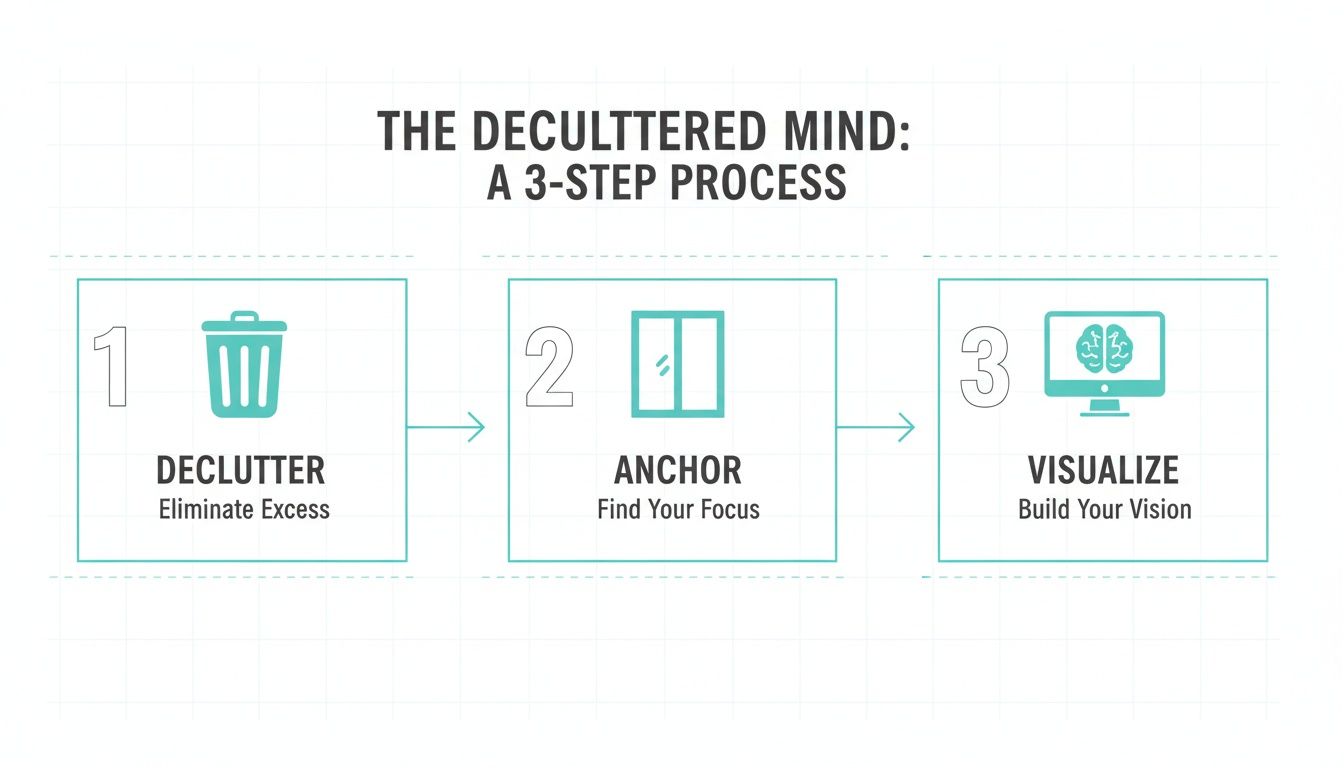
As you can see, after clearing the clutter and anchoring the space with key pieces, visualizing the final look is a crucial step before you start buying.
Minimalist Material Cheat Sheet
Here's a quick guide to selecting materials that add warmth and character to a minimalist space without creating clutter.
| Material | Best For | Pro Tip |
|---|---|---|
| Light Wood (Oak, Ash, Maple) | Furniture, flooring, and decorative accents. It brings natural warmth. | Look for a matte or oiled finish instead of high-gloss to keep the look soft and organic. |
| Linen | Curtains, bedding, and tablecloths. Its texture adds a relaxed, airy feel. | Don't worry about wrinkles! The natural creases in linen are part of its charm and add to the relaxed vibe. |
| Wool & Bouclé | Throws, pillows, and rugs. These materials add instant coziness. | A single bouclé armchair can become a statement piece that adds tons of texture without any visual noise. |
| Ceramics & Stone | Vases, kitchen countertops, and backsplashes. Adds an earthy, handmade element. | Choose pieces with a matte finish or visible texture to avoid a look that feels too sterile or polished. |
| Leather | A feature armchair or sofa. It adds a timeless element that ages beautifully. | A tan or cognac leather adds warmth, while black or gray can provide a grounding, modern anchor. |
Choosing the right combination of these will make your minimalist space feel layered, intentional, and uniquely yours.
Test Your Palette with Zero Risk
Choosing between light gray and warm beige for your walls can feel like a massive commitment. And swapping a marble side table for a wooden one involves both budget and effort. This is where you can save yourself a ton of time, money, and stress.
Using a tool like Interior Redesign AI lets you experiment risk-free. Just upload a photo of your room and instantly see how different color palettes and material combinations will look in your actual space. You can test dozens of ideas in minutes, helping you find that perfect balance of color and texture that feels just right. For homeowners on a budget or designers needing to show a client a vision quickly, it’s a total game-changer.
Selecting Furniture That Works Harder
In a minimalist room, every piece of furniture has to earn its keep. It’s not just about looking good; it's about serving a real purpose. The trick is to find items with clean lines and simple forms that are as functional as they are beautiful, which is key to keeping your space feeling open and serene.
This mindset is an absolute necessity in spaces where every square foot counts—think city apartments, rental properties, and cozy family homes. It forces you to steer clear of bulky, one-trick-pony items that just devour floor space and make a room feel cramped.
The Power of Multi-Functional Pieces
Multi-functional furniture will quickly become your best friend. These are the workhorses of minimalist design—smart pieces that pull double or even triple duty, letting you maintain a clean aesthetic without sacrificing practicality.
Here are a few of my favorite versatile heroes:
- A storage ottoman: It’s a footrest, a coffee table, extra seating for guests, and a secret spot to stash blankets, remotes, or toys.
- A platform bed with built-in drawers: This simple switch can completely eliminate the need for a bulky dresser, freeing up an entire wall in a smaller bedroom.
- A sleek console table: In an entryway, it’s the perfect landing strip for keys and mail. Pull up a stool, and it instantly becomes a compact workspace.
For anyone managing an Airbnb, this approach is a game-changer. A high-quality sofa bed can turn a studio into a space that comfortably sleeps more guests, boosting its appeal and booking potential.
Making Smart Storage Invisible
The secret behind any successful minimalist room? Storage that doesn't look like storage. The goal is to make your storage solutions blend in so seamlessly that they practically disappear. When everything has a designated home, the entire room feels calmer and much more spacious.
Look for solutions that feel like part of the room’s architecture. For example, integrated cabinetry painted the same color as the walls provides tons of storage without adding visual clutter. Floating shelves are another fantastic option; they get items off the floor, which creates an illusion of more space and makes cleaning a breeze.
If you're a renter who can't make permanent changes, don't worry. You can get a similar effect with freestanding modular shelving or slim, vertical bookcases. For more inspiration, we put together a guide filled with clever minimalist furniture ideas.
Visualize the Perfect Fit Before You Buy
One of the most common and costly mistakes is choosing furniture that's the wrong scale. A sofa might look incredible in a cavernous showroom, but in a small living room, it can throw the entire space off balance. Knowing how to choose a sofa that fits your design and lifestyle is a crucial skill.
This is where you can take all the guesswork out of the equation.
With AI visualization, you can essentially "try before you buy." It lets you test drive different furniture styles and sizes in your actual room, so you know for sure that every piece will contribute to a harmonious, well-proportioned design.
A tool like Interior Redesign AI is perfect for this. Just upload a photo of your room, digitally erase your old, bulky couch, and then ask the AI to generate new, sleek sofa options right in its place.
This simple process lets you:
- Compare different styles instantly: See how a low-profile sectional feels compared to a classic three-seater.
- Test for scale: Make sure the piece actually fits without making the room feel tight.
- Experiment with materials: Visualize whether a light fabric or a dark leather works better with your color palette.
By seeing exactly how new furniture will look before you spend a dime, you can make confident buying decisions. It saves you time, prevents buyer's remorse, and gets you one step closer to the minimalist space you've been dreaming of.
Adding Personality with Lighting and Decor
The final layers—lighting and decor—are what turn a minimalist concept into a real home. This is where you infuse the space with warmth and personality, making sure it feels like your space, not a sterile showroom. It’s all about making a few deliberate, high-impact choices that build on the serene foundation you’ve already created.
I can't stress this enough: proper lighting is arguably the most critical element here. It sets the mood, highlights your favorite features, and makes the space feel alive. Without it, even the most beautifully designed room can fall flat.
Mastering Layered Lighting
Great minimalist design treats lighting as an architectural feature. The first priority? Maximize natural light. This is the ultimate budget-friendly trick for making any room, whether you own or rent, feel bigger and more open.
If privacy isn't a huge issue, try leaving windows completely bare. If you need coverage, go for sheer, lightweight curtains that let sunlight filter through gently. It’s a simple choice that maintains that airy vibe while adding a touch of softness.
When it comes to artificial light, think in three distinct layers:
- Ambient Light: Your room’s main source of light. Think of a simple ceiling fixture or recessed lighting that blends in.
- Task Light: Focused lights for specific activities. A sleek floor lamp beside a reading chair or under-cabinet lighting in the kitchen are perfect examples. They add function without clutter.
- Accent Light: This is the fun part. Use an accent light, like a spotlight, to draw the eye to a piece of art, a plant, or a cool architectural detail. This is how you create depth and drama.
Getting this mix right is a game-changer. An Airbnb host can use layering to create a warm, welcoming vibe that pops in listing photos. A real-estate agent can use it to make a home's best features the star of the show.
Choosing Decor with Intention
When it comes to accessorizing, the mantra is quality over quantity. This is your chance to display items that mean something to you. Your decor should tell a personal story, not just be a random collection of stuff.
Instead of filling shelves with little trinkets that look cluttered, be selective. A single, large-scale painting often makes a stronger, more sophisticated statement than a busy gallery wall. A beautifully crafted ceramic vase, even empty, can act as a sculptural element on its own.
Think of your decor as the punctuation in your room's story. Each piece should have a reason for being there, whether for its form, its function, or the memory it holds.
This intentional approach also saves you money and decision fatigue. You're not trying to fill every empty surface; you're hunting for those few perfect pieces that complete the room.
Bringing Life into Your Minimalist Room
One of the easiest ways to add personality and a splash of natural color is with plants. A thriving fiddle-leaf fig in a corner or a few succulents on a windowsill can instantly breathe life into a neutral space. They bring in an organic, sculptural quality that complements the clean lines of minimalist furniture.
Textiles also play a huge role. A single, high-quality throw blanket draped over the sofa or a plush rug under the coffee table introduces texture and a sense of coziness. Stick to natural materials like wool, linen, or cotton to maintain that grounded, authentic feel.
For a homeowner, these are the elements that make a house feel like a comfortable home. For a real-estate agent staging a property, these small touches make a space feel appealing and memorable.
Take a Virtual Tour Before You Commit
It can be tough to visualize how these final details will come together. How will the light from that new lamp hit the wall? Does that huge piece of art overwhelm the sofa?
The walkthrough video feature in a tool like Interior Redesign AI is perfect for this final gut check. After you've placed your lighting and decor in the virtual version of your room, you can take a digital tour. This lets you experience the space from different angles and get a true feel for the overall mood.
This final step helps you catch potential issues before you’ve spent a dime or drilled a single hole, giving you the confidence that your finishing touches will create exactly the calm, personal atmosphere you're aiming for.
Common Minimalist Mistakes (and How to Avoid Them)
Diving into minimalist design is exciting, but it’s surprisingly easy to get it wrong. A few common pitfalls can turn your dream sanctuary into a space that feels cold, empty, or just… off. The great news is these mistakes are easy to sidestep once you know what to watch for.
One of the biggest blunders is creating a room that feels more like a hospital than a home. This happens when a design leans too heavily on stark whites and hard surfaces, missing the crucial ingredients of warmth and texture. Minimalism should feel serene, never sterile.
Another common issue is picking furniture just because it looks sleek, forgetting that you actually have to live there. A super-modern sofa might be a work of art, but if it's uncomfortable, it undermines the goal of creating a relaxing haven.
Mistake 1: The Cold and Clinical Vibe
This is the classic minimalist trap. When you strip everything back, a neutral palette without enough textural variety can fall flat, feeling bland and unwelcoming.
- The Fix: Layer in natural materials that add warmth and depth. Think a chunky wool throw on the sofa, a woven jute rug under the coffee table, or soft linen curtains that diffuse the light. These elements bring sensory richness without adding visual clutter.
Mistake 2: Uncomfortable but "Stylish" Furniture
Putting form before function is the fastest way to create a room you'll never actually use. Minimalist furniture should be both stunningly simple and genuinely comfortable for everyday life.
- The Fix: Whenever possible, test furniture before you commit. Sit on the chairs, lounge on the sofa. Look for pieces that blend clean lines with ergonomic support. You're aiming for furniture that supports a relaxed, functional lifestyle.
Mistake 3: Fake Minimalism
This is the sneaky mistake of just hiding your clutter instead of actually getting rid of it. Stuffing closets to the brim and shoving boxes under the bed gives the illusion of a clean slate, but it completely misses the point of intentional living.
- The Fix: Commit to a real decluttering process. Take a hard, honest look at what you truly need, use, and love. An organized, uncluttered space is also a cornerstone of effective home staging, as it lets potential buyers see a room’s true potential. For more on this, check out our guide on the essentials of staging home interiors.
At its heart, minimalism is deeply personal. What feels calming for one person might feel empty to another. The most successful designs always reflect the owner’s unique personality and lifestyle.
AI tools are brilliant for getting your creative juices flowing and showing you what’s possible. They can show you a clear path forward when you're feeling stuck. But remember that AI is your collaborator, not the boss. Be sure to filter its suggestions through your own personal taste and practical needs. For big projects, using AI to brainstorm ideas and then bringing them to a professional designer can yield incredible results.
Ready to sidestep these mistakes and bring your minimalist vision to life? With Interior Redesigne AI, you can instantly reimagine your room from just a photo or sketch. Visualize different styles, test layouts, and find the perfect design before you make any changes. Try it now and start creating your calm, personal space in seconds.