
Your living room is the heart of your home—it's where you relax, entertain, and make memories. But getting the layout right can feel like solving a complex puzzle. An ineffective arrangement can make a space feel cramped and chaotic, no matter how stylish your furniture is.
Whether you're a homeowner trying to make a small apartment feel spacious, an Airbnb host looking to boost your listing's appeal, or a real estate agent staging a property for a quick sale, the right furniture arrangement is a game-changer. A great layout improves traffic flow, maximizes function, and makes even tricky spaces feel intentional and inviting. Understanding how to plan a room layout effectively is the first step to unlocking your room's true potential.
In this guide, we'll break down proven living room layout ideas, with practical tips for every budget and room size. We'll also show you how AI can help you skip the guesswork and instantly visualize these concepts in your own home. This lets you find the perfect fit without moving a single piece of heavy furniture, saving you time, money, and stress.
1. The Conversation Pit Layout
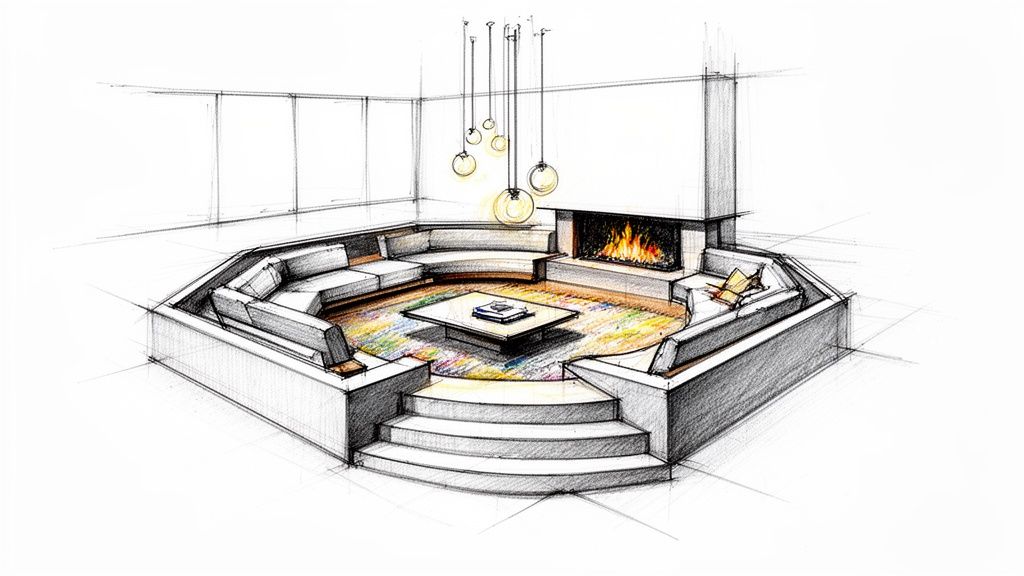
The conversation pit is a classic layout designed to foster intimacy and connection. It features a sunken or lowered seating area where all furniture is oriented inward, usually around a central coffee table or fireplace. This self-contained zone naturally encourages face-to-face interaction, making it perfect for homeowners who love to entertain.
Popularized in the mid-century, this design is making a major comeback. The sunken effect creates architectural interest and cleverly separates the lounge area from the rest of an open-plan space without using walls, maintaining an open, airy feel.
Why It Matters
This layout creates a dedicated social hub. The lowered floor establishes a cozy, cocoon-like atmosphere that feels separate from daily foot traffic, making conversations feel more private and focused. It’s an excellent choice for a family room or a formal living area dedicated to hosting guests.
How to Do It (Even in a Rental)
While a true sunken pit requires construction, you can achieve a similar effect without major renovation.
- Define the Zone: Use a large, plush area rug to anchor the seating and visually separate it.
- Use Low-Profile Furniture: Sofas and chairs with low backs maintain clear sightlines and enhance the enclosed feel. Modular sectionals work great here.
- Layer Your Lighting: Combine a central statement fixture with floor and table lamps for an inviting ambiance.
- Visualize Before You Buy: This layout is a big commitment. Use an AI Interior Designer to test different furniture configurations and see how they work in your room's dimensions. You can explore how AI-generated layouts might look with our free AI room design tool.
2. The Open-Plan Living Layout
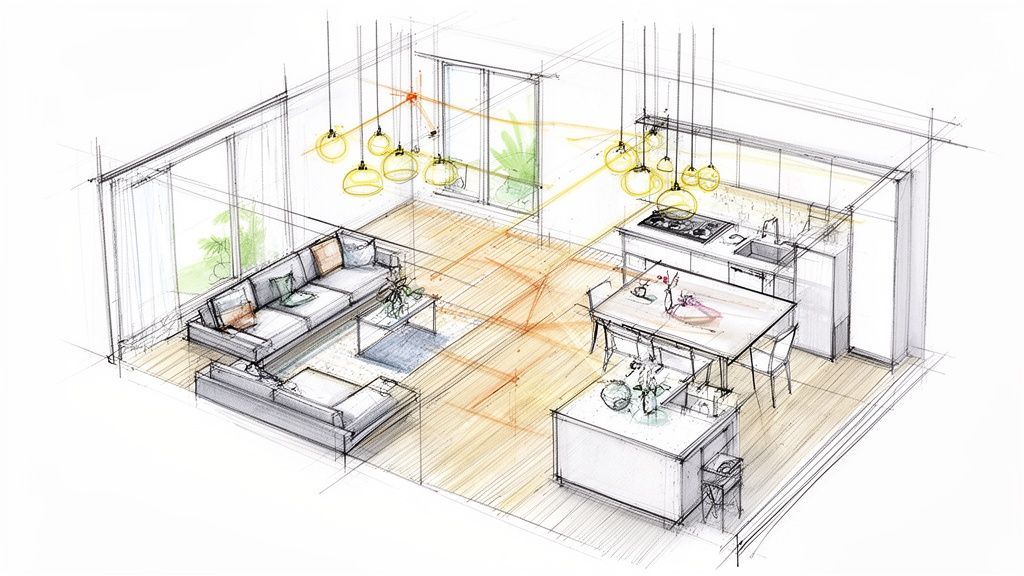
The open-plan layout is a cornerstone of modern design, removing walls between the living room, dining area, and kitchen to create one large, multifunctional space. This approach enhances the sense of spaciousness, maximizes natural light, and promotes a more connected lifestyle. It's especially popular in contemporary and minimalist homes where an uncluttered feel is key.
This layout is perfect for families who want to interact while cooking, dining, and relaxing. It also offers incredible flexibility for entertaining large groups or enjoying quiet, everyday moments, making it a huge selling point for real estate agents and a favorite for Airbnb guests.
Why It Matters
This layout makes even smaller homes feel larger and brighter. By removing visual barriers, sightlines extend, and light from windows can penetrate deeper into the home. It’s an ideal solution for creating an airy, welcoming hub that accommodates various activities at once.
How to Do It
Designing a great open-plan space is all about creating distinct "zones" without walls.
- Define Zones with Rugs: Use area rugs to anchor each functional space, such as the seating area or dining set. This creates visual separation while keeping a cohesive flow.
- Create a Cohesive Look: A unified color scheme and consistent materials are essential. Start with an interior design mood board to ensure your furniture, paint, and decor work together harmoniously.
- Use Furniture as Dividers: Arrange a sofa with its back to the dining area or place a console table behind it to create a subtle boundary. A kitchen island is also a classic and functional divider.
- Layered Lighting: Install distinct lighting for each zone—a chandelier over the dining table, pendants over the kitchen island, and a mix of ambient and task lighting in the living area.
3. The Focal Point-Centered Layout
This timeless layout provides instant order by strategically arranging furniture around a single, dominant feature. This "focal point" could be a fireplace, a large window with a scenic view, a television, or even a bold piece of art. By giving the eye a primary place to rest, this layout creates a sense of harmony and intentionality.
This classic technique is incredibly versatile, found in traditional homes with grand fireplaces and modern apartments where floor-to-ceiling windows command attention. For Airbnb hosts and real estate agents, it’s a powerful tool for creating an immediate impression of thoughtful design.
Why It Matters
This layout provides a natural anchor for the room, simplifying furniture placement. It’s perfect for spaces with a strong architectural feature you want to highlight. It also works well for media-focused rooms, ensuring everyone has a comfortable view.
How to Do It
Creating a powerful focal point-centered layout is about balance and smart placement.
- Identify Your Star: Choose the most compelling feature in your room. If you don't have a natural one, create one with a large art piece or a statement media unit.
- Arrange for Conversation: Avoid placing all furniture directly facing the focal point like in a theater. Instead, create a conversational grouping (like an L-shape or U-shape) that is oriented toward it. This is a key principle in home staging, which you can learn more about in our guide on how to stage a home for selling.
- Balance with Secondary Elements: Add smaller points of interest, like a stylish floor lamp or a gallery wall on an adjacent wall, to prevent the room from feeling one-dimensional.
- Test Your Layout Virtually: Before moving heavy furniture, use an AI Interior Designer. Upload a photo of your room and test different arrangements to see which focal point maximizes both function and style. You'll avoid the backache and get it right the first time.
4. The Multipurpose Zone Layout
The multipurpose zone layout is a smart solution for modern living, designed for spaces that must serve multiple functions. This arrangement uses furniture, rugs, and lighting to create distinct "zones" for living, working, and dining within a single room. It's one of the most practical living room layout ideas for studio apartments, open-plan homes with remote work needs, and smaller homes where every square foot counts.
Driven by the rise of flexible work and compact city living, this layout transforms one area into a versatile hub. By clearly defining functions without physical walls, you can maintain an open, spacious feel while ensuring each activity has its own dedicated spot.
Why It Matters
This layout maximizes functionality in limited spaces. By creating visual separation, it helps reduce clutter and brings order to a room that could otherwise feel chaotic. It allows a living room to seamlessly accommodate different needs, making it ideal for anyone living in a studio, small apartment, or a home that needs an integrated workspace.
How to Do It
Creating effective zones doesn't require construction; it's about smart, strategic design.
- Define Zones with Rugs: Place a different area rug in each zone (e.g., one under the sofa and coffee table, another under the desk) to create clear visual boundaries.
- Use Furniture as Dividers: Position a sofa with its back to the desk area or use an open-backed bookshelf to create a semi-permeable screen that separates spaces without blocking light.
- Implement Zoned Lighting: Use distinct lighting for each area. A pendant light over the dining table, a floor lamp in the reading corner, and task lighting at the desk will signal each zone's function.
- Choose Multifunctional Pieces: Select furniture that serves double duty, like an ottoman with hidden storage, a console table that can work as a desk, or a sleeper sofa.
5. Balanced Layouts: Symmetrical & Asymmetrical
Achieving visual balance is a fundamental design principle that makes a space feel calm and intentional. This concept splits into two main approaches: symmetrical balance, which creates a formal, mirror-image arrangement, and asymmetrical balance, which uses varied objects of equal visual weight for a more dynamic, modern feel.
Symmetrical layouts often center on a feature like a fireplace, with identical furniture on either side (e.g., two matching sofas facing each other). Asymmetrical layouts are more casual, balancing a large sofa on one side with two smaller chairs and a floor lamp on the other.
Why It Matters
Balance creates a sense of harmony and order. Symmetrical layouts are perfect for traditional or formal spaces, as they convey stability and calm. Asymmetrical layouts offer more flexibility and visual interest, making them ideal for modern, eclectic, and casual living rooms where personality is key.
How to Do It
Whether you prefer order or creative flair, these principles are easy to apply.
- For Symmetry: Start with a central anchor point. Place your largest piece, like a sofa, directly opposite it. Arrange matching items like armchairs and lamps in a mirror image on both sides.
- For Asymmetry: Balance a large item with several smaller ones. For example, a bulky sectional on one side can be offset by two lightweight armchairs and a tall plant on the other. Use color and texture to distribute visual weight.
- Mix and Match: A room can be broadly symmetrical but feature asymmetrical details, like varied throw pillows or art, to add interest. You can learn more about how balance is used in different interior design styles.
6. The Floating Furniture Layout
The "floating" layout is a modern approach that breaks from the tradition of pushing furniture against the walls. Instead, sofas, chairs, and tables are pulled into the center of the room, creating a dynamic and airy feel. This technique is especially effective in large or open-plan homes, as it helps define distinct zones without physical barriers.
By floating the furniture, you establish clear pathways and improve traffic flow, making the space feel more intentional. This concept turns your seating arrangement into a central feature rather than a perimeter afterthought. It’s a great way to add a sense of luxury and spaciousness.
Why It Matters
This layout creates a cozy, conversational island within a bigger area, preventing the room from feeling like a vast, empty hall. It also allows for multiple focal points and makes every angle of your furniture visible, showcasing its design. For Airbnb hosts, this can make a listing feel more high-end and thoughtfully designed.
How to Do It
Successfully executing a floating layout requires careful planning to look intentional, not random.
- Anchor with a Rug: Use a large area rug to define the seating zone. Ensure at least the front legs of all major furniture pieces are on the rug.
- Maintain Clear Pathways: Leave at least three feet of clearance around the furniture cluster for comfortable movement.
- Add Function Behind the Sofa: Place a slim console table behind a floating sofa for lamps, decor, or storage. This also helps ground the piece.
- Visualize the Flow: Use an AI Interior Designer to map out the placement before you move anything. You can experiment with different configurations and ensure you have enough space for comfortable pathways on our free AI room design tool.
7. The Activity-Zone Layout
The activity-zone layout is a practical approach that divides a living room into distinct areas based on function. Instead of a single purpose, the room is organized around activities like media viewing, reading, working, or playing games. This method creates a multi-functional space where different family members can do their own thing simultaneously without getting in each other’s way.
This is one of the best living room layout ideas for modern families. It moves beyond traditional arrangements to create a room that truly supports a household's daily life. It’s perfect for open-plan homes where the living area must serve as a family hub, an entertainment center, and sometimes even a home office.
Why It Matters
This layout is a lifesaver in busy, multi-generational households by preventing conflicts over space. It allows one person to watch a movie while another reads quietly in a cozy nook. This functional separation ensures the room remains organized, versatile, and accommodating to everyone's needs.
How to Do It
Creating effective zones requires strategic planning to ensure the space feels cohesive, not chaotic.
- Map Your Activities: List your family’s most common living room activities. Common zones include a media center, a reading corner, a conversation area, and a play space.
- Define Zones with Rugs: Use area rugs to visually anchor each zone. A large rug can define the main seating area, while a smaller, round rug can designate a reading nook.
- Use Furniture as Dividers: The back of a sofa can separate the TV area from a walkway, or an open-backed bookshelf can divide a work corner from the main lounge.
- Tailor Lighting and Storage: Each zone needs its own task-appropriate lighting and storage.
- Test Flow with AI: Before moving everything, use an AI Interior Designer to experiment with different zone arrangements. You can test how a reading nook feels by the window versus near the fireplace to find the most natural flow.
8. The L-Shaped Sectional Layout
The L-shaped sectional layout maximizes both seating and comfort. This arrangement uses a large sectional sofa as the room's anchor, with its shape creating a natural corner that defines the seating area. It’s an incredibly versatile layout that promotes conversation and coziness, making it ideal for family movie nights, casual get-togethers, and everyday lounging.
This layout has become a go-to for its ability to offer ample seating without cluttering the room with multiple smaller pieces. The sectional’s shape inherently creates a structured, yet inviting, zone within an open-plan space.
Why It Matters
This layout is a powerhouse for functionality. The L-shape directs traffic around the seating area rather than through it, maintaining an intimate conversational zone. It’s perfect for media rooms where the goal is to orient everyone toward a single focal point, like a television or fireplace. For those exploring options, you can find a wide variety of sectional sofas to fit nearly any room size or style.
How to Do It
Properly integrating a large sectional requires careful planning to avoid overwhelming the space.
- Measure Everything: Before buying, measure your living room and all doorways, hallways, and stairwells to ensure the sectional can be delivered.
- Anchor with a Rug: Place a large area rug under the front legs of the sectional to define the seating zone and add warmth.
- Balance the Visual Weight: An L-shaped sectional is a substantial piece. Balance it with a lightweight accent chair opposite it or a sleek console table behind one side.
- Visualize the Configuration: The orientation of the chaise is critical. Use an AI Interior Designer to upload a photo of your room and test whether a left-facing or right-facing chaise works better for your traffic flow and focal points. It helps you commit to the right configuration with confidence.
9. The Window-Centric Layout
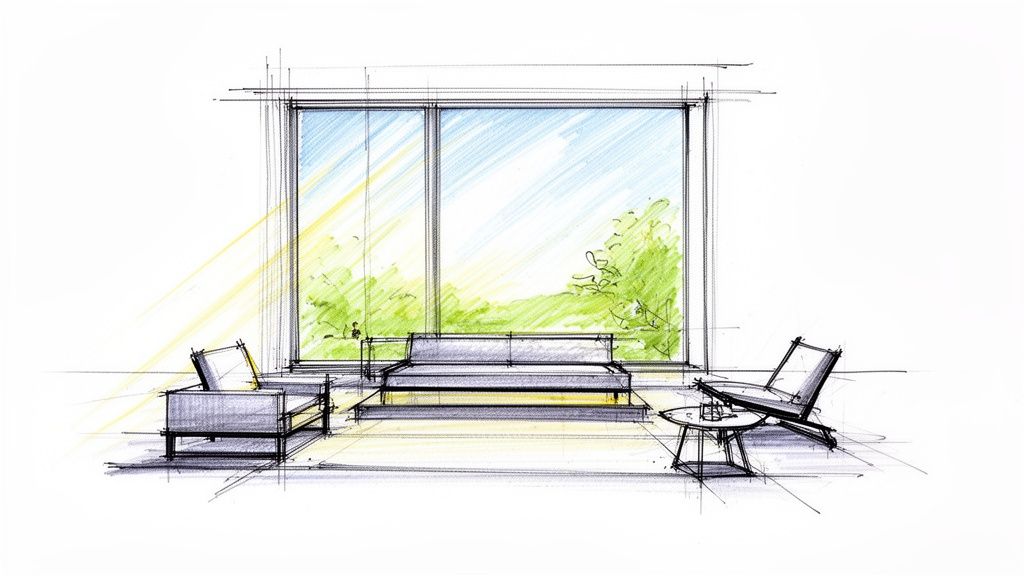
The window-centric layout prioritizes natural light and outdoor views. This approach positions the window as the room's primary focal point, with all furniture arranged to maximize sightlines and sunlight. Instead of orienting seating toward a TV, this layout celebrates the connection between indoors and outdoors, creating a bright, airy, and calming atmosphere.
Popularized by Scandinavian and biophilic design (design that connects us to nature), this layout is perfect for rooms with beautiful scenery. It enhances the sense of space and promotes wellness by flooding the living area with natural light. This is a huge bonus for real estate listings and Airbnb photos.
Why It Matters
This layout harnesses the psychological benefits of natural light and views, which can make a space feel larger, more open, and more peaceful. It’s an ideal choice for daytime living areas, reading nooks, or any room where a serene mood is desired. By making the window the star, you create a dynamic focal point that changes with the time of day and season.
How to Do It
Making your window the main feature is simpler than it sounds.
- Orient Your Seating: Arrange your main sofa and chairs to face or flank the window. Avoid placing large furniture directly in front of it, which can block light and views.
- Use Lightweight Window Treatments: Opt for sheer curtains or light-filtering blinds to maximize sunlight.
- Add Reflective Surfaces: Strategically place mirrors or metallic accents opposite the window to bounce light around the room.
- Visualize the Light: Test your layout ideas to see how natural light interacts with the space throughout the day. You can preview how different furniture placements look with your specific window orientation by using our free AI room design tool.
10. The Statement Furniture Layout
This bold layout organizes the entire room around a single, showstopping piece of furniture. It celebrates individuality by letting a distinctive sofa, an artistic armchair, or a unique coffee table dictate the room's flow and aesthetic. Instead of blending in, the furniture becomes the art.
This design philosophy prioritizes personality, making it one of the most impactful living room layout ideas for those who want a space that feels truly their own. The key is to build the room's function and style around this central element, allowing it to shine without competition.
Why It Matters
This layout instantly injects personality and a high-design feel into a space. It creates a natural focal point, simplifying decorating decisions by providing a clear anchor. It’s perfect for homeowners who have found a piece of furniture they love and want it to be the hero of their living room.
How to Do It
Making a statement piece work requires balance and intentional arrangement.
- Choose One Hero: Select one, or at most two, pieces to be the star. Anything more will create visual chaos.
- Build a Supporting Cast: Arrange complementary furniture that supports, but doesn't compete with, your statement piece. Use neutral colors and simpler forms for surrounding items.
- Create Balance with Color: Use colors from your statement piece to build a cohesive palette. For instance, if you have a bold emerald green sofa, pull in softer greens and complementary pinks elsewhere. For more ideas, explore this guide to a pink and green living room.
- Preview with AI: A statement piece is a big commitment. Use an AI Interior Designer to upload a photo of your room and virtually place the furniture to see how its scale, color, and style impact the overall layout before you buy. It’s a great way to avoid expensive mistakes.
10 Living Room Layouts Compared
| Layout | Implementation complexity | Resources required | Expected outcomes | Ideal use cases | Key advantages |
|---|---|---|---|---|---|
| The Conversation Pit Layout | High — may need sunken floor or custom seating | Moderate–High — construction, low-profile furniture, layered lighting | Intimate, conversation-focused zone with a strong design statement | Small–medium apartments, social entertaining rooms, boutique lounges | Maximizes interaction, efficient footprint, visually distinctive |
| The Open-Plan Living Layout | Moderate — may require structural changes for full openness | Moderate — cohesive finishes, ventilation, sound control | Spacious, light-filled flexible area with improved flow | Modern apartments, family homes, entertaining-focused spaces | Enhanced natural light and traffic flow; multifunctional |
| The Focal Point-Centered Layout | Low — simple furniture orientation around a feature | Low — standard furniture and accenting of focal element | Clear visual hierarchy and organized, intentional room | Traditional homes, rooms with fireplaces or strong architectural features | Easy to implement, versatile, highlights architecture |
| The Multipurpose Zone Layout | Moderate — careful zoning and circulation planning | Low–Moderate — modular furniture, storage, varied lighting | Flexible multi-use room optimized for changing needs | Studios, remote-work homes, rentals, micro-apartments | Highly adaptable, maximizes utility without structural work |
| Balanced Layouts: Symmetrical & Asymmetrical | Symmetrical: Low–Moderate; Asymmetrical: Moderate–High | Variable — matching sets for symmetry; curated pieces for asymmetry | Visual equilibrium: formal order (symmetry) or dynamic curated look (asymmetry) | Formal living rooms, curated designer spaces, galleries | Achieves balance across aesthetics; flexible design language |
| The Floating Furniture Layout | Moderate — requires precise space planning | Moderate — area rugs, console/side tables, quality finishes | Zoned, sophisticated spaces with improved circulation | Open-plan homes, lofts, larger rooms, contemporary apartments | Improves flow, frees wall space, creates intimate central zones |
| The Activity-Zone Layout | Moderate–High — detailed zone optimization and acoustics | Moderate — varied seating, task lighting, storage solutions | Function-optimized zones for simultaneous activities | Family homes, multi-generational houses, entertainment-focused rooms | Supports multiple activities, enhances functionality and satisfaction |
| The L-Shaped Sectional Layout | Low–Moderate — select and site a dominant sectional | Moderate — large sectional, complementary seating, rugs | High seating capacity and comfortable, anchored gathering area | Apartments, family/media rooms, open-plan living areas | Maximizes seating, anchors room visually, very comfortable |
| The Window-Centric Layout | Low — orient furniture to prioritize views and light | Low–Moderate — quality window treatments, possible glazing upgrades | Bright, view-focused space with wellness and daylight benefits | Waterfront homes, well-lit apartments, properties with strong views | Maximizes natural light, connects to outdoors, improves mood |
| The Statement Furniture Layout | Moderate — requires strong curation and proportioning | Moderate–High — investment in distinctive pieces and styling | Memorable, highly personalized interior centered on showstopping items | Design-forward homes, artist studios, high-end rentals | Strong visual impact, showcases personality, creates standout interiors |
Ready to Find Your Perfect Layout? Visualize It Instantly
Navigating the world of living room layout ideas can feel overwhelming. But as we've explored, the right arrangement is about crafting an environment that supports your needs, reflects your personality, and makes your home a joy to be in. The goal is to create a living room that is not just stylish but deeply functional.
The most important takeaway is that your layout should be a direct reflection of your lifestyle. Don't choose an L-shaped sectional just because it's popular; choose it because it perfectly suits your family movie nights. The best living room layout is the one that feels intuitively right for you.
How to Turn Inspiration into Reality
Here are your next steps:
- Define Your Primary Function: Before moving a single thing, clarify your top priority. Is it entertaining guests, creating a cozy family retreat, or establishing a productive work-from-home area?
- Measure Everything: Get precise measurements of your room and your key furniture pieces. This foundational step prevents costly mistakes and ensures your chosen layout fits realistically.
- Embrace Visualization with AI: The biggest hurdle is often the inability to see how a layout will look and feel. AI Interior Designer tools let you test-drive your ideas digitally, saving you time, money, and the stress of indecision. While AI is a powerful starting point, always combine its suggestions with your own personal taste. It’s a tool to empower your creativity, not replace it.
Ready to stop imagining and start seeing? Upload a photo of your current living room to Interior Redesigne AI and experiment with any of these layout ideas in seconds. Visualize different furniture placements and styles instantly, ensuring your final choice is the perfect one for your home. Try Interior Flux Studio AI now and bring your vision to life.