Learning how to stage your home for selling is a powerful strategy that makes a huge difference. The secret sauce? Declutter, depersonalize, and deep clean. Your goal is to create a neutral, welcoming space that lets potential buyers actually picture their own lives unfolding there. It’s a mental shift—you’re turning your much-loved house from your home into a desirable product that appeals to the broadest audience possible. Getting this right often leads to a faster sale and a better price.
Why Home Staging Is Your Secret Weapon in a Competitive Market
If you're selling your house or trying to make your Airbnb listing pop, staging can feel like one more thing on an already long to-do list. But trust me, it’s one of the best moves you can make. This isn't just decorating; it's about forging an emotional connection with anyone who walks through the door or clicks through your online gallery.
When buyers enter a thoughtfully staged space, they don't just see floors and walls—they see a future. They can imagine hosting a dinner party, unwinding in the living room, or waking up in that peaceful bedroom. It’s that emotional tug that turns a casual browser into a serious buyer. For real estate agents and homeowners, this translates directly into faster sales and better offers.
This same logic is gold for short-term rentals. A beautifully staged property doesn’t just photograph better; it feels more premium and can justify a higher nightly rate, boosting your listing's appeal. We dive deeper into this in our guide on how to increase Airbnb bookings.
The Power of a Great First Impression
Let’s be honest: the first "showing" happens online while a buyer is scrolling through listings on their phone. Your photos are your one chance to make them stop and take a closer look.
The National Association of Realtors® consistently points out how staging directly shapes a buyer's perception of a home, making it an essential part of a successful sale.
The data speaks for itself. A whopping 81% of buyers' agents confirmed that staging helps buyers see the property as their future home. That is a massive advantage. A cluttered or highly personalized space puts up a mental roadblock, whereas a clean, well-staged home is an open invitation. This helps reduce decision stress for buyers and builds confidence in the property.
From Visualization to Reality with AI
Figuring out the perfect staging plan used to be a mix of guesswork and moving heavy furniture. Not anymore. Now, you can map out your strategy before you lift a finger. Using an AI Interior Designer, you can upload a photo of any room and generate realistic staging concepts almost instantly, saving you time and money.
Why this matters: Unsure whether to go for a minimalist Scandinavian vibe or a cozier Japandi style in the living room? An AI tool can show you both versions in seconds. This helps you make confident, budget-friendly decisions and visualize ideas before buying a single piece of furniture. It’s perfect for real estate agents presenting options to clients or homeowners working with space constraints.
This technology takes the risk out of buying decor that doesn't work and helps you pull together a polished look that buyers will love. The proof is in the numbers. Industry data from sources like the Home Staging Institute shows that staged homes can sell up to 73% faster and get far more online views. Staging is a smart investment that almost always pays for itself.
Laying the Groundwork: Declutter, Depersonalize, and Deep Clean
Before you start picking out throw pillows, the most important work begins. The real secret to successful staging is creating a pristine blank canvas. This is all about three critical actions: decluttering, depersonalizing, and deep cleaning.
Getting this part right is the single most effective, budget-friendly thing you can do. It transforms your house from a lived-in home to a move-in-ready product that feels fresh, spacious, and full of potential. This is a crucial step for any space, from a small apartment to a large family home.
Conquering the Clutter
Clutter is the enemy of a good first impression. It makes rooms feel cramped, hides your home's best features, and screams "not enough storage" to potential buyers.
A practical way to tackle it is the four-box method. Grab four containers and label them:
- Keep: Things you genuinely use every day.
- Store: Items you'll need after the move but not right now (seasonal clothes, extra books).
- Donate/Sell: Anything in good shape that you just don't need anymore.
- Trash/Recycle: The broken, expired, or unusable stuff.
Go room by room. Be ruthless, especially with countertops, bookshelves, and closets. Your goal is to get at least 30-50% of your belongings out of sight. You can find more comprehensive strategies to Solve Clutter Issues Once And For All.
Why this matters: An overstuffed closet is a huge red flag for buyers. If you can empty one out to show off its size, even better. This shows the home has ample storage, a key selling point for families and anyone living in smaller spaces. If you're looking for clever ways to use that newly empty space, you might even consider a project like learning how to convert a closet into a bookcase.
It's Not Personal, It's Business
Next up is depersonalizing. This can feel a little weird—packing away family photos and your kids’ crayon masterpieces—but it’s absolutely essential. You want buyers noticing the great natural light, not trying to figure out where you went on your last vacation.
Pack away personal collections, diplomas, and refrigerator art. The goal isn’t to erase all signs of life, but to neutralize the space so buyers can imagine their life there.
How AI can help: Feeling stuck after clearing the clutter? This is a great time to experiment. Snap a photo of your newly neutralized room, upload it to Interior Redesigne AI, and instantly test out different styles—like "Modern Farmhouse" or "Coastal"—to see what makes the space shine. It’s a fast, stress-free way to find a look that will appeal to a wide range of buyers.
The Deep Clean That Seals the Deal
A true pre-sale deep clean goes way beyond your typical tidy-up. It signals to buyers that the home has been meticulously cared for, which builds trust and justifies your asking price. This isn't just about mopping floors; it's about the details.
Your Pre-Staging Action Plan
This checklist breaks down the essential prep work into manageable steps.
| Task | Goal | Pro Tip |
|---|---|---|
| Declutter Every Room | Remove 30-50% of personal items. | Use the "four-box method" (Keep, Store, Donate, Trash). Be ruthless! |
| Depersonalize Surfaces | Remove family photos, collections, and niche decor. | Replace personal photos with neutral art or simple decorative objects. |
| Deep Clean Kitchen | Make appliances, cabinets, and countertops sparkle. | Don't forget to clean inside the oven, microwave, and refrigerator. |
| Scrub Bathrooms | Eliminate all grime, mold, and hard water stains. | Re-caulk around the tub and sink if the existing caulk looks old or discolored. |
| Wash Windows & Fixtures | Maximize natural light and brightness. | Clean windows inside and out. Dust all light fixtures and replace dim bulbs with bright LEDs. |
| Clean Floors & Walls | Remove scuffs, stains, and lingering odors. | Consider a professional carpet cleaning. Magic erasers work wonders on scuffed walls. |
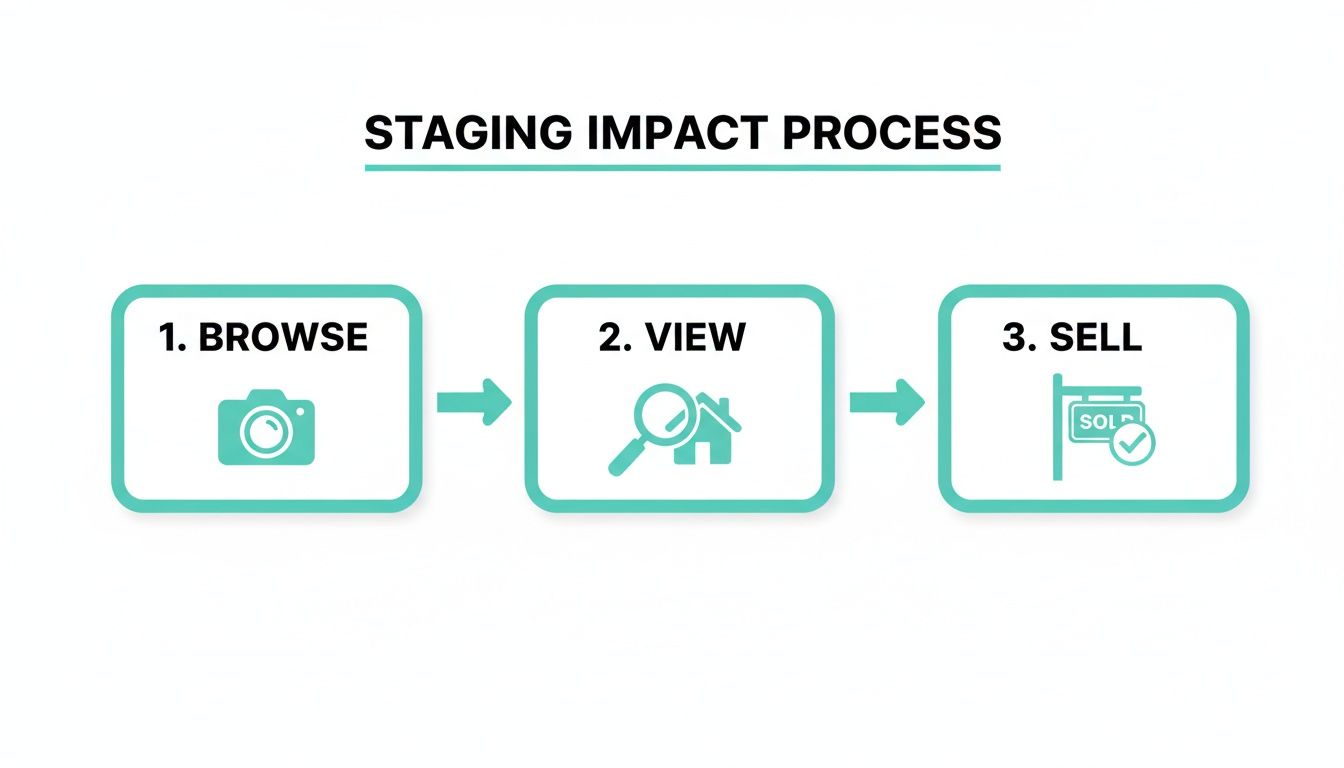
By putting in this effort up front, your online photos will grab more attention, which leads to more showings and, ultimately, a faster and more profitable sale.
Room-by-Room Staging Strategies That Create an Impact
Once you’ve decluttered and deep-cleaned, it's time for the fun part: staging each room. The secret is knowing where to focus your energy. Buyers make decisions based on their gut reactions to key spaces, so getting those right can make all the difference.
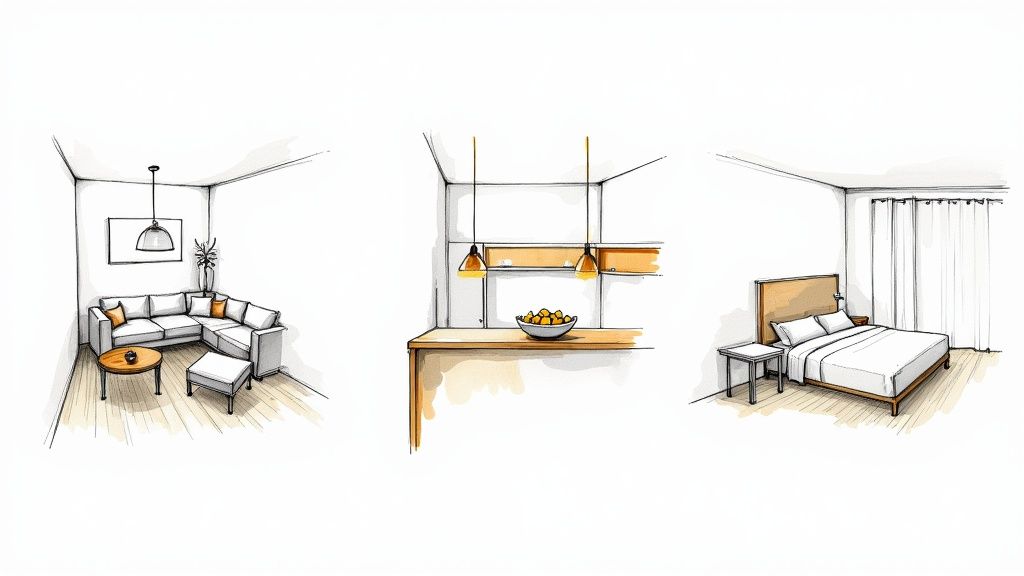
The 2025 NAR report on staging confirms that the living room, primary bedroom, and kitchen are the highest-impact spaces. Let’s look at practical, step-by-step tips for each.
Staging the Living Room for Connection
The living room is where buyers imagine their future—relaxing, entertaining, and spending time with family. Your job is to make that vision as clear as possible. A classic mistake is pushing all the furniture against the walls, which can make a room feel smaller.
- Create a conversation area: Pull your sofa and chairs away from the walls to create a defined, cozy seating arrangement. This simple trick improves the room's flow and makes it feel more spacious.
- Keep decor simple: A few neutral throw pillows, a soft blanket draped over a chair, and a coffee table with just a design book or a small plant is all you need. The goal is warmth and comfort, not clutter.
AI Staging Tip: Don't break your back moving heavy furniture. Upload a photo of your living room to Interior Redesigne AI to test different arrangements virtually. You can instantly see whether a U-shaped or L-shaped layout opens up the space better, finding the optimal setup without all the guesswork. This is incredibly helpful for visualizing ideas before buying or moving anything.
Creating a Serene Primary Bedroom Retreat
The primary bedroom should feel like a peaceful escape—a serene, hotel-like sanctuary.
- Make the bed the star: Use fresh, crisp, neutral bedding (white or soft beige is perfect). Layering pillows and adding a folded duvet at the foot of the bed adds an instant touch of sophistication.
- Clear the nightstands: A simple lamp and maybe a single book are more than enough. Remove any excess furniture to make the room feel larger.
- Show off storage: Don't forget the closet! Buyers will open it. Aim to have it no more than 50% full to showcase all the storage space, a huge selling point.
- Embrace minimalist design: The bedroom is the perfect place for a minimalist approach. For more inspiration, check out our guide on minimalist furniture ideas.
Making the Kitchen Shine
It’s true what they say: kitchens sell homes. A clean, spacious kitchen is a top priority for most buyers.
- Clear your countertops: Pack away the toaster, knife block, coffee maker—everything. You want to show off every square inch of counter space. This is crucial in apartments or homes with smaller kitchens.
- Add a touch of life: A bowl of fresh lemons or a small potted herb can add a vibrant pop of color and make the space feel fresh and inviting.
- Make it sparkle: Ensure the sink is sparkling clean and the faucet is polished. A pristine kitchen signals a well-maintained home.
Transforming Bathrooms into Spa-Like Spaces
Your bathrooms should feel like a clean, personal spa. Just like the kitchen, less is absolutely more.
- Clear the counters: Hide all personal toiletries. Toothbrushes, soap, lotions—get them all out of sight.
- Use fresh towels: Hang a set of fresh, fluffy white towels. They instantly create a clean, high-end hotel vibe.
- Add a touch of green: A small plant, like an orchid or a succulent, can add life and color without creating any clutter.
Boosting Curb Appeal with Outdoor Spaces
The exterior is the very first thing a buyer sees. A welcoming entrance sets a positive tone before they even step inside.
- Focus on the front door: A fresh coat of paint on the front door is one of the highest-impact, lowest-cost updates you can make.
- Add greenery: A couple of potted plants or hanging baskets flanking the entrance adds color and makes the home feel cared for.
- Clean and tidy: Power wash the walkway, sweep the porch, and replace any worn-out welcome mats. These small details signal pride of ownership.
Mastering the Art of Light and Space
Two of the most powerful tools in your staging arsenal are completely free: light and space. When you maximize both, you can transform even a small, dim room into a place that feels expansive, bright, and inviting. It's all about creating an atmosphere that feels calm and open.
This isn't about knocking down walls. It’s about making smart, strategic adjustments to what you already have. By focusing on how light moves through your home and how buyers perceive its layout, you can make a lasting impression.
Let There Be Light
Dark homes are a huge turn-off. They can feel small and unwelcoming. Your goal is to make every corner feel as bright and cheerful as possible.
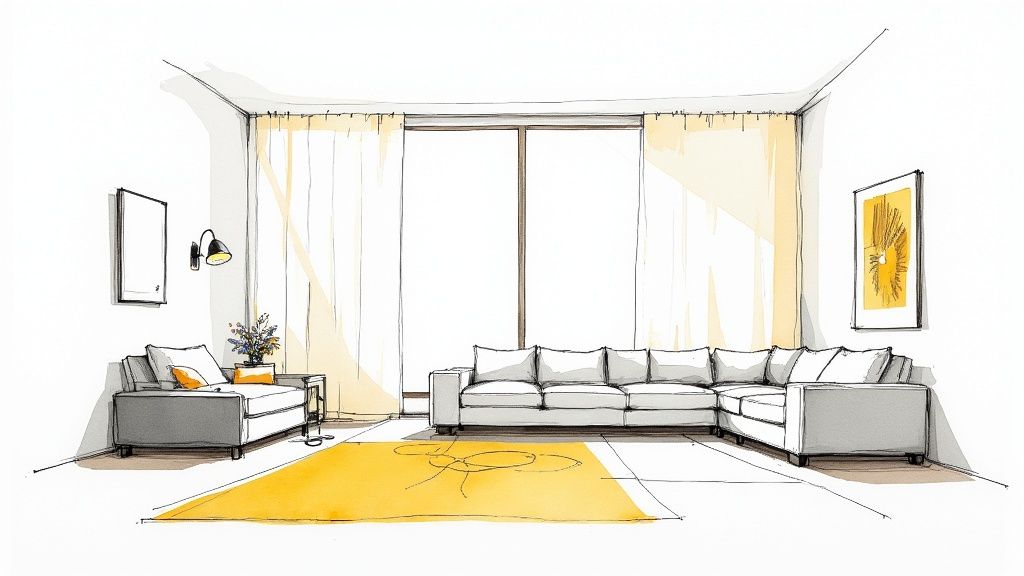
- Open windows: Open every blind and curtain before a showing. If you have heavy drapes, consider replacing them with simple, sheer curtains to let sunlight flood the room.
- Swap your bulbs: Ditch dim bulbs for bright, warm white LEDs. Consistency is key, so make sure all the bulbs in a room match.
- Layer your lighting: Add floor lamps and table lamps to banish dark corners. Aim for at least three sources of light in each main room: overhead, task (like a reading lamp), and ambient.
- Clean everything: Don't forget to wash your windows, inside and out. You’d be surprised how much more light clean glass lets in.
The Magic of Mirrors and Reflective Surfaces
Mirrors are a stager's secret weapon, especially in smaller areas like hallways or tight bedrooms. They create the illusion of depth and bounce light around a room.
Why this matters: Placing a large mirror directly across from a window can essentially double the amount of natural light, dramatically brightening a room and making it feel far more open. This is a budget-friendly trick that works wonders in apartments and smaller homes.
Understanding Negative Space
In design, negative space is simply the empty area around your furniture. It’s the "breathing room" in your layout, and it's crucial for good staging. An overcrowded room feels chaotic and small.
A simple way to create more negative space is to pull your furniture away from the walls. Resist the temptation to fill every empty corner. Sometimes, an uncluttered area is what makes a room feel calm and thoughtfully designed. If you're also rethinking your wall colors, our guide on how to choose paint colors for rooms can be a real lifesaver.
How AI can help: Feeling stuck on how to arrange your furniture? Upload a photo to Interior Redesigne AI to play with different layouts. Instantly see which one creates the best flow and makes the room feel most spacious—all without moving a single heavy item. It helps you test different materials and furniture placement to maximize light and space.
DIY, Professional, or Virtual Staging: Finding Your Fit
You can get stunning results on almost any budget. It just comes down to picking the right path for your timeline, wallet, and how hands-on you want to be. Your three main options are a DIY approach, hiring a professional stager, or using AI-powered tools.
The DIY Staging Approach
Going the DIY route is the most wallet-friendly option, perfect if you have more time than money. It’s all about working with what you already own and making small, strategic purchases that deliver a big visual punch.
A few practical DIY tips:
- Rearrange your furniture: Pull your sofa away from the walls to create a cozy conversation area. This instantly makes the space feel larger.
- Add inexpensive touches: New throw pillows, a soft blanket, or a couple of healthy plants can add life and warmth for very little cost.
- Shop smart: Look for neutral art, simple vases, or coffee table books at secondhand shops to style shelves and tables on a tight budget.
When to Hire a Professional Stager
While DIY is fantastic, sometimes calling in a pro is the smartest move. A professional stager brings an objective eye and an inventory of on-trend furniture. They know exactly what buyers in your area are looking for.
Hiring a pro is often best for vacant homes, high-end properties, or if your house has been on the market without solid offers. The investment often pays for itself.
Why this matters: A well-staged home almost always sells faster and for more money. The cost of your first price reduction on a house that isn't selling will likely be much higher than the initial cost of staging it right from the start.
The Smart Middle Ground: AI-Assisted Staging
Today, there’s an exciting middle ground powered by AI. This approach gives you professional-grade vision without the professional price tag, saving you time and reducing decision stress.
Tools like an AI Interior Designer allow you to create a visual game plan before you spend a penny. Upload a photo of your room, and the software can generate dozens of staging concepts. This removes the guesswork and helps you avoid expensive mistakes.
Use the AI-generated visuals as a blueprint for your DIY project or share them with a professional stager to communicate your vision. This combination of technology and hands-on effort is the smartest way to achieve a high-end look on a budget.
Choosing Your Staging Method
| Staging Method | Best For | Typical Cost | Key Benefit |
|---|---|---|---|
| DIY Staging | Sellers on a tight budget with a good eye for design and available time. | $200 - $1,500 | Maximum cost savings and control over the final look. |
| Professional Staging | Vacant homes, luxury properties, or sellers who need a fast, guaranteed result. | $500 - $7,000+ | Expert eye, access to inventory, and proven market results. |
| AI-Assisted Staging | Budget-conscious sellers who want a professional plan to execute themselves. | $25 - $100 | Visualizing the end result and eliminating costly guesswork before you buy. |
Ultimately, whether you're rearranging your own furniture or using AI to build a plan, the goal is the same: to create a space where buyers can instantly see themselves living.
Answering Your Biggest Home Staging Questions
As you dive into staging your home, questions are bound to pop up. Let's walk through some of the most common concerns for homeowners, real estate agents, and designers.
So, How Much Does Home Staging Really Cost?
Staging costs can range from a few hundred dollars for a DIY refresh to several thousand for a full-service professional. Most homeowners typically spend between $500 and $1,500.
But the real conversation isn't about the upfront cost—it's about the return on investment. The data shows that this investment pays for itself. Staged homes consistently sell faster and for more money. Think of it this way: the cost of your first price drop on a home that’s sitting on the market will almost always be more than what you would have spent to stage it right from the get-go.
Pro Tip for Saving Money: Before you buy anything, use an AI tool like Interior Redesigne AI to map out your plan. It lets you virtually experiment with different layouts and decor, helping you create a targeted shopping list and a realistic budget.
Is It Worth Staging an Empty House?
Yes, absolutely. In fact, it's even more important to stage an empty home. Vacant rooms can feel cold, uninviting, and surprisingly small. Without furniture, it’s tough for buyers to grasp the scale of the space or imagine their own lives there. Staging brings in warmth, provides context, and helps buyers form that all-important emotional connection.
What Are the Biggest Home Staging Mistakes I Should Avoid?
The most common pitfall is not decluttering or depersonalizing enough. We all get a little "house blind" to our own things, but a potential buyer sees it all with fresh eyes.
Other classic blunders to sidestep include:
- Oversized furniture: Squeezing a massive sectional into a modest living room makes the space feel cramped.
- Decor that's too specific: Your goal is to appeal to the widest audience. Put away bold, niche decor in favor of a neutral, inviting vibe.
- Bad lighting: Layer your lighting with floor and table lamps to create a soft, welcoming atmosphere.
- Ignoring smells: Lingering odors from pets or cooking can be an instant deal-breaker. The goal should be a fresh, clean, and completely neutral scent.
How Can an AI Interior Designer Help Me Stage My Home?
Think of an AI Interior Designer as your on-demand staging consultant. Instead of guessing what might look good, you can upload a photo and instantly see it reimagined in dozens of styles. You can explore everything from clean Modern looks to cozy Scandinavian designs or even Japandi (a calming mix of Japanese and Scandinavian styles).
This is a game-changer for two reasons. First, it allows you to visualize the finished product before you spend a dime, which seriously cuts down on stress and expensive mistakes. Second, you can test different furniture arrangements to find the layout that makes each room feel its biggest and brightest. While AI is a powerful tool for generating ideas, remember to combine its suggestions with your own personal taste or consult a professional designer to perfect the final look.
Time to Bring It All Together
Think of staging as the final, critical step before your home's debut on the market. This is where you showcase its best features and create an atmosphere that connects with buyers, from that first click online to the moment they step inside.
You’re doing more than just tidying up. By decluttering, depersonalizing, and thoughtfully arranging each room, you’re helping buyers envision their own lives unfolding within those walls. You're selling a lifestyle, not just a property. This mindset is what makes a home truly stand out and ultimately fetch the best possible price, whether it's a family home, a small apartment, or a rental property.
As you put the finishing touches on everything, checking out these 7 essential home staging tips for a faster sale can be a great final review. Often, it's the smallest details that leave the biggest impression.
Ready to unlock your home's potential? Use Interior Redesigne AI to instantly reimagine your room from a photo or sketch. It's the perfect first step toward a faster, more profitable sale.