Feeling overwhelmed by endless decor choices? You're not alone. An interior design style quiz is your secret weapon to cut through the noise. Think of it as a friendly guide for your home’s look, asking simple visual questions to turn your gut feelings into a clear style direction, like ‘Modern Farmhouse’ or ‘Industrial Loft’. It's the first step to a home you'll love, without the stress.
What an Interior Design Style Quiz Really Tells You
An interior design style quiz is basically a conversation starter with yourself about what you truly love in a home. Instead of getting lost scrolling on Pinterest, a quiz sharpens your focus by having you choose between specific images. It’s designed to uncover the patterns in your preferences—the ones you might not even notice on your own.
This isn’t just about picking pretty pictures; it’s a smart first step before you touch a single paint chip or piece of furniture. Why does this matter? It gives you clarity and confidence before you start spending money. If you're curious about how these quizzes are built to be so effective, you can learn how to create a find your style quiz that converts to see the psychology behind it.
How a Style Quiz Saves You Time, Money, and Stress
Decorating without a clear plan often leads to expensive mistakes and decision fatigue. A style quiz hands you a roadmap, preventing those impulse buys that look great in the store but feel totally wrong at home. This clarity is a game-changer for everyone.
- For Homeowners: It stops you from buying that trendy velvet sofa when your heart is truly set on a timeless, classic look. This saves money and ensures your home feels cohesive and authentic to you, whether you're decorating a small apartment or a family house.
- For Airbnb Hosts: A strong, defined style makes your listing pop online. Guests are drawn to thoughtfully designed spaces that promise a unique experience, which can lead to more bookings and better reviews.
- For Real-Estate Agents: When you stage a home with a clear, inviting style, it’s easier for potential buyers to picture their lives there. That emotional connection makes a property far more desirable and can help it sell faster.
From Quiz Result to Your Actual Room
So, you’ve taken a quiz and have your result—let's say it's “Japandi.” That’s when the real fun starts. Japandi is a beautiful mix of Japanese minimalism and Scandinavian function, focusing on clean lines and natural materials. But what does that actually look like on your walls, with your floors, and next to your existing furniture?
This is the perfect time to use an AI tool like Interior Redesign AI. You can take that "Japandi" result and see it come to life in your own space, almost instantly. Just upload a photo of your living room, select the style, and watch as the AI generates realistic visuals in seconds. It’s the perfect way to test-drive a style with zero commitment, bridging the gap between an idea and reality and ensuring it feels right for your home.
How to Decode Your Interior Design Style Quiz Results
So, you took an interior design style quiz and got a result like "Scandinavian" or "Bohemian." That's a fantastic starting point! Think of it as a compass—it gives you a direction, but now you need to learn how to read the map. Let's translate that single phrase into a real, tangible vision for your home.
You're not alone in seeking this guidance. One popular online quiz, for example, pulled in results from over 200,000 people in just six months. It just goes to show how many of us are looking for clarity in the often-overwhelming world of home decor.
Understanding Your Style Archetype
Your quiz result is more than just a label; it’s a blueprint for a specific feeling and aesthetic. Every design style has its own language, spoken through colors, textures, and even the shapes of furniture. The trick is to grasp the core principles behind your result, not just copy a picture from Pinterest piece by piece.
For instance, a “Modern” result suggests you’re drawn to clean lines and simple color palettes. If you got “Bohemian,” on the other hand, you probably lean towards a more free-spirited vibe filled with layered textiles and natural materials. Understanding this helps you make smarter choices that align with the look you love.
This whole process is about moving from confusion to focus. A quiz is designed to cut through the noise and give you an actionable starting point.
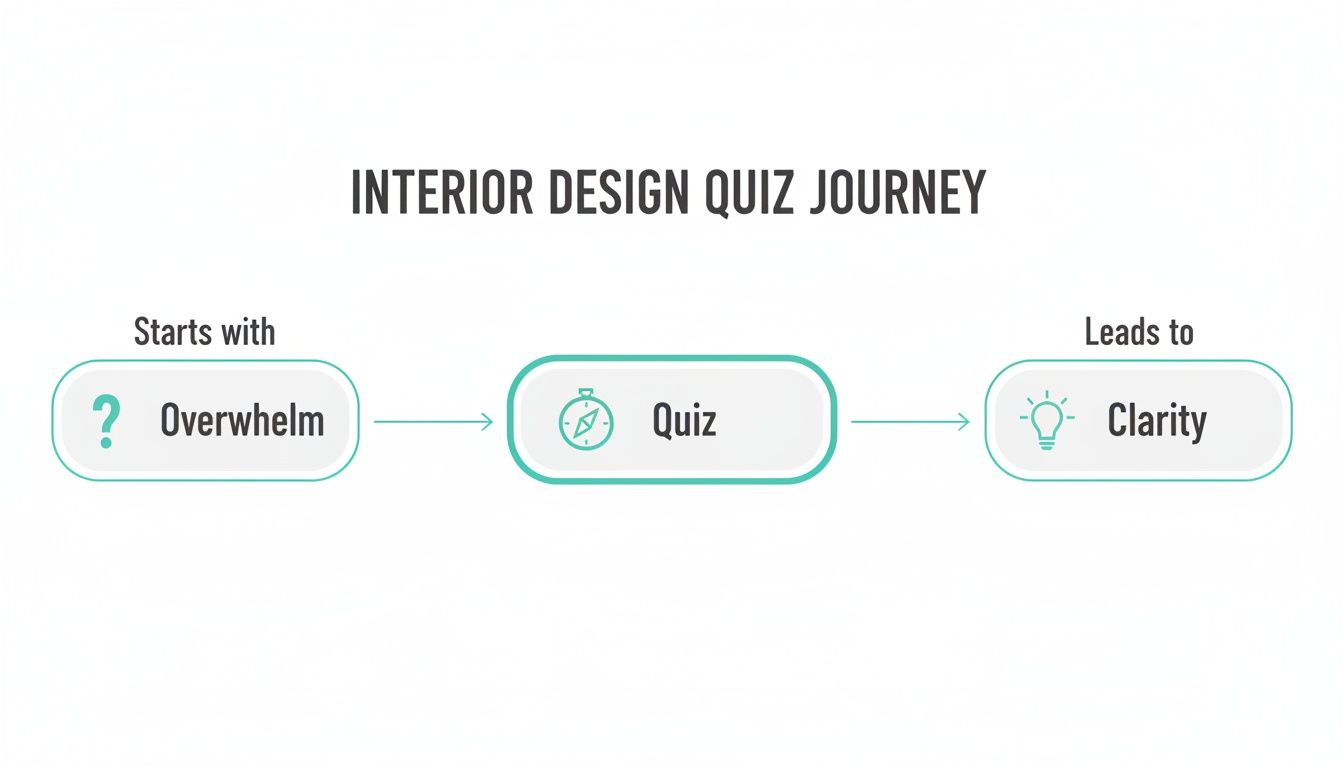
As you can see, the quiz itself isn't the final destination. It’s the tool that turns that feeling of "I don't even know where to begin!" into a clear, focused design direction.
Spotting the Differences in Similar Styles
Sometimes, quiz results can feel a bit... similar. You might be wondering, what’s the real difference between Modern and Contemporary? Or is Scandinavian just another word for Japandi? Nailing down these subtle distinctions is key to refining your vision.
- Modern vs. Contemporary: Modern design is tied to a specific era (think mid-20th century) with its iconic, clean-lined furniture. Contemporary, however, is all about what’s happening right now. It’s more fluid and often features more curves.
- Scandinavian vs. Japandi: Scandinavian style is famous for its cozy minimalism (a concept called hygge), relying on light woods and soft textures. Japandi is a beautiful hybrid, blending that Scandi function with Japanese rustic minimalism. It often brings in darker wood tones and sleek lines.
To help you get a better handle on these nuances, here’s a quick breakdown of some common quiz outcomes.
Common Interior Design Style Quiz Outcomes Explained
This table breaks down the core elements of popular interior design styles to help you understand your quiz results.
| Design Style | Key Characteristics | Common Materials | Color Palette |
|---|---|---|---|
| Scandinavian | Minimalism, functionality, clean lines, and a cozy (hygge) feel. | Light woods (birch, pine), wool, linen, felt, and leather. | Dominated by white, gray, and black, with pops of soft pastels. |
| Bohemian | Eclectic, free-spirited, and layered with personal touches. | Rattan, wicker, macramé, natural textiles, and wood. | Warm, earthy tones mixed with vibrant jewel tones. |
| Modern | Rooted in the mid-20th century; simple forms and function. | Wood, metal, glass, plastic, and natural fabrics. | Neutral or earthy base with bold primary color accents. |
| Japandi | A hybrid of Japanese and Scandinavian styles; minimalist yet warm. | Natural woods (both light and dark), bamboo, paper, stone. | Muted, neutral colors like beige, cream, and charcoal. |
| Industrial | Raw, unfinished aesthetic inspired by warehouses and factories. | Exposed brick, concrete, steel, distressed wood, and copper. | Neutral and monochromatic (black, white, gray) with warm undertones. |
Understanding these building blocks gives you the vocabulary to start creating a space that feels uniquely you. For a deeper dive into these styles and more, be sure to check out our complete interior design styles guide.
Your quiz result isn’t a rigid box. It’s a vocabulary that empowers you to describe what you love, making every decision—from choosing a sofa to picking paint—infinitely easier and less stressful.
The next step is to see how these ideas look in your actual room. This is where a tool like Interior Redesign AI becomes so powerful. You can upload a photo of your space, select your newly identified style, and get an instant, realistic preview. It lets you test-drive the core elements of your style before you commit a single dollar or ounce of effort.
Turn Your Quiz Results Into an Actionable Design Plan
So you've taken a quiz and have a result. That "aha!" moment is a great starting point, but what now? This is where you move from a label to a living space you genuinely love. Think of your result not as a rigid rulebook, but as a friendly guide pointing you in the right direction.
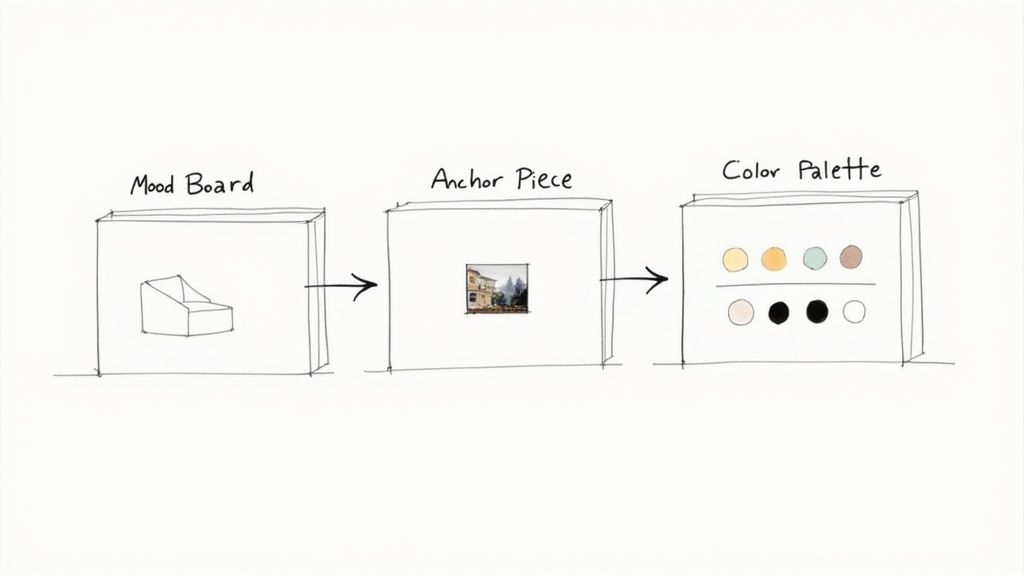
The first step is to create a mood board. This is just a visual scrapbook of everything you like. Hop on Pinterest, search for your style, and start pinning rooms, textures, and colors that catch your eye. You'll quickly see patterns emerge, making every decision that follows way less intimidating.
Build Your Room Around an Anchor Piece
Every great room has a focal point, a hero piece that grounds the entire design. We call this the anchor piece. It's usually the biggest item in the room and often where you’ll spend the most money, so it’s the perfect place to start.
- Living Room: The sofa is the undisputed anchor. For a "Mid-Century Modern" style, you’d look for one with clean lines and tapered wood legs.
- Bedroom: Your bed and headboard take center stage. A "Bohemian" vibe might call for a woven rattan headboard, while an "Industrial" style could use a simple metal frame.
- Kitchen: The countertops or a statement island can serve as the anchor, setting the tone for cabinetry and backsplash choices.
- Outdoor Space: Your primary seating, like an outdoor sofa or a dining set, anchors the entire patio or balcony layout.
Focusing on the anchor piece first keeps you from getting overwhelmed. It simplifies your shopping list and ensures your biggest investment aligns with your design vision.
Choose a Cohesive Color Palette
Look at your mood board. You’ll probably notice a handful of colors popping up again and again. That's your natural color palette! Instead of picking colors out of thin air, select three to five hues that work well together. As you start making choices, you might even want to explore the basics of bedroom colour psychology to pick shades that create the exact feeling you want.
Pro Tip: Try the 60-30-10 rule for a balanced look. Use your main color for 60% of the room (like the walls), a secondary color for 30% (furniture, rugs), and an accent color for the final 10% (pillows, art).
An online home design planner can be a game-changer here, letting you play with these elements visually before you spend a dime. By following these simple steps—mood board, anchor piece, and color palette—your quiz result becomes a real, tangible plan. It's a process that saves time, prevents costly mistakes, and empowers you to create a home that truly feels like you.
Visualize Your Style Instantly with AI Interior Design
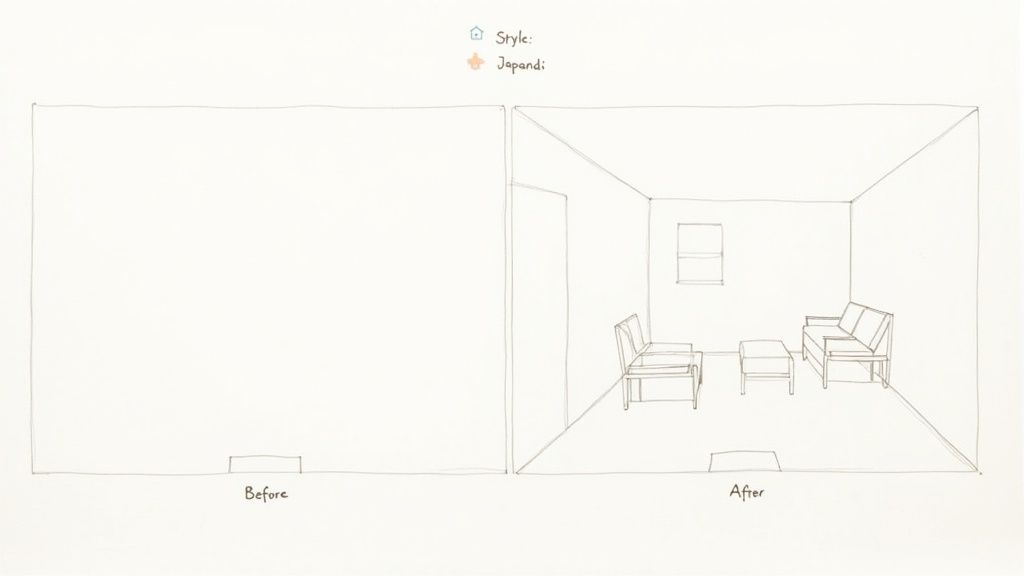
It’s one thing to get "Japandi" as your quiz result. It’s another to actually picture what that means for your living room. This "imagination gap" is where most design projects get stuck. Luckily, technology offers a powerful way to close that gap.
AI interior design tools bring your quiz results to life right before your eyes, turning an abstract style name into a concrete, realistic visual of your own space. The process is simple and takes the guesswork out of the equation—the kind of guesswork that leads to expensive mistakes.
From a Simple Photo to a Full Redesign
Imagine snapping a quick photo of your bedroom on your phone. Then, you upload it, and with a few clicks, you see it completely reimagined in the "Modern Farmhouse" style you just discovered. This is exactly what tools like Interior Redesign AI can do in seconds.
This ability is a true game-changer for anyone feeling stuck:
- Test-drive your style: See how "Industrial" exposed brick or "Coastal" light woods would look on your actual walls before committing.
- Experiment risk-free: Curious about a bold accent wall or a different furniture layout? AI lets you try dozens of variations without lifting a paintbrush or moving a heavy sofa. This is invaluable for testing ideas in apartments or small homes where every choice matters.
- Boost listing appeal: For Airbnb hosts and real-estate agents, this means creating stunning, virtually staged photos that capture a buyer's imagination and help your property stand out.
The real power of AI in design is how it turns you into a confident decision-maker. When you can visualize the end result, the fear of making a costly mistake disappears, and you can be sure every dollar you spend is building toward a space you'll truly love.
Making Practical, Confident Choices
Using AI for a room makeover is about more than just inspiration. It's about making smart, practical choices that save you time and money. Before you buy a single pillow, you can check if a new sofa’s scale feels right for the room, or if that rug really works with your flooring.
Of course, AI is a tool to guide your vision, not replace it. The best results come from using these AI-generated visuals as a starting point. Feel free to mix and match ideas, tweak the concepts to fit your daily life, and inject your own personality into the design. Combine AI's power with your personal taste for a truly perfect result.
Finding Your Unique Design Mix Beyond the Quiz
What happens when your interior design quiz result feels close, but not quite you? That’s completely normal. In fact, that’s where the real design magic starts. Think of your quiz result as a fantastic starting point, not a rigid rulebook. The most compelling spaces are almost always a blend of different styles.
You don't have to be a purist. There’s no law saying you can't mix the cozy warmth of 'Modern Farmhouse' with the breezy vibe of 'Coastal.' This approach is a lifesaver for injecting personality, especially in smaller apartments or rentals where you often work with existing furniture.
How to Blend Styles Cohesively
Creating a beautiful, mixed-style space isn't about tossing random things into a room. It’s about finding a common thread that pulls everything together. Here are a few practical tips to make it work:
- Stick to a Unified Color Palette: Pick three to five colors and use them consistently. A 'Coastal Farmhouse' look, for example, could lean on a palette of crisp whites, sandy beiges, and soft blues. When those colors appear everywhere from walls to pillows, the different styles feel connected.
- Repeat Textures and Materials: Create a sense of rhythm by weaving a few key materials throughout the room. You could repeat the warmth of light oak wood in both a farmhouse dining table and your coastal-inspired accent chairs. Suddenly, they're speaking the same design language.
- Find a Common Shape: Repeating a specific shape can subtly unify a room. If you have a round, modern coffee table, echo that curve somewhere else—maybe in a mirror, a light fixture, or the pattern on a rug.
Your personal treasures are what make a house feel like home. Never be afraid to mix that sleek, AI-generated 'Minimalist' layout with your grandmother’s antique armchair. The contrast is what tells your story and makes the space uniquely yours.
Interestingly, personal quiz results often line up with bigger industry shifts. Recent reports show 71% of designers are now choosing more colorful kitchens over the classic all-white look. We see this in our data too, with more people gravitating toward vibrant, nature-inspired palettes. You can discover more insights about 2025 design trends on Artsy.net.
Once you're ready to start visualizing your own perfect mix, our guide on interior design mood board examples is the perfect next step to solidify your vision.
Common Questions About Interior Design Quizzes
So, you've taken a quiz and have a style name in hand. That's a huge first step! But it's normal to have questions about what comes next. A style quiz is a fantastic starting point, but the magic happens when you know how to use those results to create a space you love.
Let's walk through some of the most common questions.
How Accurate Are These Quizzes, Really?
A well-designed quiz is great at pinpointing your core design tastes. They work by connecting the images you're drawn to with established design principles, giving a name to the "look" you've always liked but couldn't describe.
Think of your result not as a rigid rule, but as a compass. It gives you a clear direction—like "Coastal" or "Industrial"—which is the hardest part for most people. The final room, of course, should be filled with your personal touches.
What If I Get Different Results From Different Quizzes?
This happens all the time, and it's a clue! Getting conflicting results almost always means your personal style is a beautiful blend of two or more aesthetics. Instead of getting fixated on one label, look for the common threads.
For example, if one quiz says you’re ‘Scandinavian’ and another calls you a ‘Minimalist,’ what does that tell you? It means you love clean lines, simplicity, and uncluttered spaces. That overlap is your true north and a powerful insight into what you genuinely want in your home.
Can I Really Apply My Style to a Small Apartment or a Rental?
Absolutely! A defined style is even more important in smaller spaces where every item needs to earn its place. A clear style guide helps you make smart choices, picking pieces that are both functional and beautiful, which is the secret to avoiding a cramped, cluttered feeling.
Here's how it works in real life:
- A 'Mid-Century Modern' result guides you toward furniture with slender, raised legs. This simple trick creates visual space underneath, making the whole room feel bigger.
- Love the 'Bohemian' vibe but live in a rental? You can bring that style to life without touching the walls. Focus on things you can take with you: vibrant rugs, unique plug-in light fixtures, layered textiles, and even removable wallpaper.
How Can I Use My Quiz Results if I'm on a Tight Budget?
Your quiz result is your best friend when you're trying to save money. It acts as a filter, saving you from impulse buys that feel out of place once you get them home.
Start with paint; it’s inexpensive and makes the biggest impact. Then, go thrifting with a clear mission. If your style is 'Modern Farmhouse,' you'll know to look for rustic wood accents and vintage-inspired decor, skipping everything else. For more answers to common questions, you can always check our complete FAQ page.
And before you spend a dime, use an AI tool to test your budget-friendly ideas. See what that accent wall will actually look like or how a new furniture layout will feel before you do any heavy lifting. Visualizing it first can save you a world of time, money, and stress.
Ready to stop guessing and start seeing? With Interior Redesign AI, you can take a photo of your room and instantly see it redesigned in your specific style. It’s the fastest way to bring your vision to life. Try it now