Picture a bedroom that feels like a permanent escape to the coast—sun-drenched, breezy, and effortlessly serene. That’s the magic of Mediterranean style bedrooms. This design beautifully weaves together the rustic charm of Spain, the crisp whites of Greece, and the warm earthiness of Italy to create a personal sanctuary in your own home.
What Makes a Bedroom Feel Mediterranean?
At its core, a Mediterranean bedroom is all about creating an escape. The entire design philosophy revolves around crafting a serene, light-filled retreat that feels deeply connected to the natural world. It’s an incredibly versatile aesthetic, which is why it works just as well for a homeowner dreaming of a peaceful primary suite as it does for an Airbnb host wanting to create a vacation-worthy listing that truly stands out.
The growing obsession with this style is easy to see. The global bedroom furniture market alone hit a staggering USD 266.15 billion in 2024, and that number continues to climb. People are investing in creating spaces that feel good.
This quick guide gives you a snapshot of the essentials, breaking down the vibe, colors, and materials that define the look.
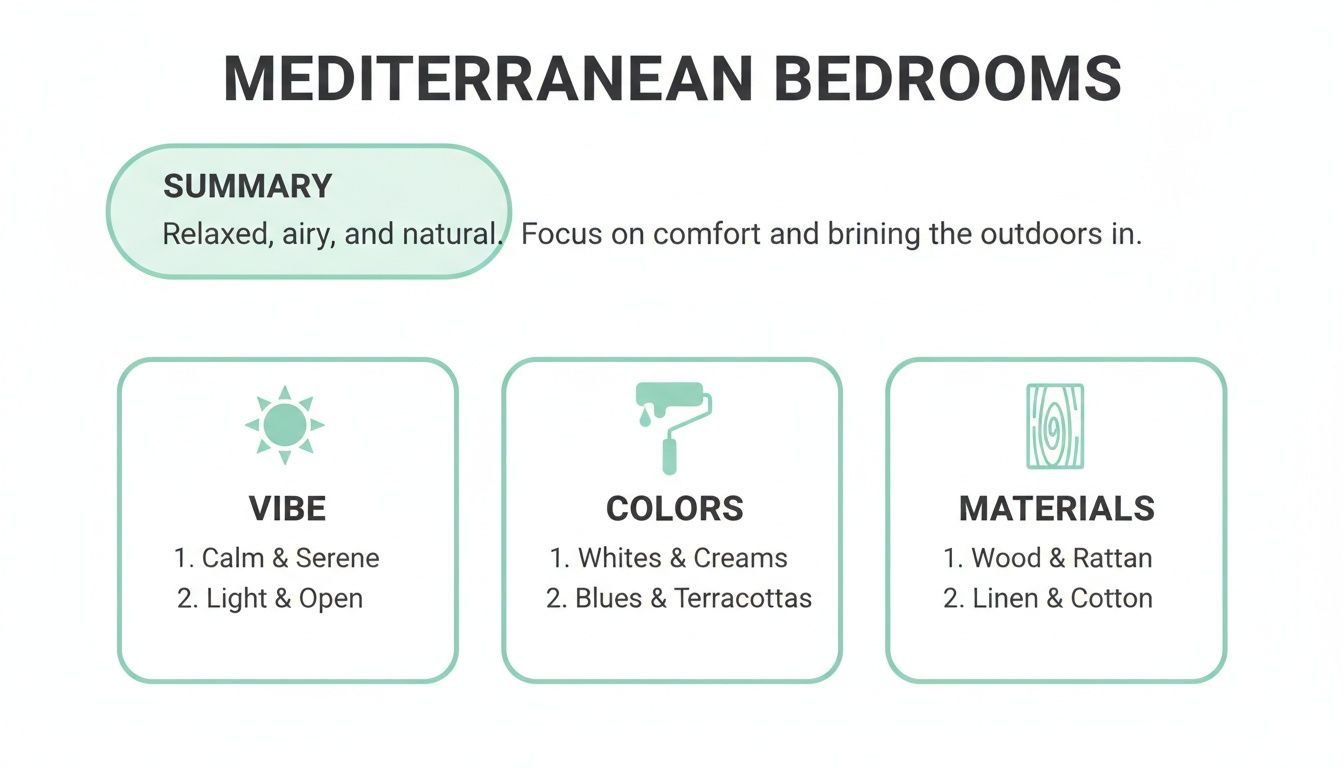
As you can see, the style is all about that sun-drenched, relaxed atmosphere. It comes to life through a palette of whites, blues, and earth tones, grounded by natural materials like wood, stone, and plaster.
Key Characteristics of This Timeless Style
So, what’s the secret sauce that gives this style its enduring popularity? It isn’t just one single element but a beautiful blend of features that work in perfect harmony.
- A Bright and Airy Atmosphere: The number one priority is light. We're talking large windows, breezy sheer curtains, and light-colored walls that make even a smaller room feel expansive and open. This is key for boosting appeal in real estate listings and making rental spaces feel more premium.
- Natural and Rustic Materials: This is where the texture comes in. Think of the tactile quality of plaster walls, the coolness of terracotta tiles underfoot, the character of exposed wood beams, and the classic touch of wrought iron. These materials add warmth and a sense of history.
- An Earthy and Coastal Color Palette: The colors are pulled straight from the seaside landscape. You'll see a lot of crisp whites like seafoam, sandy beiges, deep ocean blues, and the warm glow of terracotta.
While we're diving deep into Mediterranean design here, it's always helpful to explore other diverse bedroom styles to really nail down what you love.
Before you start buying furniture, a great tip is to use an AI interior design tool. You can upload a photo of your room to instantly visualize how these elements will come together. This saves a ton of time and helps you avoid costly design regrets, making it a smart first step for any makeover project.
Building Your Foundation with Colors and Materials
The soul of a Mediterranean bedroom comes from its connection to the coast and the landscape. This feeling starts with your core choices: the color palette and the materials you use. Get these right, and you'll create the calm, sun-drenched canvas that defines the entire space.
Crafting the Perfect Color Palette
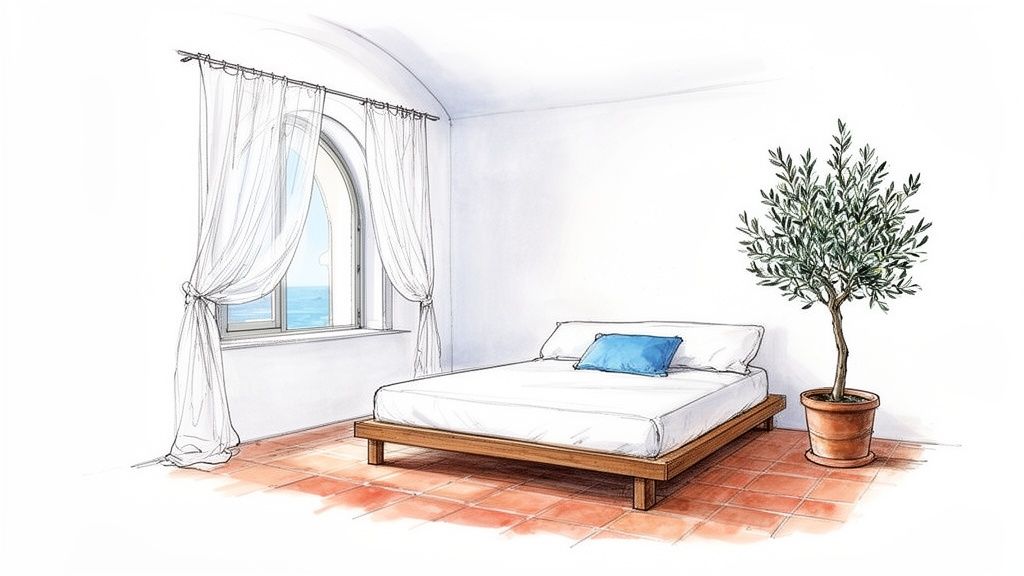
First, let's talk about the base color. Forget stark, clinical white. We're going for warm, light-reflecting shades that feel soft and inviting. Think alabaster, ivory, or a gentle beige for the walls. These hues are brilliant at amplifying natural light, which is a game-changer for making smaller bedrooms feel much more spacious and airy.
This approach has a timeless appeal that really resonates. In fact, neutral palettes made up 62% of global interior trends in 2023, with warm whites being used in 75% of those designs. The idea is to create a serene backdrop, then bring in pops of color sparingly, just like you’d see hints of blue or green against a whitewashed village wall.
Once you’ve established that neutral foundation, it’s time to layer in accent colors inspired by the region. Use them thoughtfully on a feature wall, through your textiles, or in a piece of artwork.
- Aegean Blue: This classic, iconic blue instantly brings the Greek islands to mind. It’s perfect for throw pillows, a cozy blanket, or a single piece of statement art.
- Terracotta: A warm, earthy orange-red that injects the sun-baked feel of Spanish and Italian villas. Try it in small doses with plant pots or a rustic vase.
- Olive Green: A more sophisticated, dusty green that connects the space to the region's famous olive groves. It adds a subtle, organic touch.
Choosing the right paint shade can feel like a massive commitment. If you're feeling stuck, it’s always a good idea to dig a little deeper into the fundamentals of how to choose paint colors for rooms before you start buying samples.
Embracing Natural and Textural Materials
In a Mediterranean bedroom, texture is every bit as important as color. It’s what gives the space its authentic, lived-in character and stops a neutral room from feeling one-dimensional. The goal is to create an organic, layered space that feels both grounded and serene. Focus on materials that look and feel like they came from the earth.
For the walls, finishes like limewash or Venetian plaster add a soft, mottled texture that catches the light beautifully. If a full plaster job is out of your budget (or you’re renting), don't worry. You can find specialty paints that mimic this effect without the intensive labor.
When it comes to flooring, think cool and natural underfoot. Terracotta tiles are the quintessential choice, but distressed or light-colored wood planks also work wonderfully. Can't change your floors? No problem. A large jute or sisal rug will instantly add that perfect dose of rustic texture and can cover up flooring you don't love. It's a fantastic, non-permanent fix for renters or anyone looking for a quick update.
Choosing Furniture That Feels Found and Authentic
Forget buying a matching bedroom set. Mediterranean style is all about curating pieces that feel collected over time, each with its own story. You're looking for furniture with character, but the goal is to keep the room feeling open, airy, and uncluttered.
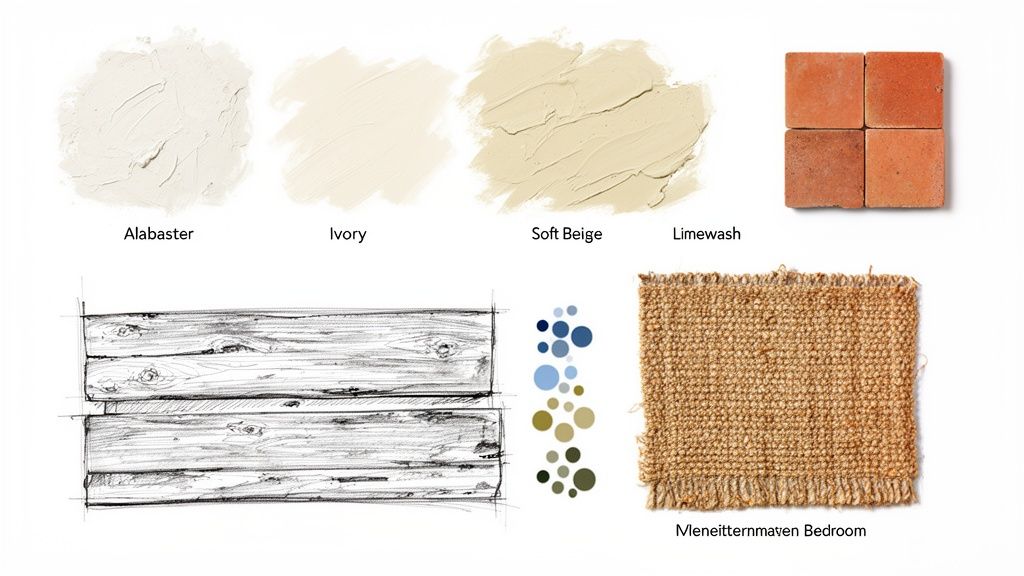
The magic comes from natural materials and simple, strong silhouettes. Think solid wood, wrought iron, and rattan. These materials are essential for adding the right kind of texture and warmth, grounding the space and connecting it back to nature.
Selecting the Right Pieces
When furnishing a Mediterranean bedroom, every piece should be a balance of function and form. You want items that are beautiful but never fussy or overly ornate.
- Low-Profile Beds: A simple wooden or wrought-iron headboard keeps sightlines clear, which immediately makes the room feel larger and more open. This is a huge win for smaller bedrooms or rental properties where creating a sense of space is key.
- Natural Wood Nightstands: A pair of nightstands crafted from reclaimed or distressed wood adds instant rustic charm. Look for straightforward designs that give you just enough space for a lamp and a book.
- A Rustic Armoire or Dresser: Instead of a sleek built-in closet, a freestanding wooden armoire can become a stunning focal point, bringing in that old-world character you’re after.
This pared-back approach is a secret weapon for real estate agents and Airbnb hosts. Why? Because a room that isn't crammed with heavy furniture looks far more spacious and inviting in photos, boosting its appeal right away. You can dive deeper into this concept with our guide to minimalist furniture ideas.
Mastering the Art of Layout and Negative Space
How you arrange your furniture is just as critical as the pieces themselves. Positioning your bed to catch the morning sun can create a beautiful start to your day—a simple trick that costs nothing but enhances the room's atmosphere.
Equally important is negative space—the empty areas around your furniture. In design, this isn't wasted space; it's an active element that gives your eyes a place to rest and keeps the room from feeling chaotic. This is crucial for creating that calm, retreat-like vibe at the heart of Mediterranean style.
Before you start hauling furniture around, test your layout ideas. This is where AI Interior Designer helps. Just upload a photo of your empty room and virtually place different beds, armoires, and nightstands to see how they fit. Trying out multiple layouts without moving a single heavy item saves time, prevents stress, and helps you land on that perfect balance of furniture and open space.
Weaving in Warmth with Textiles and Lighting
Once you've set the stage with colors, materials, and furniture, it's time for the magic touches. Textiles and lighting transform a well-designed room into a genuine sanctuary. They are the secret ingredients for creating that lived-in, effortless comfort that is the soul of Mediterranean style.
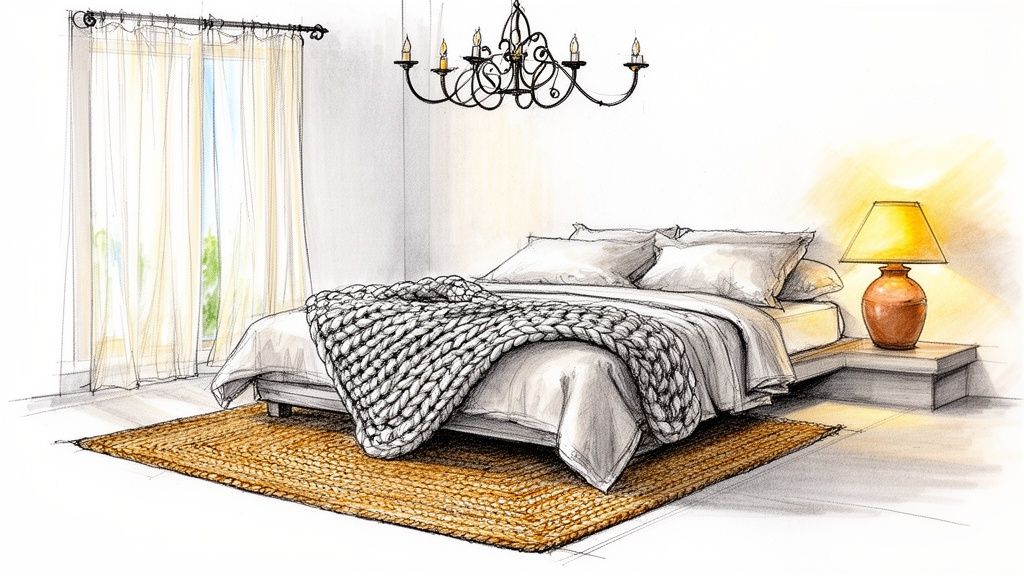
Think about fabrics that feel good and let the light through. Sheer linen curtains are a classic for a reason—they soften harsh sunlight into a dreamy glow and catch the breeze, blurring the line between inside and out. For your bed, you can't go wrong with natural materials like crisp cotton or a light wool blanket that feels both luxurious and inviting.
Layering Textures for a Rich, Tactile Feel
A room without texture can feel a little sterile. Layering different textiles breathes life and personality into the space, adding visual weight and a tactile quality that makes you want to curl up and stay awhile. It’s surprisingly simple to do, but the impact is huge.
Here are a few practical, step-by-step tips:
- On the Bed: A chunky knit throw tossed casually over the foot of the bed is an instant game-changer. It offers a beautiful textural contrast to your smooth cotton or linen duvet.
- On the Floor: Nothing grounds a room quite like a natural fiber rug. Jute or sisal provides a wonderfully rustic texture underfoot, a perfect counterpoint to cool tile or smooth wood floors. This is an easy, rental-friendly way to add warmth.
- On a Chair or Bench: Soften the hard lines of a wooden bench by draping a simple linen throw or even a small sheepskin rug over it.
Layering textiles is probably the fastest way to nail that cozy, inviting feel. It gives the room a sense that it has been curated over time, adding character without making it feel cluttered.
The Art of a Warm and Intimate Lighting Scheme
Forget that single, glaring overhead light. Great lighting design is all about layers. A thoughtful lighting plan sets the mood, makes the room functional, and wraps your bedroom in a warm, intimate glow when the sun goes down.
I always approach lighting with a three-layer strategy: ambient, task, and accent.
- Ambient (Overall) Light: This is your foundation. Think of a simple wrought-iron chandelier or a woven rattan pendant light that casts a gentle, diffused light throughout the room.
- Task (Functional) Light: This is your focused light for activities like reading in bed. A pair of mismatched ceramic table lamps on the nightstands works beautifully, especially with warm-toned bulbs.
- Accent (Mood) Light: Wall sconces are fantastic for this. They wash the walls with a soft, indirect light that highlights a piece of art or adds a gentle shimmer. Putting everything on dimmers is a must—it gives you absolute control over the atmosphere.
For more inspiration, check out these expert tips on how to make your home cozy. And if you love blending this warmth with a streamlined look, our guide to designing a cozy minimalist bedroom is packed with ideas.
Adding Personality with Thoughtful Accessories
This is where the magic really happens. Accessories are the final, personal touches that take a room from "nicely decorated" to a space that feels like you. For Mediterranean-style bedrooms, the guiding principle is simple: curate, don’t collect. Choose a few standout pieces that tell a story, rather than just filling shelves.
This intentional, nature-inspired approach isn't just a trend; it's a reflection of how people want to live. In Europe, where this style was born, the market for authentic, natural bedroom furnishings is seeing a massive 9.08% CAGR projected through 2033. This growth is fueled by a 25% jump in demand for things like solid olive wood nightstands and real limestone walls—elements that genuinely capture the spirit of the region.
Choosing Decor That Feels Collected Over Time
Think of your accessories as the final brushstrokes. Each one should have a reason for being there, contributing to the room’s calm, uncluttered vibe.
- Bring the Outdoors In: Nothing says Mediterranean more than greenery. An olive tree soaking up the sun in a corner is the quintessential choice. A potted fig tree or even a few terracotta planters with fragrant herbs on a windowsill work just as well and are perfect for smaller apartments.
- Embrace Handcrafted Imperfection: Seek out unique, artisan-made items. A set of hand-painted ceramic vases, a chunky woven wall hanging, or a rustic wooden bowl to hold jewelry are perfect examples. These pieces have a soul that mass-produced decor just can’t replicate.
- Play with Light and Reflection: An antique mirror, especially one with a simple, slightly weathered frame, can do wonders for making a room feel bigger and brighter. A few well-placed glass vases will also catch the light beautifully.
My best advice? Less is more. A single, beautiful object on a nightstand will have far more impact than a dozen smaller items. The goal is to add details that feel personal and meaningful, not just fill space.
Visualize Before You Buy with AI
We've all been there—you find the perfect accessory in a store, but when you get it home, it just... doesn't work. The scale is wrong, or the color clashes. This is where AI Interior Designer can save you from that headache (and save you money).
By uploading a photo of your bedroom, you can virtually "place" different accessories into the space. See how that oversized plant looks by the window, or test out different art above the bed. This lets you experiment with placement and scale without spending a penny, preventing buyer's remorse. It’s also a fantastic way to build a visual plan, a technique we cover in our guide to creating great interior design mood board examples. This process ensures every piece you bring into the room works toward your final vision.
Common Questions About Mediterranean Bedrooms
As you pull together ideas for your coastal escape, a few questions are bound to come up. Redesigning any room can feel daunting, but creating a Mediterranean-style bedroom is more straightforward than you might think. Let's tackle some common concerns.
How Can I Create a Mediterranean Feel in a Small Apartment Bedroom?
This is a great question. For smaller spaces, the trick is to lean into the feeling of the style—light, airy, and uncluttered—rather than trying to cram in every single element.
Your biggest ally is your color palette. Sticking to brilliant whites, soft creams, or sandy beiges for the walls will work wonders by reflecting light and making the room feel larger. Ditch heavy drapes for sheer linen curtains to let every bit of sunlight stream in. A large, simple mirror is another classic trick to create the illusion of depth.
When it comes to furniture, think smart and streamlined:
- Low-Profile is Key: A bed with a low headboard (or none at all) keeps sightlines clear and makes the room feel less crowded.
- Multi-Functional Pieces: Look for a bed frame with built-in storage to eliminate the need for a bulky dresser. Floating nightstands are another great space-saving hack.
- Curate Your Decor: Choose one or two impactful pieces, like a large terracotta pot with a plant or a beautiful piece of coastal art, instead of lots of little knick-knacks.
What Are Some Budget-Friendly Ways to Get the Look?
You don't need a massive budget for a beautiful Mediterranean bedroom. A fresh coat of warm white paint is easily the single most transformative, low-cost update you can make.
After that, get creative. Spend a weekend hitting up thrift stores and flea markets for rustic wooden furniture. A little sanding and a coat of wax can work wonders on an old nightstand. DIY is your best friend here, too—try painting simple abstract art with blue and white acrylics on a canvas, or grab inexpensive terracotta pots for a few succulents.
Is Mediterranean Style Suitable for Colder Climates?
Absolutely. You just need to lean into the cozier side of the style. Instead of stark, bright whites that might feel chilly in the winter, opt for warmer, creamier shades that feel more enveloping.
Texture becomes even more important here. Layer in heavier fabrics like chunky knit wool blankets, and consider a plush, deep-pile rug over wood floors for physical and visual warmth. A well-thought-out lighting scheme with multiple lamps on dimmers is also essential for casting an inviting glow that combats gray days.
How Can an AI Interior Designer Help Me?
AI tools are a game-changer for home design. Instead of guessing how different paint colors, furniture, and textures will look, you can upload a photo of your current bedroom and see it instantly reimagined in a Mediterranean style. It takes the guesswork out of the process, saving you time and money.
With a tool like Interior Redesign AI, you can play with dozens of color palettes, test different furniture layouts without throwing your back out, and see how materials like limewash walls will actually look in your room. It significantly cuts down on decision-making stress. While AI is fantastic for visualization, remember to combine its ideas with your own personal taste to create a space that truly feels like you.
Ready to stop guessing and start visualizing? With Interior Redesigne AI, you can upload a photo or sketch of your bedroom and see it transformed into a Mediterranean oasis in seconds. Try it now and bring your dream room to life.