
A cozy minimalist bedroom isn't about creating a cold, stark space—it's the exact opposite. This style blends the clean, uncluttered principles of minimalism with the genuine warmth of comfortable living, turning your bedroom into a serene and deeply inviting sanctuary. Think of it as creating an intentional space—one that uses soft textures, a warm neutral palette, and clever storage to dial down the chaos and amp up the relaxation.
Why a Cozy Minimalist Bedroom Just Feels Right
Let's be honest, who doesn't love the idea of a bedroom that is both beautifully simple and incredibly warm? This isn’t about sterile, empty rooms; it's about crafting a personal retreat where clean lines meet a comforting embrace. This design approach is so much more than a fleeting trend—it’s a lifestyle choice that can genuinely improve your sense of well-being.
When you intentionally strip away the clutter and put comfort first, you’re creating an environment that naturally helps lower stress and can even improve your sleep. It's the perfect solution for anyone craving a peaceful escape from our non-stop world, whether you're in a busy family home or a small city apartment.
Before we dive into the "how-to," let's quickly break down the core components of this style.
Core Elements of a Cozy Minimalist Bedroom
| Element | What It Means | Why It Matters for Your Space |
|---|---|---|
| Warm Neutral Palette | Using colors like cream, beige, taupe, and warm grays. | Creates a soothing, unified backdrop that feels calm, not cold, and makes small rooms feel larger. |
| Natural Materials | Incorporating wood, linen, wool, rattan, and stone. | Adds organic texture and a tangible connection to nature, making the room feel grounded and authentic. |
| Layered Textures | Mixing different materials (e.g., chunky knit, smooth cotton). | Builds visual interest and a sense of "touchable" comfort without adding clutter. |
| Functional Furniture | Selecting pieces with clean lines and a clear purpose. | Ensures the space remains uncluttered and every item serves a function, which is crucial for small spaces. |
| Concealed Storage | Using beds with drawers, closets, and built-ins. | Hides clutter, maintaining a serene and organized environment that's easy to keep tidy. |
| Soft, Ambient Lighting | Combining natural light with warm, dimmable lamps. | Creates a gentle, relaxing atmosphere instead of harsh overhead light, perfect for winding down. |
This table is really just the starting point. The magic happens when you start combining these elements in a way that feels personal and authentic to you.
Benefits for Every Kind of Space
This style isn't just for homeowners. If you're an Airbnb host or a real estate agent, you’ll find that cozy minimalism is a proven winner. It photographs beautifully, has broad appeal, and instantly communicates a sense of a relaxing, well-maintained space that can seriously boost bookings and buyer interest.
The universal appeal is rooted in a few key benefits:
- Reduces Visual Noise: With fewer items demanding your attention, your brain can relax, creating a naturally calming effect. This is a huge plus for busy families or anyone feeling overwhelmed.
- Emphasizes Quality over Quantity: The focus shifts to well-chosen pieces that are both beautiful and genuinely useful, saving you money in the long run.
- Creates a Sense of Spaciousness: Even in a tiny room, minimalist principles make the area feel larger and more open—a game-changer for apartments and rental properties.
This whole trend is heavily influenced by the Danish concept of hygge (pronounced "hoo-gah"), which is all about finding comfort and contentment in simplicity. As a design philosophy, hygge offers a sanctuary from the outside world through soft textures and warm lighting, making it a perfect partner for the cozy minimalist bedroom. To see how this fits in with other popular looks, check out our complete interior design styles guide.
This design movement works exceptionally well in both small apartment bedrooms and spacious master suites, making it universally applicable. You can discover more insights about this growing trend and why it's dominating design trends in 2025 on castlehome.co.
Before you commit to a paint color or a new bed frame, you can visualize your choices with a tool like Interior Redesign AI. Uploading a photo lets you see how different elements will look in your actual room, which saves time, money, and the stress of making a decision you regret later.
Building Your Foundation with Colors and Textures
Let's get one thing straight: minimalist doesn't have to mean cold and sterile. The foundation of a truly cozy minimalist bedroom is a color palette that feels like a warm embrace the second you walk through the door. This is all about creating a serene backdrop, not a stark white box.
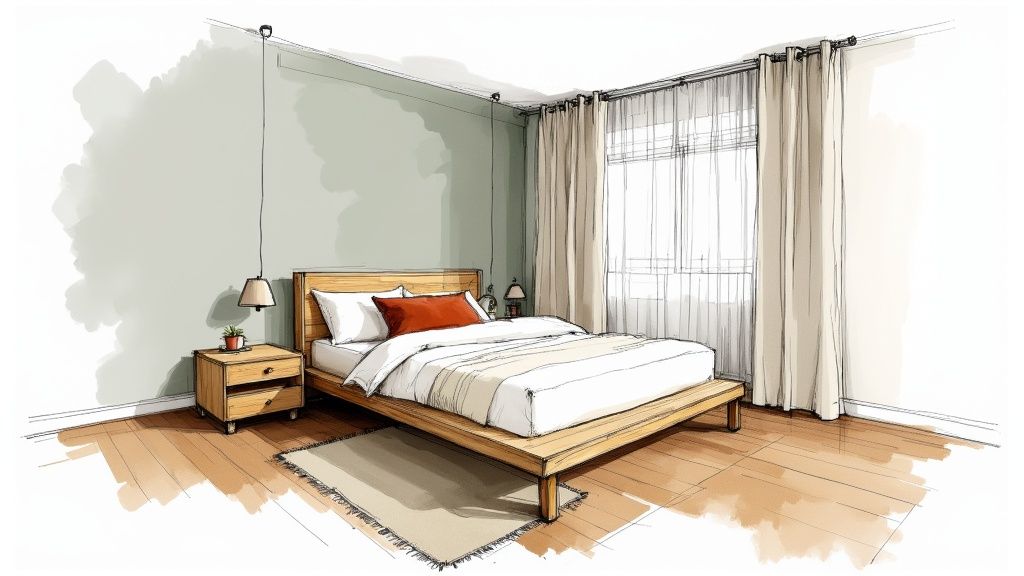
Warm neutrals are going to be your secret weapon. They have this amazing ability to create a calming atmosphere that works in any space, whether you're in a tiny city apartment or have a sprawling primary suite.
Choosing Your Warm Neutral Palette
The key is to think in terms of soft, earthy undertones. These colors have a wonderful way of making a room feel both more expansive and more intimate at the same time—a neat little design trick that’s great for any room size.
Here are a few go-to choices that are easy to work with:
- Soft Grays with Warm Undertones: Ditch the cold, industrial grays. Instead, look for greige (that perfect blend of gray and beige) or mushroom tones that feel sophisticated and grounded.
- Earthy Terracotta and Clay: You don't need to go all-in. Even a single accent wall in a muted terracotta can add an incredible amount of warmth without dominating the room.
- Muted Sage and Olive Greens: These shades are fantastic for bringing a bit of the outdoors in. They instantly promote a sense of calm and tranquility.
- Creamy Off-Whites: If you love white, just make sure it has a hint of yellow or pink in it. Think alabaster or ivory—they feel rich and warm, never sterile.
Feeling stuck? Choosing the perfect paint color can be paralyzing. To skip the cycle of buying endless sample pots, try using an AI Interior Designer. You can upload a photo of your actual bedroom and see how different palettes look with your own lighting and furniture before you commit, saving you from a costly mistake.
For more practical tips, our guide on how to choose paint colors for rooms has you covered.
Layering Natural Textures for Warmth
Color sets the stage, but texture is what brings the "cozy" to life. When you start layering in different natural materials, you add depth, character, and a tactile quality that makes a room feel genuinely comfortable and lived-in.
This isn’t just a niche trend. Recent data shows that 72% of renters are now embracing minimalist styles that lean heavily on warm neutrals and clean lines, a detail confirmed in this 2025 trends report on multifamilyexecutive.com. This shows just how appealing this style is for rental properties and listings.
To start building warmth, try incorporating a few of these materials:
- Light Woods: Oak, ash, or maple are perfect for a bed frame or nightstands. They add an organic, grounding element to the room.
- Linen: There's nothing quite like linen for curtains or a duvet cover. Its naturally rumpled, breathable texture is the very definition of relaxed elegance.
- Wool and Bouclé: A soft wool rug feels incredible underfoot first thing in the morning. A bouclé accent chair not only adds comfort but also helps absorb sound—a huge plus in apartments.
- Rattan or Wicker: Simple touches like a woven basket to hold extra blankets or a rattan light fixture can add just the right amount of bohemian warmth without creating clutter.
Choosing Furniture That Works Smarter
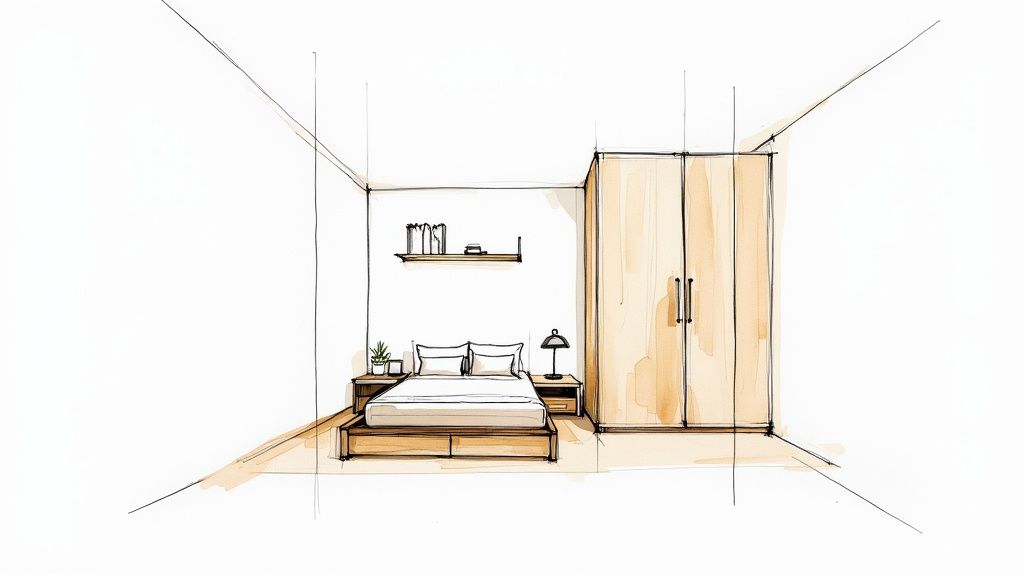
When you're creating a cozy minimalist bedroom, every piece of furniture has to earn its keep. The idea is to pick things that are not just beautiful, but also incredibly useful. This intentional approach is the secret to keeping your sanctuary feeling serene and uncluttered.
Stick with furniture that has clean, simple lines and a low profile. A great example is a wooden platform bed; it immediately makes a room feel more open and airy compared to a traditional, bulky frame. This simple trick of using low-slung furniture can even create the illusion of higher ceilings, which is a lifesaver in smaller bedrooms or basement spaces.
Prioritizing Functionality Without Sacrificing Style
The real hero in any minimalist space is smart, concealed storage. Since clutter is the ultimate enemy of calm, furniture that pulls double duty is non-negotiable for maintaining that peaceful vibe.
Here are a few of my favorite multifunctional pieces for a cozy minimalist bedroom:
- Beds with Hidden Storage: A platform bed with built-in drawers is the ultimate space-saver. You gain a huge amount of storage for extra linens or seasonal clothes, often eliminating the need for a separate dresser entirely.
- Sleek Floating Shelves: Instead of a heavy bookcase that eats up precious floor space, a few simple floating shelves are a much better fit. They give you a spot for a handful of books or a small plant while keeping the overall feel of the room light.
- Streamlined Wardrobes: If you don't have a built-in closet, look for a wardrobe with a simple, flat-front design. A piece that blends in with your wall color will feel much less visually intrusive and won't dominate the room.
This focus on smart storage is especially important for anyone living in an apartment, hosting an Airbnb, or just dealing with limited square footage. When every inch counts, your furniture has to work harder. For a deeper dive, check out our guide to essential minimalist furniture ideas.
Visualizing Your Layout Before You Buy
One of the most common—and expensive—mistakes is buying furniture that's completely the wrong scale. That perfect bed you found online can quickly swallow your entire room, making it feel cramped instead of cozy. This is exactly why planning is your best friend.
Before you even think about adding something to your cart, take a moment to truly visualize it in your space. An oversized piece can throw off the entire flow and undo all your hard work.
This is a perfect time to use an AI interior design tool. With a platform like Interior Redesign AI, you can upload a photo or even a quick sketch of your bedroom and virtually test out different furniture. See how a queen bed compares to a king, or figure out if that slim wardrobe actually fits better than a wider one. This helps you avoid costly mistakes and reduces the stress of making big decisions, ensuring your final choices are just right.
Mastering the Art of Light and Layers
Think of your furniture and color palette as the foundation of your cozy minimalist bedroom. Lighting and textiles? That's the soul. This is where you really start to dial up the comfort, turning a clean, simple space into a warm, inviting sanctuary. The right combination can take a room from feeling just functional to feeling deeply personal and relaxing.
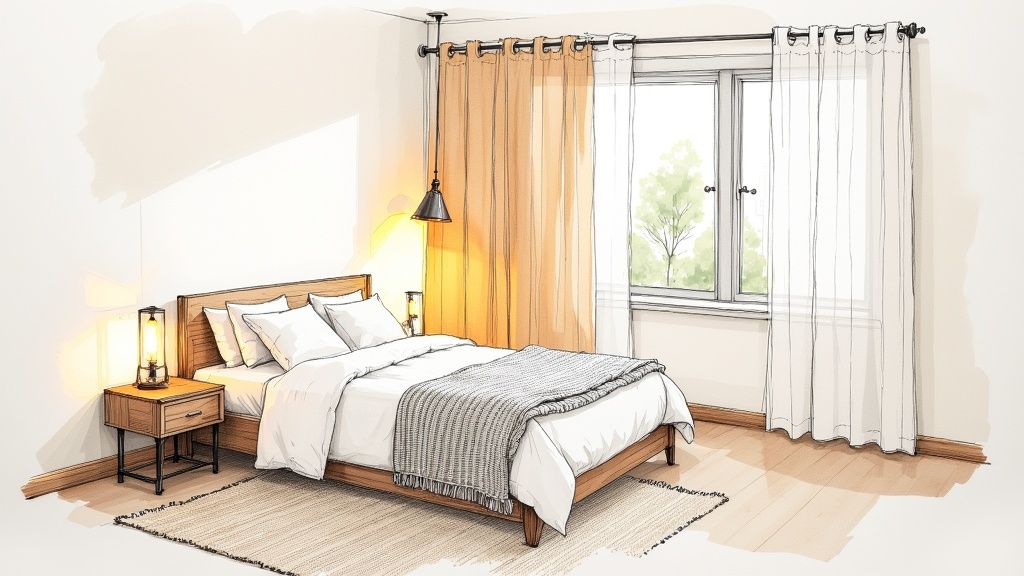
The secret here is to get away from relying on a single, harsh overhead light. Instead, you want to think in terms of layered lighting—combining different light sources to create a soft, adaptable glow. This approach lets you set the mood for any time of day, whether you're getting ready in the morning or winding down with a book at night. It's a professional trick that makes any space feel more thoughtfully designed.
Creating a Warm Glow with Layered Lighting
Building layers of light is much simpler than it sounds. It’s all about giving yourself options beyond just "on" or "off." A well-lit room just feels more dynamic and welcoming.
Here’s a simple, step-by-step formula:
- Start with ambient light: This is your primary light source, often an overhead fixture. To keep things soft, choose one with a diffuser or a warm-toned bulb to cast an even, gentle glow across the room.
- Next, add task lighting: These are focused lights for specific activities. Think of a stylish bedside lamp for reading or a small, elegant lamp for a corner desk.
- Finally, bring in accent light: This adds a touch of drama and warmth. A slim floor lamp tucked behind a reading chair works beautifully. Even battery-powered puck lights under a floating shelf can be a great, renter-friendly option.
The Power of Textiles and Texture
Once your lighting is sorted, textiles are your next move for injecting that essential cozy factor. Layering different materials is the quickest way to make a minimalist room feel luxurious and inviting without adding a bunch of clutter. You’re aiming for a space that you just want to reach out and touch.
Focus on materials that feel as good as they look:
- On the Bed: Start with soft linen or brushed cotton sheets. Add a waffle-knit duvet cover, then top it all off with a chunky knit throw for that ultimate sink-in feeling. These layers create visual depth and undeniable comfort.
- On the Floor: A plush, high-pile area rug is a non-negotiable in my book. Make sure it's large enough that your feet land on it when you get out of bed—it’s the perfect soft start to your day.
- On the Windows: Sheer linen or cotton curtains are perfect for softening the hard edges of a window frame. They let that beautiful natural light filter through while still offering a sense of privacy.
Key Takeaway: The goal isn’t to fill the room with things, but to choose a few high-impact textural pieces. A single bouclé accent pillow or a soft sheepskin rug can do more for coziness than a dozen generic decor items ever could.
This focus on intentional choices is a huge part of why cozy minimalist interiors are so popular. In fact, 50% of renters are now specifically interested in smart lighting to control ambiance, and social media is fueling demand for photogenic textures like soft linen and wood grain. It proves that a well-layered room has major appeal for both personal enjoyment and listing photos.
Of course, mastering light control and privacy means choosing the right window treatments is key; you can learn more about the best blinds for bedrooms to complete the look.
It can be tricky to visualize how all these layers—from lighting to curtains to bedding—will come together. This is a great time to create a digital mood board to make sure your chosen textures and colors really work. For a little guidance, check out these helpful interior design mood board examples.
Styling With Intention: The Art of "Less But Better"
The final layer in crafting your cozy minimalist bedroom is all about styling with intention. This is where you infuse the space with your personality, but the key is to be incredibly selective. Instead of filling every surface, we're aiming for a "less but better" philosophy that allows each carefully chosen object to truly stand out.
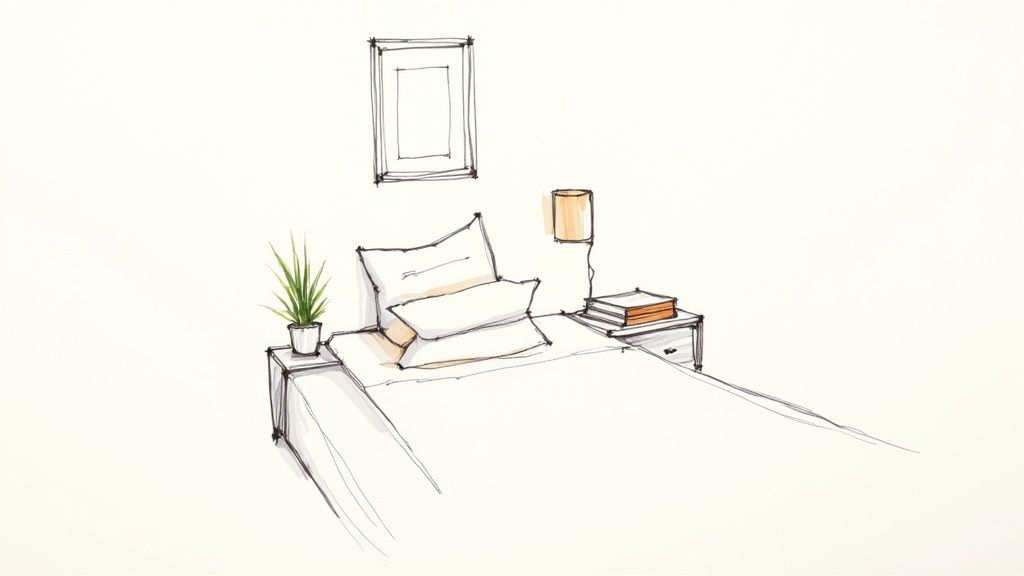
A huge part of this is understanding the power of negative space—a design term for the empty area around your furniture and decor. Think of it as visual breathing room. It’s what keeps a room from feeling chaotic and cluttered, creating a sense of calm and order instead. That intentional emptiness is precisely what makes your beautiful lamp or single piece of art feel special.
Curating Your Personal Touches
Instead of scattering lots of small, random trinkets, focus on a few items that are genuinely meaningful or beautiful to you. This approach adds loads of character without creating clutter, making it perfect for both homeowners and Airbnb hosts who want a stylish, low-maintenance vibe.
A few practical examples:
- A Single Piece of Art: One large, captivating piece of art above the bed makes a far more powerful statement than a busy gallery wall.
- A Small Stack of Books: Place two or three of your favorite hardcover books on the nightstand. It’s simple, personal, and feels lived-in.
- A Touch of Green: A single snake plant or a cascading pothos in a simple ceramic pot can breathe life and organic texture into the room instantly.
This isn't just about making the room look good for a photo. It’s about creating a space that feels clear and peaceful to be in every day. The fewer items you have, the easier it is to maintain that serene atmosphere.
The Decluttering Mindset
Of course, embracing less means you first have to let go of the excess. Set aside a weekend to declutter, focusing on notorious clutter hotspots like the closet, the top of the dresser, and those packed nightstand drawers. For every item, ask yourself: is this useful, or does it bring me genuine joy? If not, it’s time for it to go.
As you edit your belongings, extend that same mindfulness to new purchases. For instance, exploring minimalist and sustainable bedding choices aligns perfectly with this intentional design philosophy. It's all about making conscious decisions.
Feeling stuck on which decor pieces to keep? This is where a design preview tool can be a game-changer. Upload a photo of your room to Interior Redesign AI and you can virtually test out different styling combinations. See if that one large painting really does look better than three smaller ones. It’s a fantastic, low-stress way to make confident decisions before you start hammering nails into the wall.
Cozy Minimalist Styling Dos and Don'ts
| Do | Don't |
|---|---|
| Do select items with personal meaning. | Don't use decor as filler for empty spaces. |
| Do group small items in threes or fives. | Don't create a "gallery wall" with too many small frames. |
| Do choose one or two healthy plants. | Don't line a windowsill with a dozen tiny succulents. |
| Do use trays to corral necessities on a dresser. | Don't leave clutter out on every flat surface. |
| Do let beautiful materials speak for themselves. | Don't cover every surface with knick-knacks. |
Ultimately, styling a minimalist space is about celebrating simplicity and making sure that what you do display is worthy of the attention it will inevitably receive.
Bringing Your Vision to Life with AI
You’ve got the complete playbook for creating a cozy minimalist bedroom. Now for the fun part: turning those concepts into a reality you can see. This is where modern design tools come into play, bridging the gap between your imagination and your actual room.
For homeowners, Airbnb hosts, and real estate agents, visualization is a game-changer. It helps you perfect a design before spending any money or allows you to create virtual concepts that showcase a property’s potential without buying a single piece of furniture.
Test Your Ideas Before You Commit
AI-powered tools give you the confidence to make smarter design choices, saving you from the headache and expense of a design regret. Here's how they help:
- Visualize Wall Colors: Instantly see how different paint shades will look in your room, with your specific lighting. No more guessing with tiny paint swatches.
- Experiment with Layouts: Virtually rearrange furniture to find the most functional and spacious configuration. See if that king-size bed will make the room feel cramped before you buy it.
- Preview Materials: Wondering how a light oak bed frame will look against a dark wood floor? Test out different textures and materials in seconds.
The real magic of using AI is how it reduces decision stress. It lets you experiment freely, turning what can be an overwhelming process into a creative and genuinely enjoyable one.
Of course, AI is a powerful starting point, not a final answer. It provides fantastic ideas, but always combine them with your personal taste. If you're undertaking a major renovation, consulting a professional designer is still a great idea. Our guide to free AI home design tools explains more about how they work.
Ready to see your ideas come to life? Upload a photo of your bedroom to Interior Redesign AI and try it out for free.
Common Questions, Answered
Let's tackle some of the questions that pop up most often when people start thinking about a cozy minimalist bedroom. These are the practical, real-world concerns about budget, small rooms, and making it all work.
How do I create this look on a tight budget?
Great news: a cozy minimalist bedroom is more about what you remove than what you add. The single most powerful (and 100% free) step is a thorough declutter. That alone will transform the feel of your space.
Once you’ve cleared the clutter, you can make a huge impact with just a little cash. Here are some realistic, budget-friendly tips:
- Rearrange first: Before you buy anything, try rearranging your existing furniture. A new layout can completely refresh a room without costing a dime.
- DIY what you can: A fresh coat of warm, neutral paint on an old nightstand or dresser can make it look brand new. You could even create your own simple, abstract art for a personal touch.
- Shop secondhand: Thrift stores and online marketplaces are goldmines for solid wood furniture. You can find beautiful, timeless pieces for a fraction of what they’d cost new.
- Focus on textiles: The fastest way to add coziness is with texture. A quality linen-blend duvet cover, a chunky knit throw, or a soft new rug will make the biggest difference for the smallest investment.
Won't a minimalist style make my small room feel empty?
It's a common fear, but the reality is the exact opposite. Done right, minimalism is a small room's best friend. It doesn't make it feel empty; it makes it feel bigger, calmer, and much more intentional.
The trick is to create an illusion of space. Here's how:
- Opt for furniture with slender, visible legs—think a bed frame you can see under, rather than a solid box base. This allows light and air to move more freely, making the room feel more open.
- Go vertical with floating shelves instead of a clunky, floor-standing bookcase. This draws the eye upward and saves precious floor space.
- Use the “cozy” elements to add warmth. Those tactile elements like plush rugs, layered bedding, and soft, ambient lighting are what keep the space from feeling sterile. It’s the perfect balance of open and inviting.
Ready to stop guessing and start seeing? Instantly reimagine your room from a photo or sketch. Try Interior Redesign AI and visualize your new bedroom for free!