A modern house exterior isn’t just about looking new—it's a design philosophy that champions clean lines, simple geometric shapes, and a deep connection to the outdoors. This style steps away from fussy ornamentation, focusing instead on a smart mix of materials and uncluttered surfaces. The goal? To create a look that's both sophisticated and genuinely welcoming, boosting curb appeal and your home's value.
What Defines a Modern House Exterior?
When you picture a modern house, do you see a cold, sterile box? Let's update that image. Today's modern design is all about warmth, texture, and creating a standout first impression. It's an architectural style that prizes simplicity and purpose over purely decorative details. The result is a facade that feels calm, confident, and built to last.
For homeowners, real estate agents, and Airbnb hosts, understanding these principles is key. A thoughtfully designed modern exterior doesn't just make coming home a better experience; it can significantly lift a property's market value and listing appeal. You can see how this philosophy compares to other popular looks in our complete guide to interior design styles.
The Core Philosophy
At its heart, modern exterior design is about letting the building's structure and materials do the talking. Every element serves a purpose. You won't find fake shutters or trim that's just there for show. Instead, the beauty comes from the way different textures play off each other, the strategic use of light, and how the home blends seamlessly into its surroundings.
Recent trends are moving away from the flat grays that once defined modern homes. Homeowners are now leaning into warm, nature-inspired colors, a smart move that can increase a home’s value. With nearly half of buyers willing to pass on a home because of poor curb appeal, these kinds of updates make a real impact on your bottom line. You can discover more insights about these exterior home design trends on caseynelsonexteriors.com.
The goal is to create a sophisticated but welcoming feel. Modern design isn’t about being minimalist for its own sake; it’s about enhancing a home’s architectural beauty through a thoughtful mix of materials and uncluttered surfaces.
Here's a quick rundown of the key characteristics you'll almost always find in a modern exterior.
Core Elements of Modern Exteriors at a Glance
This table breaks down the fundamental characteristics of a modern house exterior, giving you a quick snapshot of the concepts that drive this design approach.
| Characteristic | Why It Matters for Your Home |
|---|---|
| Simple Geometric Forms | Clean cubes and bold angles create a strong, clear silhouette that feels confident and uncluttered. |
| Expansive Windows | Large, unadorned windows blur the line between inside and out, flooding your home with natural light and making spaces feel larger. |
| Asymmetrical Design | Unlike traditional homes, modern exteriors use asymmetry to create visual interest and a dynamic, engaging feel. |
| Natural Materials | Mixing wood, stone, and metal adds warmth, texture, and depth, preventing the design from feeling flat or sterile. |
Understanding these core ideas is the first step toward creating a modern exterior that not only looks great but also feels right for your home.
Here's a closer look at what those characteristics mean in practice:
- Simple Geometric Forms: We're talking about clean cubes, striking angles, and flat or low-pitched rooflines. These elements create a powerful, unambiguous silhouette.
- Expansive Windows: Large panes of glass, often without fussy grilles, are a hallmark of this style. They’re designed to dissolve the barrier between your living space and the outdoors, which is great for small homes needing to feel more spacious.
- Asymmetrical Design: Forget perfect symmetry. Modern exteriors often play with balance, arranging elements in a way that feels dynamic and visually engaging, rather than static.
- Natural Materials: You'll almost always see a thoughtful combination of materials. Think the warmth of wood siding, the rugged texture of stone, the sleekness of metal, and the solid feel of concrete. This mix is key to adding character.
Choosing Your Materials and Textures
The materials you choose are the very skin of your home. They set the tone, tell a story, and create that all-important first impression that can make or break a real estate listing. The secret to a striking modern exterior isn't just picking one nice material—it's knowing how to combine them to create something truly special.
Think of it like putting together an outfit. A single fabric can be boring, but when you pair a smooth texture with a rough one, you create depth and interest. The exact same idea applies to your home's exterior.
Popular Materials for a Modern Look
Let's walk through some of the go-to materials for achieving that clean, contemporary aesthetic. Each one brings its own personality, cost, and upkeep needs—something every homeowner, property manager, or Airbnb host needs to weigh carefully.
- Natural Wood: Materials like cedar and redwood bring incredible warmth and an organic feel, softening the sharp edges of modern architecture. It’s perfect for accent walls or framing an entryway, but remember it will need sealing every few years to stay protected from the elements.
- Architectural Concrete: This isn’t rough parking garage concrete. We're talking about smooth, precisely formed panels that create a sleek, minimalist backdrop. It’s incredibly durable and requires virtually no maintenance, offering a cool, solid anchor that makes warmer materials like wood really pop.
- Sleek Metal Siding: Usually installed in standing-seam panels, metal siding (like steel or aluminum) delivers crisp, clean lines and a super durable finish. It comes in a range of colors and gives off a polished, industrial-chic vibe that holds up incredibly well to weather.
- Stone and Brick Accents: When used strategically, natural stone or modern, slim-profile brick can add a sense of permanence and timeless texture. The modern approach isn't to cover the whole house; instead, you use it to highlight a key feature, like a fireplace chimney or the foundation line.
This diagram really captures the essence of what makes a modern exterior work.
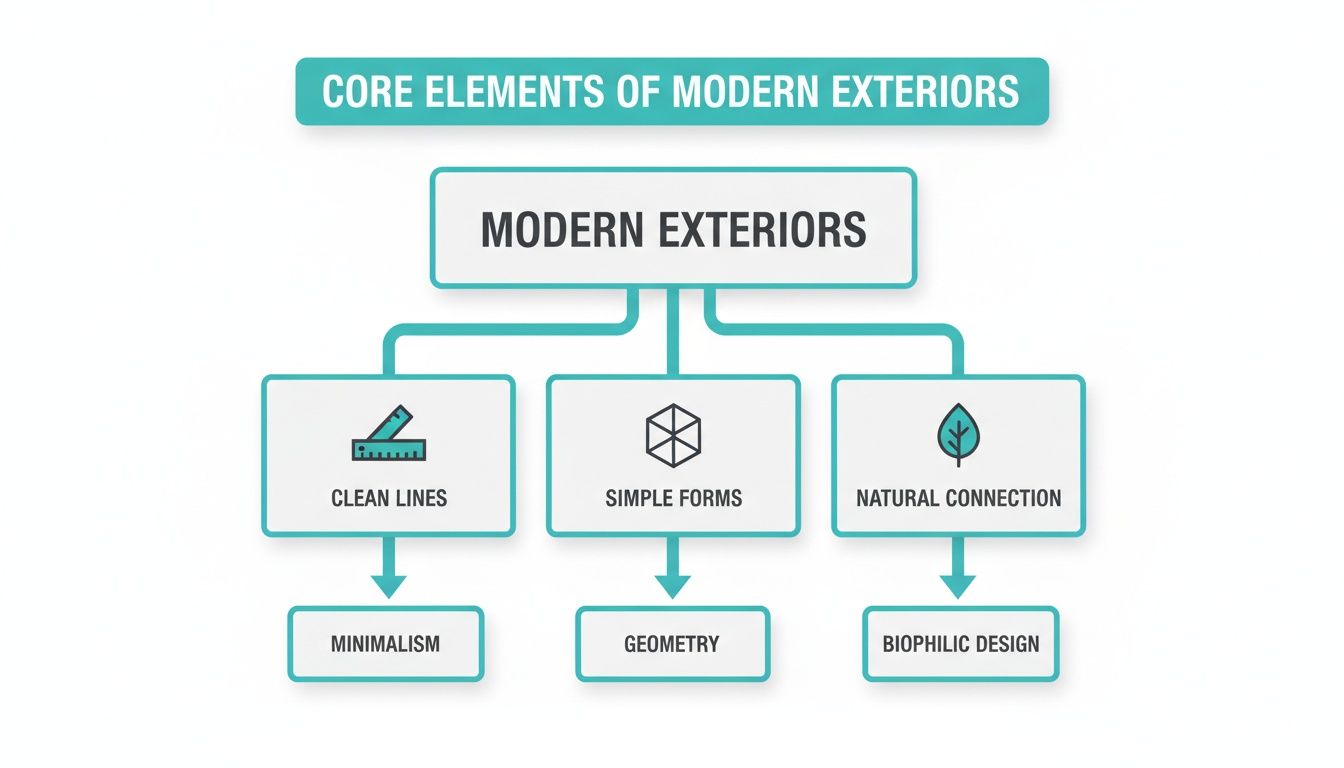
As you can see, it all comes back to simple forms, clean lines, and a strong connection to nature. The materials you choose are what bring these principles to life.
The Art of Combining Textures
The real magic happens when you start layering these materials. The goal is to create a facade with depth and character, avoiding that flat, one-dimensional look. A well-executed mixed-material design feels balanced and sophisticated, and it's one of the fastest ways to elevate your home's curb appeal and resale value.
Designer's Tip: The easiest rule of thumb is to pair a warm, textured material with a cool, smooth one. The organic grain of cedar siding, for example, looks absolutely stunning next to a sleek, dark metal panel. That contrast is what creates architectural drama and visual interest.
Figuring out the right mix can feel like a huge decision. It’s tough to visualize how different materials will actually look on your home, and a wrong move can be an expensive mistake. This is where technology can be a huge help. And if you're thinking about a more extensive update, our guide on planning a modern home remodeling project offers a great roadmap.
Using AI to Visualize Your Material Choices
Before you spend thousands on materials and labor, you need to feel confident in your plan. This is the perfect job for an AI Interior Designer. It lets you test drive your ideas without any risk, saving you time, money, and stress.
- Try Combinations Instantly: Just upload a photo of your house to Interior Redesign AI and immediately see what it would look like with cedar accents versus a painted brick finish.
- Experiment Without Risk: Curious if a dark metal roof will work with light gray siding? You can visualize multiple styles quickly and get a realistic preview in seconds.
- Refine Your Ideas: Use AI to play with the layout of materials. See if you prefer wood siding on just the entryway or running across the entire second floor. This process takes the guesswork out of the equation and empowers you to make decisions with a clear picture of the end result.
Mastering Your Modern Color Palette
Color is your secret weapon for giving your home a distinct personality and major curb appeal. Let's get one thing straight: the old idea that modern houses have to be sterile white or cold gray is completely outdated. Today, it’s all about creating a sophisticated palette that feels intentional and works with your home's architectural materials, not against them.
Picking a color scheme can feel like a high-stakes decision. After all, nobody wants to spend thousands on a paint job only to realize they hate the result. You're not just choosing one color; you're creating a look that ties together your siding, trim, and accents into something special.
Beyond Basic White and Gray
Sure, a crisp white or a deep charcoal will always have a place in modern design. But the real magic is happening in the world of warmer, more complex neutrals. These are the colors that make a home feel inviting and sophisticated without losing that clean, contemporary vibe. For a real estate agent or an Airbnb host, a warm, welcoming exterior can make a property feel a hundred times more appealing in listing photos.
Here’s what’s really catching on:
- Warm Neutrals: We're not talking about bland beige. Think greige (that perfect blend of gray and beige) or a warm taupe. These shades create a soft, earthy backdrop that looks incredible next to natural wood or stone.
- Earthy Tones: Deep, nature-inspired colors like a rich forest green or a moody deep brown can make a house feel totally connected to its surroundings. This is especially effective in rural or wooded areas.
- Dramatic Contrasts: If you want to make a statement, go dark. A house painted in charcoal, an almost-black shade, or a deep navy looks incredibly confident. The trick is to pair these powerful colors with crisp white or light wood accents to define the home's architectural lines.
The Simple Three-Color Rule
Overwhelmed by options? Fall back on a classic designer trick: the three-color rule. It's a straightforward framework that brings balance to your exterior and prevents a chaotic look.
- Primary Color: This is your main act. It’s the color that will cover most of your home’s siding.
- Secondary Color: This is for the trim, fascia, and window frames. It should complement your primary color, whether it's a subtle contrast (like soft white against greige) or a bold one (like black trim on a white house).
- Accent Color: Here’s where you add a splash of personality! This color is usually reserved for the front door. A bright yellow, a cool blue, or a classic red on an otherwise neutral house creates an instant focal point that says, "welcome."
Pro Tip: The finish is just as important as the color. A matte finish is great for hiding small surface flaws and gives a soft, modern look. A satin finish has a slight sheen, which makes it easier to clean and adds a touch of elegance—perfect for high-traffic areas like doors and trim.
If you're stuck, check out our guide on how to choose paint colors for rooms. The principles for creating a great palette are surprisingly similar, inside and out.
Test Your Palette Before You Paint
How do you know what a color will actually look like on your whole house? Painting a few small swatches on a wall just doesn't cut it. This is where AI can be a game-changer, saving you from stress and potential regret.
With a tool like Interior Redesign AI, you can upload a photo of your house and start playing. Instantly see what that deep green looks like with black trim, or test drive five different accent colors for your front door in minutes. You get a realistic preview of the finished product, so you can feel completely confident before you ever pick up a paintbrush.
The Role of Windows and Exterior Lighting
In a modern home, windows and lighting aren't just practical—they're core design elements. Think of windows as the eyes of the house, forging a connection with the outdoors. Exterior lighting, on the other hand, is the artist's brush, sculpting the home's silhouette and setting the mood after dark.
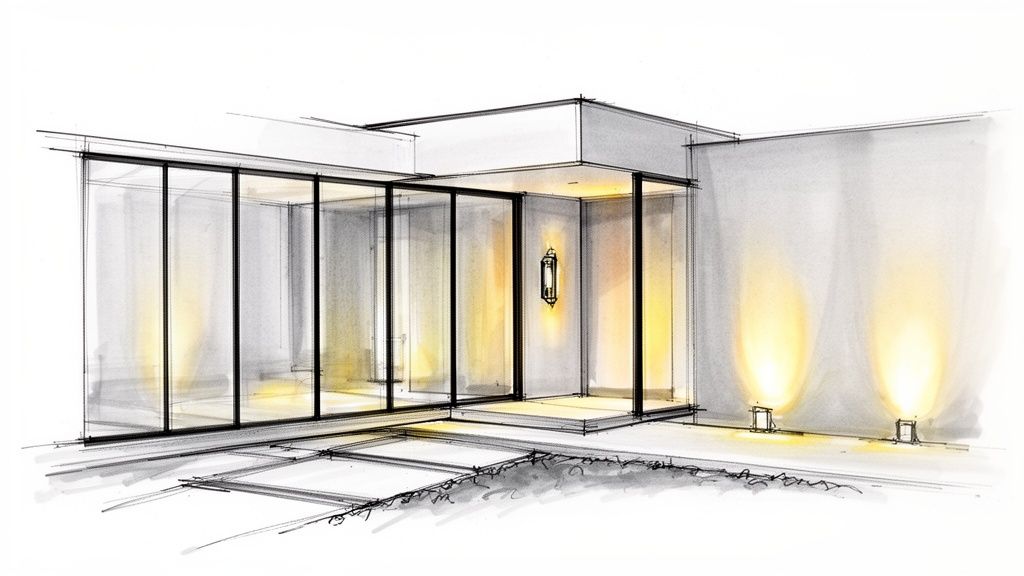
When you get these two right, they give your home serious curb appeal, day or night. For anyone in real estate or managing an Airbnb, that 24-hour visual impact is a powerful asset, making a property feel both impressive and secure.
Windows as Architectural Statements
Big windows are a hallmark of modern design, and for good reason. The entire point is to blur the lines between inside and out, flooding your home with natural light. This simple move makes any space, big or small, feel more expansive and connected to nature.
This isn't just about sticking a few large panes of glass in the wall. A truly modern approach gets more creative.
- Floor-to-Ceiling Windows: These are the showstoppers. They create a seamless flow to a patio or garden, making the landscape feel like an extension of your living room.
- Clean Window Groupings: Instead of one massive window, consider arranging several simpler ones in a striking geometric pattern. A clean grid or a long, linear series adds a sense of rhythm and purpose.
- Minimalist Frames: The frame shouldn't steal the show. Thin, barely-there frames—often in black steel or aluminum—keep the focus on the view itself and add a crisp, graphic quality to the exterior.
Crafting a Layered Lighting Plan
A great exterior lighting plan is so much more than a single, glaring porch light. It's about layering light to build depth, highlight your home's best angles, and, of course, improve safety. You're essentially painting with light to create a specific vibe after the sun goes down.
Most professional lighting schemes rely on three distinct layers:
- Ambient Lighting: This is your base layer of general, soft illumination, like downlights tucked under the eaves or well-placed sconces that cast a gentle glow.
- Task Lighting: This is the practical stuff. It’s the focused, bright light you need over the front door, above the garage, or along a walkway to see where you're going.
- Accent Lighting: Here’s where the magic happens. Accent lights are used to create drama by drawing the eye to specific architectural details or stunning landscape features.
A common mistake is just blasting the front of the house with a harsh floodlight. A much more sophisticated approach uses multiple, smaller lights to create a warm, inviting atmosphere with pockets of light and shadow.
Practical Lighting Ideas for Your Home
Pulling together a beautiful and functional lighting plan is more achievable than you might think. For some fantastic real-world inspiration, check out this Lower Macungie Modern Exterior Lighting project to see how these techniques come together.
Here are a few ideas you can put into practice right away:
- Uplighting: Place small spotlights on the ground and aim them up at a textured stone wall or a beautiful tree. This creates dramatic shadows and highlights texture.
- Path Lights: Line your walkways and driveway with low-profile, downward-facing lights. It's not just for safety; it creates an elegant, runway-like effect that guides guests to your door.
- Statement Sconces: Think of a pair of sleek, geometric wall sconces as jewelry for your entryway. They add a touch of style while perfectly illuminating the entrance.
Of course, it can be tough to visualize how different fixtures and placements will look. This is where AI Interior Designer helps. Upload a photo of your exterior, and you can experiment with different lighting styles instantly, helping you nail the perfect look before committing to an expensive installation.
Integrating Landscaping with Modern Design
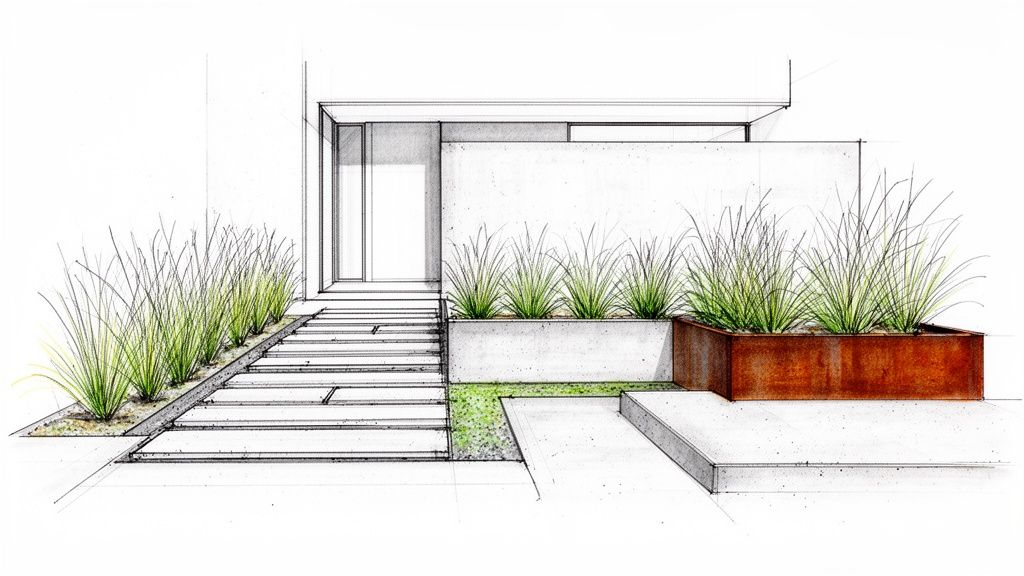
A great modern house exterior doesn't stop at the walls. The design needs to flow right into the landscape, creating one cohesive, intentional space. Stop thinking of your yard as a separate patch of grass and start seeing it as an outdoor room—an extension of your home's architecture.
The core ideas of modern landscaping echo the principles of modern architecture: clean lines, a minimalist mindset, and a strong focus on structure. This means trading fussy flowerbeds for organized, purposeful plantings. For a homeowner, this approach builds a sophisticated, low-maintenance yard. For real estate agents or Airbnb hosts, it delivers serious curb appeal that instantly communicates a well-cared-for property.
Core Principles of Modern Landscaping
Pulling off a modern landscape is all about being deliberate. Instead of trying to fill every square inch, modern design uses negative space—purposeful empty areas—to make the plants and structures you do have stand out even more. The goal is a calm, uncluttered environment that feels like a natural bridge from your indoor living areas to the outdoors.
Here are the key elements to get right:
- Clean, Geometric Hardscaping: Use large-format concrete pavers or sleek bluestone slabs to create patios and walkways with crisp, straight lines. These geometric shapes create a strong structural backbone for the whole design.
- Minimalist Plant Palette: Resist the urge to plant one of everything. Instead, choose just a few powerful plant species and arrange them in mass groupings or neat, linear rows. Ornamental grasses, boxwoods, and ferns are fantastic for adding texture without creating visual chaos.
- Strategic Use of Materials: Tie your landscape back to your home's exterior by repeating materials. If your house has cedar siding, a simple cedar planter box creates an instant connection. Corten steel planters add a beautiful, industrial-chic element that develops a rich, rusty patina over time.
The big idea here is that your yard should feel like a purposeful extension of your home, creating a seamless flow from the built environment to the natural one. It's about quality over quantity.
Practical Ideas You Can Implement
You don't need a massive budget or a sprawling lawn to bring these principles to life. Even a small patio or an apartment balcony can be transformed with a clean, organized approach. To take your outdoor spaces to the next level, think about incorporating innovative garden lighting solutions that can unify the landscape after dark.
- Create a Living Fence: Instead of a standard wooden fence, plant a row of tall, slender trees like Italian Cypress or use bamboo (in containers to control its spread!) to form a natural privacy screen with strong vertical lines.
- Group Planters for Impact: On a deck or patio, arrange three identical modern planters of varying heights together. Planting the same thing in each—like a spiky agave or some soft feather grass—creates a striking, artful focal point.
- Embrace Textural Ground Cover: Replace awkward patches of lawn that are a pain to mow with low-maintenance ground covers like fine gravel, river stones, or creeping thyme. This cuts down on upkeep and adds a clean, textural element.
Visualize Your Landscape Design with AI
It’s one thing to read about these concepts, but it's another thing entirely to picture them in your own yard. How will those concrete pavers really look next to your siding? This is exactly where planning with an AI tool can save you time, money, and stress.
Using an AI Interior Designer, you can just upload a photo of your yard and start testing these concepts instantly. Visualize a new planting scheme before you pick up a shovel, or compare different hardscaping materials side-by-side. While AI is a fantastic starting point for ideas, be honest about its limitations. Always combine AI-generated concepts with your personal taste, or consult a professional landscaper for complex projects.
Visualize Your New Exterior with AI
Feeling overwhelmed by all the material and color choices for your modern house exterior? You’re not alone. This is where technology can help, letting you experiment with confidence before making any expensive, permanent commitments. Visualizing the final result takes the guesswork—and a lot of the stress—out of the process. Think of it like a digital dress rehearsal for your house.
Experiment with Zero Risk
You can use a tool like Interior Redesign AI to bring your ideas to life. Just upload a current photo of your home and start testing changes instantly.
Wondering how that dark charcoal paint would really look next to warm cedar accents? Curious if a bold yellow front door is exciting or just a bit much? Instead of squinting at tiny paint swatches, you can generate realistic, 4K previews of your modern house exterior in seconds. This is a huge benefit for reducing decision stress.
The biggest win here is getting rid of the fear of making a costly mistake. You get to see exactly how different materials, colors, and features will look together on your actual home. This process is a user-friendly version of what architects use; you can learn more about what architectural rendering is in our detailed guide.
This lets you explore different paths to find the perfect look.
- Test Paint Colors: See how a warm greige actually compares to a cool gray on your walls, not just on a sample card.
- Mix Materials: Visualize how sleek metal siding plays against rugged stone accents before a single panel is ordered.
- Update Key Features: Make specific, targeted edits. See how black trim could totally redefine your windows, or test out a few different styles for your garage door.
Make Decisions with Confidence
Using an AI tool puts you in the driver's seat. For real estate agents and Airbnb hosts, this is an incredible way to quickly generate concepts that show a property's hidden potential, boosting its appeal to buyers or renters.
For homeowners, it simply means you can move forward with your renovation feeling certain about your choices. By testing your ideas digitally first, you save time, cut down on decision fatigue, and ensure the final result is a modern exterior you’ll absolutely love for years to come.
Frequently Asked Questions
Got questions about bringing a modern exterior to life on your own home? Here are clear, straightforward answers to get you started.
How Can I Give My Traditional Home a Modern Exterior on a Budget?
You don't have to drain your bank account. Focus on high-impact updates that give you the most bang for your buck, even if you're in a rented space (with permission, of course!).
- Start with Paint: This is the easiest and most effective change. A fresh coat of paint in a modern palette, like a deep charcoal gray or a crisp white, can completely transform a house. Adding a pop of bold color to the front door creates a whole new vibe.
- Update Fixtures: Think small details, big impact. Swap out that old, ornate porch light for something sleek and geometric. Replace dated, curly house numbers with a clean, sans-serif font. These little touches make a huge difference.
- Simplify Landscaping: Modern design is about clean lines. Prune back overgrown bushes, create defined edges with simple stone or metal borders, and use mass plantings rather than a jumble of different flowers. The goal is intentional, not chaotic.
What Is the Biggest Mistake to Avoid with a Modern Exterior?
Hands down, the biggest misstep is creating a design that feels cold or sterile. A modern home should feel clean and intentional, not like an institution. It's a common trap when focusing too much on minimalism.
The key is balance. Avoid using just one material or a single, monotonous color. Instead, create visual interest and warmth by mixing textures. Picture sleek metal siding paired with the organic grain of natural cedar, or smooth stucco softened by the billowy texture of ornamental grasses. A great modern exterior is uncluttered, but it absolutely must feel inviting.
For more answers to common questions, check out our comprehensive FAQ section.
Are Modern Exterior Materials Hard to Maintain?
Quite the opposite. Many materials that define the modern aesthetic were chosen specifically for their durability and low-maintenance nature, which is a huge benefit for busy families or rental property owners.
Products like fiber cement siding, metal roofing, and composite decking are engineered to withstand the elements for decades with very little upkeep. Even natural wood has modern solutions. Thermally modified or acetylated wood, for example, is treated to resist rot and insects, drastically cutting down on maintenance. Plus, with fewer intricate details and moldings than a traditional home, there's simply less to clean, repair, and repaint over the years.
Ready to see what your home could look like? Try Interior Redesign AI to instantly reimagine your exterior from a simple photo.