
Thinking about a modern home remodel? You're in the right place. It's all about creating spaces with open layouts, clean lines, and beautiful natural materials. The goal is to design a home that is functional, light-filled, and timeless—leaving dated, fussy styles behind. A great modern remodel doesn't just improve how your home looks; it enhances how you live in it and boosts its value on the market.
Why Everyone Is Talking About Modern Home Remodeling
It seems like home renovation is on everyone’s mind, and for good reason. Many homeowners are choosing to transform their current spaces rather than navigate a tough real estate market. This isn't just about a fresh coat of paint; people are going all-in on full modern remodels to create homes that truly work for their lives right now.
This isn't just a fleeting trend—it’s a massive economic shift. The global remodeling market was valued at an eye-watering USD 3.5 trillion in 2024 and is expected to climb to USD 5.2 trillion by 2034. This growth sends a clear signal: for many, renovating is a smarter move than buying new. Plus, with over 80% of U.S. homes being more than 20 years old, many are simply overdue for an update to bring them into the 21st century.
The Real Drivers Behind the Trend
So, what’s actually motivating homeowners, Airbnb hosts, and real estate agents to take on these big projects? It usually comes down to a few key reasons.
- Adapting to New Lifestyles: The need for dedicated home offices, multi-purpose living areas, and seamless indoor-outdoor connections is no longer a luxury—it’s a necessity. A remodel can reconfigure your existing space to fit your family's evolving needs.
- Boosting Property Value: A thoughtfully designed modern kitchen or bathroom remodel isn't just a joy to use; it can seriously increase a home's resale value and make it stand out to buyers. For more on this, it's worth understanding the best return on investment for home improvements.
- Improving Functionality and Comfort: Outdated layouts often feel dark, cramped, and inefficient. A modern remodel can open up the floor plan, maximize natural light, and make daily life smoother and more enjoyable, which is a huge win for families and renters alike.
A well-planned modern remodel isn't just about looks; it's a strategic investment. It enhances your daily life while building long-term equity, making it a smart move for any property owner.
This guide is your step-by-step playbook for the entire process. We’ll walk you through how to plan effectively and make smart decisions. Plus, we'll show you how new tools like an AI Interior Designer can help you visualize different layouts and finishes before you ever lift a hammer, saving you time, money, and a lot of stress.
Building a Remodel Plan That Actually Works
A successful remodel starts long before the sledgehammers appear. A solid, realistic plan is your best defense against surprise costs and frustrating delays. This is where you turn your daydreams into a concrete, actionable blueprint.
First, get honest about the scope of your project. It’s time to separate your true needs from your exciting wants. A "need" is non-negotiable—like fixing a leaky roof or updating an ancient electrical panel. A "want" is what makes the space beautiful and uniquely yours, like that stunning waterfall countertop you’ve been eyeing. Knowing the difference is the bedrock of a budget that holds up. If you're struggling to sort through it all, this comprehensive guide to prioritizing home improvement projects is a great place to start.
This flowchart maps out the journey many homeowners take when facing the high costs and maintenance of an aging home, ultimately leading them to remodel.
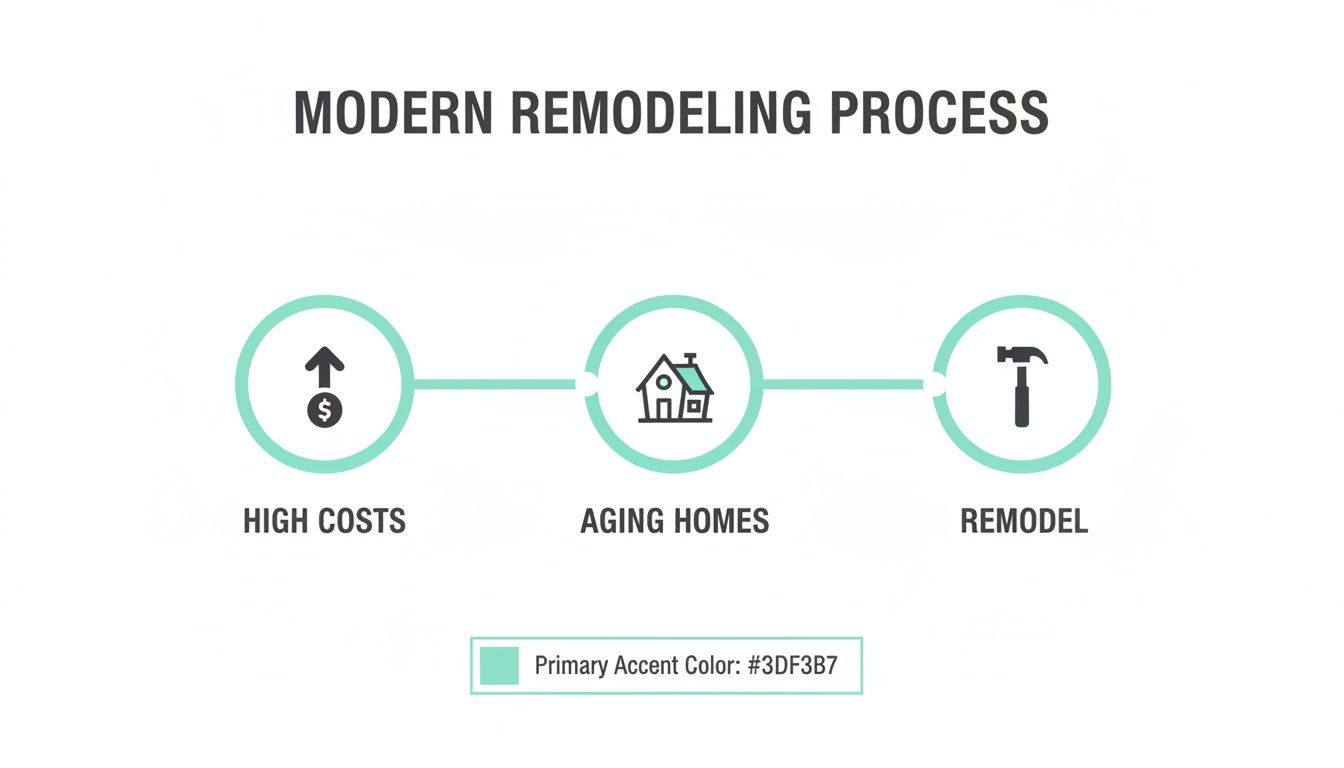
It’s a great visual reminder that renovating isn’t just about aesthetics; it’s often a practical solution to the real-world challenges of homeownership.
Defining Your Scope and Budget
With your list of needs and wants in hand, it's time to talk money. This part can feel daunting, but breaking it down into smaller steps makes it much more manageable.
- Research Material Costs: Start browsing online and in stores. Look up prices for big-ticket items like flooring, tile, fixtures, and appliances. Get a feel for the price range between budget-friendly options and high-end finishes.
- Get Preliminary Quotes: It’s never too early to talk to a few contractors. You don’t need a final bid yet, but getting ballpark estimates for labor will give you a reality check on what professional work costs in your area.
- Build in a Contingency Fund: This is crucial. Always add an extra 15-20% to your total estimated budget. This isn't "if" money; it's "when" money. It’s for the inevitable surprises hiding behind a wall, especially in an older home.
Think of your budget as your primary decision-making tool. It will guide every choice you make, from materials to finishes, and keep you on track to create a space you love without financial regret.
If you want to dig deeper into the numbers, our guide on how to plan your home renovation offers a more detailed breakdown.
Navigating Permits and Regulations
I know, the word "permits" can make any homeowner’s eyes glaze over. But this is a non-negotiable step for most major remodels. Permits ensure the work is done safely and meets local building codes, protecting both you and your home's future value.
You’ll almost certainly need a permit if your project involves:
- Altering the structural frame of your house.
- Touching the electrical, plumbing, or mechanical systems.
- Moving, adding, or removing walls.
Purely cosmetic updates—like painting, refacing cabinets, or swapping a faucet—typically don’t require a permit. When in doubt, call your local building department. A five-minute phone call can save you from massive headaches and fines later.
Visualize Before You Finalize
One of the biggest culprits behind stress and budget overruns is changing your mind after work has started. This is where modern technology can save the day. Instead of just imagining how a new layout will feel, you can actually see it first.
With a tool like an AI Interior Designer, you can upload a photo of your room and start playing. In minutes, you can generate different design concepts, test out various materials, swap paint colors, and even see how different furniture arrangements would work. This reduces decision stress immensely. For an Airbnb host, it means you can see exactly how a new bathroom layout will photograph for your listing. For a family, it means everyone can agree on a kitchen design before a single cabinet is ordered. Seeing the end result with such clarity provides peace of mind and all but eliminates those costly "I wish we had..." moments.
Crafting Your Modern Design Vision
With a solid plan, you can move on to the fun part: defining what "modern" looks like in your home. This is where you turn abstract ideas into real design elements that create a clean, functional, and inviting space. Modern design gets a bad rap for being cold, but it’s really about intentional simplicity—letting materials and layout do the talking.
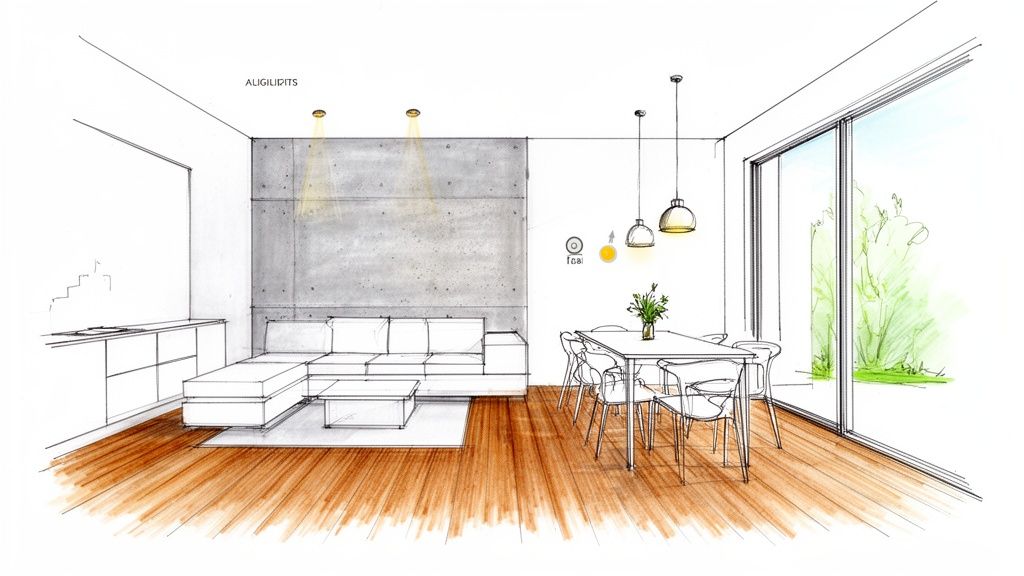
A common first move in a modern remodel is creating an open-concept layout. This usually means knocking down non-essential walls to blend the kitchen, dining, and living areas into one bright, cohesive space. For smaller homes or apartments, this is a total game-changer. The entire floor instantly feels larger, brighter, and more social—a huge win for families or anyone who loves to entertain.
Embrace Natural Materials and Clean Lines
Modern design celebrates honesty in materials. Instead of covering things up with ornate details, the focus is on the inherent beauty of natural textures. This is how you build warmth and character without adding clutter.
Start thinking about a material palette that feels both grounded and sophisticated.
- Warm Woods: Light woods like white oak or maple are perfect for flooring, custom cabinets, or even a statement ceiling. They bring in a touch of nature and keep the space from feeling stark.
- Sleek Metals: Matte black or brushed nickel hardware and fixtures provide a sharp, clean contrast. Use them for faucets, window frames, or lighting to add a defined, industrial edge.
- Honest Concrete: A polished concrete floor or a single feature wall can add an unexpectedly chic and durable element. It’s a fantastic, realistic choice for high-traffic areas in apartments and homes.
- Expansive Glass: Large windows, skylights, and sliding glass doors are key. They blur the line between inside and out, flood the space with natural light, and make everything feel more connected.
If you’re still pinning down your aesthetic, our interior design styles guide is a great place to get more inspiration.
Modern design is all about balance. The key is to pair hard surfaces like metal and concrete with softer, natural elements like wood and textiles. That’s how you create a space that feels both clean and comfortable.
Layer Light for Function and Mood
Lighting is one of the most powerful tools in a modern remodel, but it's often overlooked. A great lighting plan isn't just about making a room bright; it's about creating layers that support different activities and set the right mood.
Think in three main layers:
- Ambient Lighting: This is your general, overall light, like recessed ceiling lights or a central flush-mount fixture.
- Task Lighting: This is direct, focused light for specific activities, like under-cabinet lighting in the kitchen or a reading lamp by a chair.
- Accent Lighting: This is the "jewelry" of your lighting plan. Use it to highlight cool architectural features or artwork.
Getting these layers right makes a room feel finished and incredibly functional. It's no surprise that this is an area where homeowners are increasingly investing. The home improvement market is projected to hit USD 509 billion, with kitchens, baths, and smart upgrades leading the charge. People want technology that makes daily life better—a trend we see in the growing use of apps for visualizing design choices.
Visualize Your Lighting and Layout with AI
Trying to imagine how all these elements will look together can be tough. How will morning sun look streaming through that bigger window? Will three pendant lights over the island feel crowded?
This is where an AI Interior Designer eliminates the guesswork. You can upload a photo of your space and instantly see how different lighting schemes, materials, and layouts will look. This lets you gut-check your choices and ensure the final result feels exactly how you imagined it, saving you from expensive changes down the road. It's a simple step that helps you move forward with confidence.
As you dive in, here's a quick guide to choosing the right materials and lighting for a modern look in different areas of your home.
Modern Material And Lighting Choices By Room
| Room | Key Modern Materials | Smart Lighting Ideas |
|---|---|---|
| Kitchen | Quartz countertops, flat-panel wood cabinets, stainless steel, matte black fixtures | Dimmable under-cabinet LED strips, recessed ceiling lights, sculptural pendant over the island |
| Living Room | Polished concrete or wide-plank oak flooring, exposed brick or stone, large glass windows | Track lighting to accent art, smart floor lamps with adjustable color temperature, layered recessed lights |
| Bathroom | Large-format porcelain tiles, floating wood vanity, frameless glass shower enclosure | Backlit LED mirror for even task lighting, waterproof recessed lights in the shower, a single modern sconce |
| Bedroom | Natural fiber rugs (wool, jute), linen curtains, simple wood or metal bed frame | Dimmable bedside sconces, a simple overhead fixture, cove lighting for soft ambient glow |
This table is just a starting point. Modern design blends beautifully with other styles. For example, "Japandi" is a popular hybrid of Japanese and Scandinavian design that focuses on simplicity and natural warmth. Don't be afraid to experiment! Use an AI tool as your personal sandbox to try on different styles and ensure your modern home remodel perfectly reflects you.
Room-by-Room Remodeling Strategies
Now let's apply that big-picture vision to the spaces you use every day. Thinking about your remodel one room at a time keeps the process from feeling overwhelming. We’ll focus on high-impact areas where you'll get the most bang for your buck, like the kitchen and bathroom.
Interestingly, there's been a massive shift in mindset. Awareness of aging-in-place design has shot up to 98% among remodeler clients, a huge jump from just 75% back in 2004. This focus on accessibility is now a major influence on design choices, especially in these key rooms. You can dig into more of these home remodeling trends and statistics on IBISWorld.
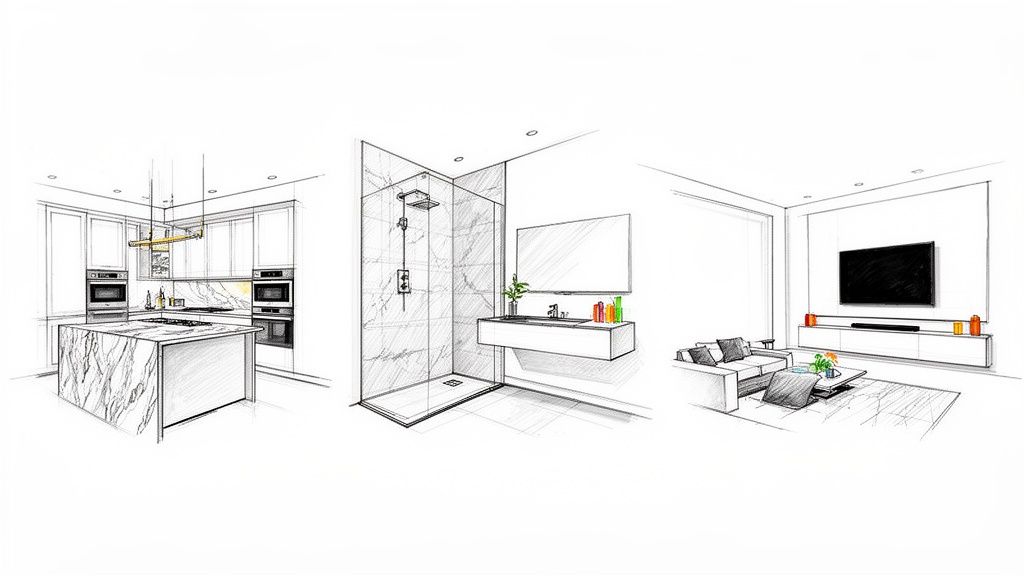
Reinventing the Modern Kitchen
The kitchen is the heart of the modern home, blending high performance with high style. It needs to be a workhorse, but that doesn't mean it can't look incredible. Here are some practical tips:
- Flat-Panel Cabinets: Sleek, flat-panel cabinets create an uninterrupted surface that feels clean and intentional. Light wood tones or matte neutrals are great choices.
- Integrated Appliances: For a streamlined look, hide appliances behind custom cabinet panels. Your refrigerator and dishwasher will disappear, creating a cohesive flow.
- Waterfall Islands: A waterfall island, where the countertop material cascades down the sides, is a showstopper that makes a space feel luxurious and minimalist.
Before you commit, an Airbnb host could use an AI Interior Designer to test whether dark cabinets make their small kitchen feel cramped or chic in listing photos. It takes the guesswork out of a decision that could impact bookings.
Creating a Spa-Like Modern Bathroom
Your bathroom should feel like a personal sanctuary. The key is to create an open, airy vibe, even in a small footprint.
- Floating Vanities: Lifting the cabinetry off the floor creates the illusion of more space and makes cleaning a breeze—perfect for busy families or rentals.
- Curb-less Showers: A zero-entry shower gets rid of the traditional shower dam for a seamless, unbroken floor line. This is great for accessibility and gives a high-end, modern look.
For a cohesive, spa-like feel, use large-format tiles on both the floor and shower walls. Fewer grout lines create a clean look that makes the entire room feel more expansive.
A real estate agent can use AI to visualize these upgrades, helping them show potential buyers how a small change can dramatically improve the space.
Designing a Calm and Collected Living Room
The modern living room is a haven of calm, achieved by stripping away non-essentials and focusing on clean lines.
- Minimalist Media Wall: Instead of a clunky entertainment center, consider a simple floating console or sleek built-ins to hide messy wires. This creates a single, clean focal point.
- Use Negative Space: This simply means the empty, uncluttered areas in a room. You don't have to fill every corner. Leaving some walls bare or choosing furniture with a light profile allows the room to breathe and feel tranquil.
This approach is perfect for apartments and smaller homes where every square foot counts. For a deeper dive, check out our guide on living room layout ideas to master the art of space and flow.
Connecting with the Outdoors
A core principle of modern design is its connection to nature. Blurring the line between inside and out can make your entire home feel larger and brighter.
- Large Glass Doors: The single most impactful way to do this is with large sliding or bi-fold glass doors. They can erase the barrier between your living room and a patio, creating one enormous, flowing space perfect for entertaining. This is a feature that dramatically boosts a property's appeal for sale or rental.
- Small Space Solutions: Even in an apartment with a tiny balcony, swapping a standard door for a full-glass option makes a world of difference. It floods the interior with natural light and makes the whole space feel bigger.
Using an AI tool to visualize this change can show you just how dramatic the effect will be before you commit to the cost.
Smart Ways to Save Money on Your Remodel
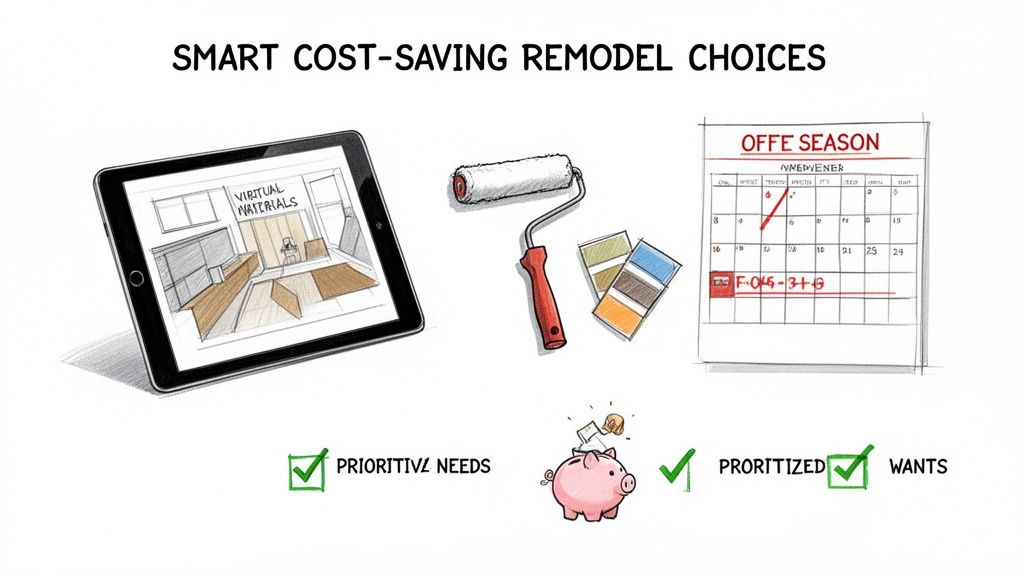
A stunning modern remodel doesn’t have to drain your bank account. Strategic thinking and some insider know-how can deliver a high-end look while keeping your budget in check. One easy win is timing: scheduling your project for a contractor's slower season, often in late fall or winter, can sometimes land you better rates.
Prioritize High-Impact, Low-Cost Updates
Think about where your money will make the biggest visual splash. You'd be surprised how often clever cosmetic changes can feel more transformative than a major overhaul.
- A Fresh Coat of Paint: Never underestimate the power of paint. A clean, modern color palette can completely shift the vibe of a space for a tiny fraction of other update costs.
- Update Hardware and Fixtures: This is a favorite quick-win. Swapping out dated cabinet pulls, old faucets, and builder-grade light fixtures is a weekend project that makes a kitchen or bathroom feel instantly more current and is perfect for rented spaces.
- Refinish Instead of Replace: Look at your hardwood floors or kitchen cabinets. If they're structurally sound, refinishing or repainting them is much smarter than tearing them out. It saves a fortune and keeps good materials out of a landfill.
Source Materials Wisely
The materials you pick are a massive slice of your budget, but "expensive" doesn't always equal "better." Get creative and look beyond big-box stores. Local lumberyards, stone fabricators, and reclaimed material suppliers are often hidden gems. For example, you can often find high-quality remnants of granite or quartz for a small bathroom vanity at a huge discount. If you're looking for more ways to stay on track, check out our guide to the best home renovation apps.
Avoid Expensive Rework with Virtual Previews
Want to know the single biggest budget-killer in any remodel? Rework. It’s that sinking feeling when you have to tear something out because it doesn't look the way you imagined. That bold, patterned tile you loved online might overwhelm your small bathroom in reality.
Using an AI Interior Designer to see materials in your actual space before you buy is the ultimate financial safety net. It turns an expensive guess into a confident decision, saving you both time and money.
Instead of just buying a single sample tile and hoping it works, you can use a tool like an AI editor to virtually "install" it on your floor or wall. Seeing it right there, next to your vanity and tub, gives you 100% confidence in your choice. It's a simple step that helps you sidestep the costly mistake of installing something you immediately regret.
Bringing Your Vision to Life with AI Design Tools
This is where your planning and inspiration come together. Technology gives us an incredible way to bridge the gap between the ideas in your head and a concrete, visual plan. An AI design tool, in particular, can be your secret weapon, helping cut through the decision fatigue that comes with a big project. Locking in your layouts, materials, and colors before work begins prevents costly on-the-fly changes and ensures the quotes you get from contractors are accurate.
Your Creative Copilot
Think of an AI tool as your creative partner—one that works at lightning speed. It's a fantastic way to brainstorm and explore design avenues you might never have considered.
- Visualize Before You Buy: Wondering about that bold tile or a dramatic paint color? See exactly how it will look in your space to sidestep expensive mistakes and buyer's remorse.
- Communicate Clearly: A picture is worth a thousand words, especially with contractors. Handing them a detailed render of your vision is far more effective than trying to describe it verbally. It gets everyone on the same page.
- Boost Listing Appeal: For Airbnb hosts or real estate agents, AI can help you virtually stage a space to show off its full potential, attracting more bookings or serious buyers.
The real magic of using an AI Interior Designer is how it empowers fearless exploration. It gives you a risk-free sandbox to play in, so when it's time to commit, you can do it with total confidence.
Of course, AI is a tool, not a replacement for your own taste. It's brilliant for visualization and generating ideas, but you should always combine its suggestions with your personal style. For major structural changes, consult a professional architect or designer. The goal is to use technology to explore all the possibilities, turning your modern home remodel into an exciting and well-planned journey. For more details, learn about using AI for room design.
Got a Few More Questions? Let's Talk Specifics
As you get closer to starting your modern remodel, practical questions always come up. Let's tackle some of the most common ones so you can move forward with clarity.
How Long Does a Modern Kitchen Remodel Really Take?
The honest answer is: it depends on the scope. A full, down-to-the-studs modern kitchen renovation is a significant project, typically taking anywhere from 6 to 12 weeks from demolition to the final touches. A simple facelift—like new paint and hardware—could be done in a weekend.
Here’s what often causes delays:
- Permit Approvals: Depending on your city, getting plans approved can add weeks before work even starts.
- Material Lead Times: Custom countertops or special-order appliances can have lead times of several months. Order these big-ticket items as soon as your layout is finalized.
- Contractor Schedules: The best crews are often in high demand and may be booked out for months.
This is where meticulous planning pays off. Finalizing every design choice before you start—using a tool like Interior Redesign AI to lock in your vision—is the single best way to avoid delays from changing your mind mid-project.
What’s the Real ROI on a Modern Bathroom Remodel?
A modern bathroom refresh is almost always a smart financial move. You can realistically expect a return on investment (ROI) hovering around 60% to 70%. For homeowners planning to sell, a clean, contemporary bathroom is a massive draw for buyers. For an Airbnb host, a sleek, spa-like bathroom directly translates to five-star reviews and the ability to command a higher nightly rate. The secret to a great ROI is focusing on timeless modern choices: a floating vanity, a frameless glass shower, and classic large-format tiles.
Can I Pull Off a Modern Remodel in a Small Apartment or Rental?
Yes, absolutely! Modern design's principles—clean lines, minimalism, and multi-functionality—are a small space's best friend. You may be limited by your lease, but you can still make a huge impact.
The key is to focus on what you can control. You'd be amazed at how strategic, non-permanent changes can redefine a room. Think fresh paint, new light fixtures (just box up the old ones to swap back later), and updated cabinet hardware.
Renters have more options than ever. High-quality peel-and-stick backsplashes can give you a high-end tile look, and removable wallpaper can create a stunning feature wall without damaging the drywall. An AI interior design tool is perfect for this, letting you see exactly how these smaller, reversible tweaks will come together to create that modern vibe.
Ready to stop guessing and start visualizing? Instantly reimagine your room from a photo or sketch with Interior Redesigne AI.