
Embarking on a home renovation without a solid plan is like setting off on a road trip without a map. You might get there eventually, but you're bound to hit dead ends, waste time, and spend far more than you intended. A great plan transforms that chaos into an exciting, manageable journey by breaking it down into three core phases: defining what you want, figuring out the budget, and understanding the actual build.
Your Essential Home Renovation Roadmap
It's easy to feel overwhelmed by the sheer number of decisions involved in a renovation. Whether you’re a homeowner finally creating your dream kitchen, an Airbnb host looking to attract more guests, or a real estate agent staging a property for a quick sale, a structured plan is your best friend. This isn't just about knocking down a wall; it's about improving your quality of life, boosting your rental's appeal, and adding real value to your property.
This guide will walk you through a clear, step-by-step roadmap, taking you from that first spark of an idea all the way to the final, satisfying walkthrough.
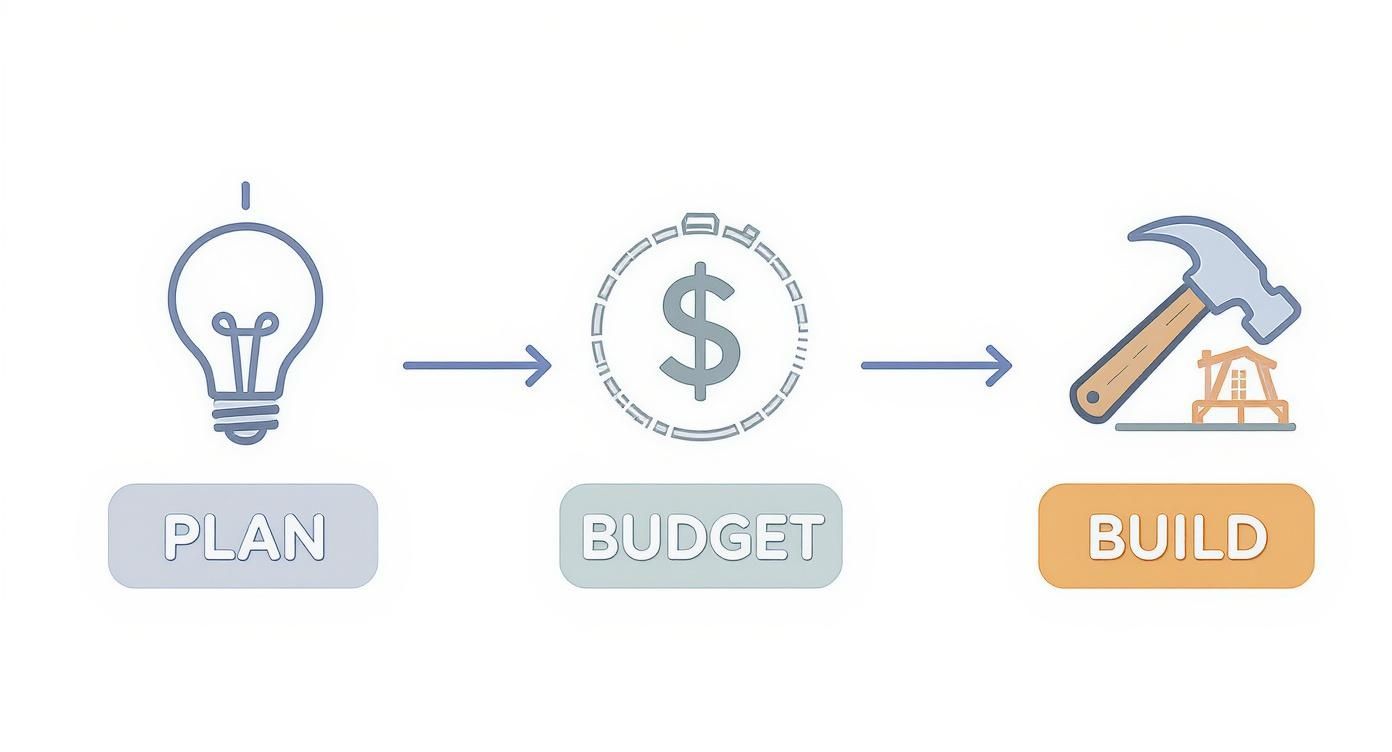
As you can see, the "build" is the last piece of the puzzle. Putting in the time upfront to get the planning and budget right is what sets you up for a smooth, successful project, saving you time, money, and a lot of headaches.
Why Smart Renovation Planning Matters
A good plan is the difference between a dream space and a costly mistake. For families, it means designing a kitchen that actually works for busy mornings. For an Airbnb host, it’s about creating an Instagram-worthy living room that boosts bookings. For real estate agents, it’s about making strategic upgrades that lead to a faster, more profitable sale.
In the U.S. alone, the home remodeling market is valued at around USD 498.3 billion and is projected to climb past USD 812.8 billion by 2034. With so much being invested, planning efficiently isn't just a good idea—it's essential for getting the best return on your investment and avoiding stress.
Renovation Planning Key Stages at a Glance
| Stage | Key Objective | Why It Matters for Your Space |
|---|---|---|
| 1. Define Goals & Scope | Clearly outline what you want to achieve and what the project includes (and doesn't). | This prevents "scope creep" where a small bathroom update suddenly turns into a full-floor remodel, blowing your budget and timeline. |
| 2. Budget & Financing | Determine a realistic budget, including a contingency fund, and secure financing. | This ensures the project is financially viable from start to finish and avoids the stress of running out of money mid-project. |
| 3. Create a Timeline | Establish key milestones and a realistic schedule for the entire project. | This helps you coordinate contractors and material deliveries, and if you live in the space, plan for disruptions (like not having a kitchen!). |
| 4. Hire Professionals | Vet and hire the right contractors, designers, or architects for the job. | The right team is the difference between a dream result and a disaster. Good pros save you money by preventing costly errors. |
| 5. Finalize Design & Materials | Select all materials, finishes, and fixtures before construction begins. | Locking in decisions early prevents delays. Waiting for a back-ordered tile can halt the entire project for weeks. |
Each of these stages builds on the last, creating a strong foundation that supports the entire project from concept to completion.
A well-thought-out renovation plan is the single best tool for preventing budget overruns and timeline delays. It acts as a compass, keeping everyone from the homeowner to the contractor aligned and focused on the same outcome.
Use AI to See Your Vision Before You Build
In the past, visualizing how a renovation would look meant relying on your imagination or expensive designer renderings. Thankfully, technology has changed the game. An AI Interior Designer has become a secret weapon for homeowners, hosts, and agents.
Here’s how it helps you plan smarter:
- Visualize Ideas Risk-Free: Wondering how dark green cabinets will look in your small kitchen? Or if a leather sofa will overwhelm your living room? Interior Redesign AI lets you upload a photo and see it instantly, helping you avoid costly mistakes before you buy a single thing.
- Explore Different Styles: Effortlessly try dozens of design aesthetics—from the clean lines of Japandi to a cozy Farmhouse vibe—to discover what you truly love for your space. This is perfect for an Airbnb host wanting to test different looks to attract more guests.
- Communicate Clearly: Give your contractor a crystal-clear visual of what you want. A picture is worth a thousand words and helps eliminate expensive misunderstandings.
AI tools are powerful, but they are a starting point. They generate ideas, but your personal taste (or the expertise of a professional designer) is what makes a space truly yours. If you’re new to this, getting comfortable with these tools can be a huge help. You can find out more in our complete guide to interior design software for beginners.
Turning Your Vision into a Concrete Plan
Before a single can of paint is opened, the most critical work happens on paper—or on a screen. This is where vague daydreams about a new kitchen or a dream bathroom start to take the shape of a real, actionable plan. Every successful project starts with a crystal-clear "why."
So, what’s your why? Are you carving out a home office in a small apartment? Updating a tired bathroom in your rental to justify a higher nightly rate? Or making smart upgrades to a living room to maximize a home's sale value? Nailing down your primary goal is the bedrock for every decision you'll make. This clarity is your best defense against "scope creep"—where small additions slowly blow up your budget and timeline.
Start with Your Wish List
For a moment, forget about the budget. Let your imagination run wild and create a list of everything you would love to have in your new space.
- For a kitchen: A large island with seating, durable quartz countertops, a dedicated coffee bar, and better lighting.
- For a bathroom: A walk-in shower with a rainfall head, a double vanity to ease morning traffic jams, and heated floors.
- For an outdoor space: A multi-level deck for entertaining, built-in seating, and landscape lighting for evening ambiance.
Now, it's time to get practical. Go through your list and sort every item into two columns: Must-Haves and Nice-to-Haves. This simple exercise is incredibly powerful. It forces you to prioritize what truly matters for your lifestyle (like storage for a growing family) versus what's just a bonus, helping you align your dreams with your budget.
Visualize Your Ideas Before Committing
It's one thing to picture a Japandi-style living room—that beautiful, calming blend of Japanese minimalism and Scandinavian warmth—but it's another to see how it actually looks in your living room, with your specific lighting and dimensions.
This is where an AI Interior Designer becomes your best friend. Instead of guessing, you can upload a photo of your current room and see it instantly transformed.
- Test materials: See how that bold floral wallpaper looks before you commit.
- Check layouts: See if that large sectional will make your small living room feel cramped.
- Save money: Avoid buying furniture that doesn't fit or paint colors you end up hating.
Using Interior Redesign AI lets you test-drive your ideas without risk. This is a huge benefit for anyone on a tight budget or working with a small space, as it ensures every dollar and every square foot is used effectively.
From Ideas to a Cohesive Mood Board
Once you've used AI to explore concepts, pull your favorite elements together into a mood board. This is a visual collage of images, textures, color swatches, and materials that captures the exact look and feel you're aiming for. It’s an essential tool for ensuring all your choices work together harmoniously. You can dive deeper into this process in our guide on what a mood board is in interior design.
Think of your mood board and AI visuals as a universal language. They become a powerful, clear-cut brief for your contractor, cutting through jargon and minimizing the chances of costly misunderstandings. It ensures everyone is on the same page, working toward the same vision.
Nailing Down the Budget and Finding the Money
Let's talk money. Budgeting can feel intimidating, but getting it right from the start is the single best way to keep your project from going off the rails. A solid financial plan isn't just a final number; it's your roadmap for every decision.
First, do your homework. Costs for materials and labor vary wildly by location. Start by getting detailed quotes from at least three reputable local contractors. This is the only way to get a true sense of what your project will actually cost in your area.
Breaking Down Your Renovation Costs
To avoid budget blowouts, you need to think in line items. This forces you to consider every single component, from big-ticket items down to the small details.
A typical renovation budget breaks down like this:
- Labor: Expect professionals to account for 20-40% of your total budget.
- Materials: Raw goods like lumber, drywall, tile, and flooring.
- Fixtures & Finishes: Everything you see and touch, like faucets, lighting, and appliances.
- Permits & Fees: Don’t forget the cost of municipal paperwork.
The Golden Rule of Renovation Budgeting: Always build in a contingency fund of 15-20% of your total project cost. This isn’t "just in case" money; it's a planned buffer for surprises like outdated wiring or hidden water damage. This fund turns a potential disaster into a manageable problem.
Visualize Costs to Make Smarter Choices
One of the classic renovation dilemmas is deciding where to splurge and where to save. An AI tool like Interior Redesign AI is a game-changer for your budget. Before you commit to an expensive material, you can see how different options look in your space.
Torn between high-end quartz countertops and a wallet-friendly butcher block for your kitchen? Generate visuals of both. Seeing the final look helps you make confident financial trade-offs. This helps you get the style you want while staying within budget, reducing decision stress significantly. Learn more about how to use AI tools for your room design to make these choices easier.
How to Pay for Your Project
Once you have a realistic budget, you need a plan to fund it. The best route depends on your finances and project size.
- Personal Savings: The simplest option. No interest, no loans. Perfect for smaller updates like a bedroom refresh or new flooring.
- Home Equity Line of Credit (HELOC): A flexible line of credit you draw from as needed. Great for projects where costs might fluctuate.
- Home Equity Loan: A single lump-sum payment with a fixed interest rate. Ideal when you have a firm, locked-in budget.
- Cash-Out Refinance: You replace your mortgage with a new, larger one and take the difference in cash. This can be smart if you can also lock in a better interest rate.
For real estate agents or Airbnb hosts, think about the return on investment (ROI). A minor kitchen remodel is known to recoup over 70% of its cost at resale, making it one of the smartest upgrades to boost a property's value and appeal.
Assembling Your Renovation Dream Team
You have a vision and a budget, but a renovation is only as good as the people building it. Now it’s time to assemble your "dream team." Finding the right professionals can make all the difference between a smooth project and a stressful ordeal.
Start with word-of-mouth. Ask friends, colleagues, or neighbors for recommendations. Online resources like Houzz or the National Association of the Remodeling Industry (NARI) are also fantastic for finding vetted professionals in your area.
Who Do You Need on Your Team?
Not every project needs an army. The scale of your renovation determines who you need to hire.
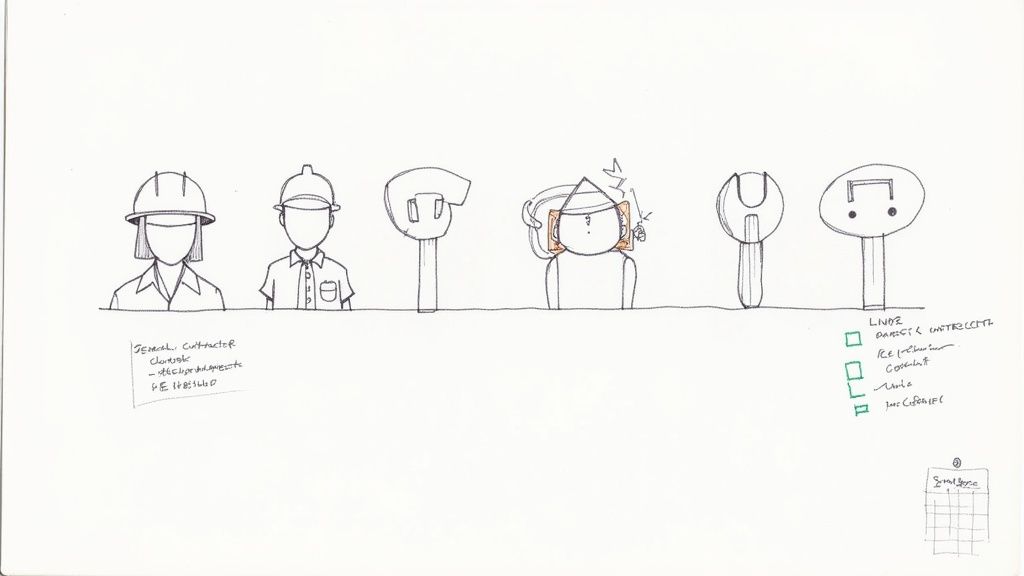
- General Contractor (GC): The project's quarterback. A GC hires and manages all subcontractors (plumbers, electricians), pulls permits, and keeps the project on schedule. For any job involving multiple trades, a good GC is essential.
- Architect or Designer: If you're moving walls, building an addition, or tackling a complex layout change, you’ll need an architect or designer to create the detailed blueprints.
- Specialized Tradespeople: For smaller jobs—like retiling a bathroom backsplash or installing a new light fixture—you can often hire electricians, plumbers, or tilers directly, which can save money if you're comfortable managing the project yourself.
The Interview and Vetting Process
Get a shortlist of three to four potential contractors and start interviewing. This isn't just about finding the cheapest quote. You're looking for a partner you can trust and communicate with.
First, ask for proof of license and insurance (both liability and worker's compensation). This is non-negotiable and protects you from financial liability for accidents.
Next, check references. Ask to speak with at least three recent clients. Don't just ask if they were happy; ask about communication, how unexpected issues were handled, and whether they stuck to the timeline and budget.
A contractor who is vague about insurance, rushes your questions, or pushes for a handshake deal is a major red flag. A true professional will be transparent, patient, and provide a detailed, written bid.
Decoding Bids and Contracts
A detailed contract is your best protection. It needs to spell out every aspect of the project, leaving zero room for interpretation.
Make sure your contract includes:
- A Detailed Scope of Work: Lists exactly what work will be done, down to specific brands and model numbers for materials.
- A Clear Payment Schedule: Payments should be tied to project milestones (e.g., after demolition is complete). Never pay for the entire project upfront.
- An Estimated Timeline: Outlines a start date, key milestones, and a projected completion date.
- A Change Order Process: A formal process for how any changes are documented, priced, and approved in writing by both of you before the work is done.
This is where your AI-generated visuals become invaluable. Handing your contractor concepts from a tool like Interior Redesign AI eliminates guesswork. You’re not just telling them what you want; you’re showing them, which helps prevent costly "that’s not what I pictured" conversations later.
Managing Your Project from Start to Finish
Once the work begins, your role shifts from dreamer to project manager. This is where you guide the vision into reality, making sure everything stays on track, on time, and on budget.
Your most powerful tool is communication. Set up a regular check-in schedule with your contractor—a quick daily text or a weekly on-site walkthrough. This simple rhythm keeps everyone aligned and helps you spot small issues before they become big problems.
Staying on Track and Handling Delays
Even the best-planned renovation can hit a snag. A custom item might be delayed, or you might find old wiring once a wall is opened. The key is to pivot, not panic. This is what your contingency fund is for.
One of the most common causes of delays is homeowner indecision. To prevent this, have every single finish and material—tile, faucets, light fixtures, and paint colors—selected before the work begins. If the crew is ready to paint but you're still deciding on a color, you've just become the bottleneck. If you’re stuck, our guide on how to choose paint colors for rooms can help you decide.
Delays are almost inevitable. The success of your project isn't measured by avoiding them, but by how efficiently you and your team respond. Clear communication and pre-made decisions are your best defense.
The All-Important Final Walkthrough
As the dust settles, it's time for the final walkthrough. This is your last chance to ensure every detail matches the standards in your contract. Don't just glance around; be meticulous.
Your walkthrough checklist should be thorough:
- Paint and Finishes: Look for clean lines at the trim, even paint coverage, and no drips or scuffs.
- Flooring: Walk every square foot. Check for squeaks, scratches, or gaps. Ensure tile grout is clean and consistent.
- Fixtures and Appliances: Flip every switch, test every outlet, and turn on every faucet. Run appliances to ensure they're working correctly.
- Cabinetry and Doors: Open and close every cabinet and drawer. They should glide smoothly and line up perfectly.
- Overall Cleanliness: The site should be "broom clean" with all construction debris removed.
Closing Out Your Project
Once you’re completely satisfied, there are two final steps: the final payment and the lien waiver.
A lien waiver is a signed document from your contractor confirming they’ve been paid in full and won't place a mechanic's lien on your property. Never make the final payment until you have the signed lien waiver in your possession. This simple paper is your ultimate protection and the official signal that your renovation is successfully complete.
Got Questions About Renovation Planning? We've Got Answers.
Even with a great plan, questions are bound to come up. Here are answers to some of the most common ones I hear from homeowners, real estate agents, and designers.
How Long Does Renovation Planning Really Take?
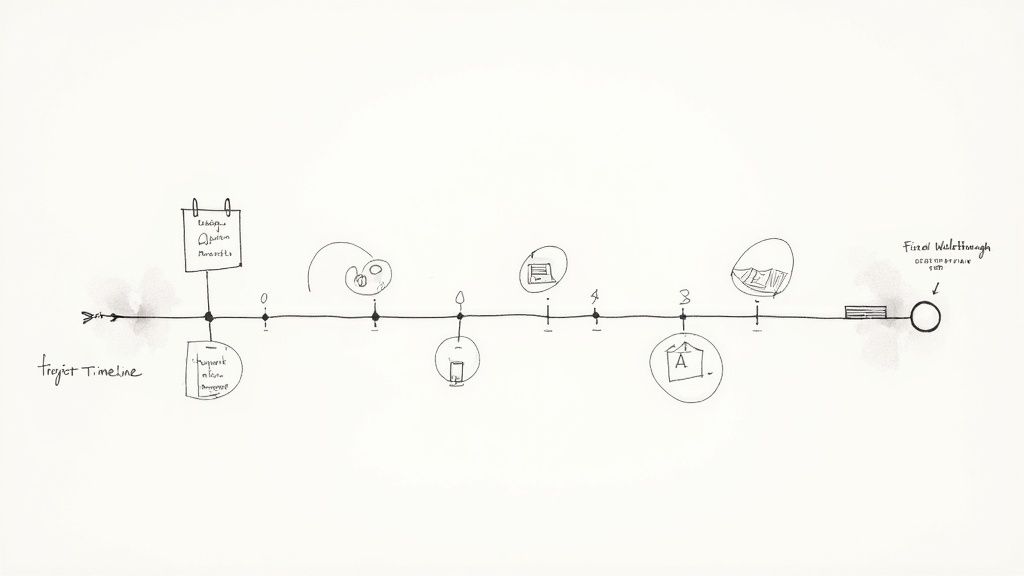
The timeline depends entirely on your project's scope.
- Simple cosmetic refresh (one room): Plan for 2 to 4 weeks. This involves choosing paint, sourcing furniture, and scheduling a painter.
- Full kitchen or bathroom remodel: Set aside 2 to 3 months for planning. This includes finalizing the layout, selecting all materials, getting contractor bids, and signing contracts.
- Major structural overhaul or addition: The planning phase can easily stretch to 6 months or more due to architects, engineers, and city permits.
The bottom line: don't rush the planning. Every hour you invest upfront will save you time, money, and stress once construction starts.
What's the Single Biggest Mistake to Avoid?
Starting demolition without a fully detailed plan and a realistic budget. Excitement takes over, the sledgehammer comes out, and then reality hits. This is a fast track to decision paralysis, surprise costs, and major delays.
A close second is not having a contingency fund. You absolutely must have 15-20% of your project cost set aside for the unexpected. That fund is what keeps a surprise from becoming a crisis.
Can I Use AI if I'm Hiring a Professional Designer?
Absolutely! Using an AI tool beforehand can make your partnership with a designer even more productive.
- Find Your Vision Faster: Use an AI tool to explore dozens of styles and color palettes. You'll get a clear sense of what you love (and don't love) before your first meeting.
- Communicate Better: Showing up with AI-generated visuals is a game-changer. It's much more effective than trying to describe a vibe and gives your designer a concrete starting point.
- Speed Up the Process: When your designer understands your aesthetic from day one, it cuts down on back-and-forth revisions, saving time and money.
It’s the perfect way to blend the instant feedback of technology with the creative expertise of a pro. You can explore more in our frequently asked questions about AI design tools.
Which Renovations Give the Best ROI?
For anyone focused on maximizing value—homeowners, real estate agents, or Airbnb hosts—some renovations consistently deliver a bigger bang for your buck.
Kitchen and bathroom remodels are the undisputed champions. Industry data shows that even a minor kitchen update (like refacing cabinets and adding new countertops) can recoup over 70% of its cost at resale. Bathrooms are a close second and are a huge selling point for buyers and renters.
Other high-ROI projects include:
- Boosting Curb Appeal: A new front door, fresh exterior paint, or modern landscaping makes a powerful first impression.
- Creating Outdoor Living Space: A new deck or patio adds valuable, usable square footage at a lower cost than an interior addition.
- Improving Energy Efficiency: New windows or better insulation are very attractive to modern buyers concerned about long-term utility costs.
The key is to make smart updates that appeal to a wide audience without over-improving for your neighborhood.
Ready to stop guessing and start visualizing? Take the first step in your renovation plan. With Interior Redesign AI, you can instantly reimagine your room from a photo or sketch.
Try Interior Redesign AI now and transform your space in seconds.