Staring at an endless scroll of Pinterest boards and Instagram inspiration can feel overwhelming. You know what you like, but you don't know how to translate those individual pieces into a cohesive look. This is where a home design style quiz can be a total game-changer. Think of it as your personal design compass, pointing you in a clear direction and saving you from costly mistakes.
Pinpoint Your Perfect Style in Minutes
Before you pick up a paint swatch or browse for a new sofa, the most crucial step is to nail down your core aesthetic. Getting this right from the start saves time, money, and second-guessing later. A good interior design quiz cuts through the online noise and helps you identify the styles you're instinctively drawn to, even the ones you can't quite name yet.
This isn't just for homeowners planning a renovation. For Airbnb hosts, a clear design makes a space more bookable. For real estate agents, it helps stage a property to sell faster. A clear, intentional design vision is what makes a space feel special, ensuring every choice—from light fixtures to throw pillows—works in harmony.
Why Style Clarity Matters
Have you ever bought a piece of furniture you loved in the store, only to bring it home and realize it just... doesn't work? That’s what happens without a defined style. You end up with a collection of things that feel disjointed, which is a classic recipe for decision fatigue and expensive re-dos.
Defining your style first streamlines everything.
- You'll Save Money: No more impulse buys that don't fit the bigger picture. Every purchase becomes intentional, which is crucial for staying on budget.
- Decisions Get Easier: With a clear direction, choosing paint, decor, and furniture is suddenly much less stressful. This is a huge relief whether you're decorating a small apartment or a whole house.
- It Boosts Property Appeal: For agents and hosts, a beautifully executed style makes a listing stand out. It can directly lead to faster sales and higher booking rates, boosting your bottom line.
Think of your design style as a roadmap. Once you know your destination—whether it’s "Modern Farmhouse" or "Japandi"—every other choice becomes clearer. To explore different aesthetics, our comprehensive interior design styles guide is a great place to start.
Visualize Your Results Instantly
So you've taken a quiz and have your result. That's great! But how will that style actually look in your room? This is where AI tools have completely changed the game. Instead of just trying to imagine "Mid-Century Modern" in your living room, you can actually see it.
With an AI Interior Designer, you can upload a photo of your own space and instantly render it in your new style. You can test drive different looks—compare a cozy Bohemian vibe with a sleek Minimalist one—all in a matter of seconds. It's like a virtual fitting room for your home, helping you visualize ideas before you buy.
This technology doesn’t replace your personal taste; it brings it to life. It gives you the power to experiment risk-free, making sure the vision in your head is the one that materializes in your home.
So, What Does Your Interior Design Style Actually Mean?
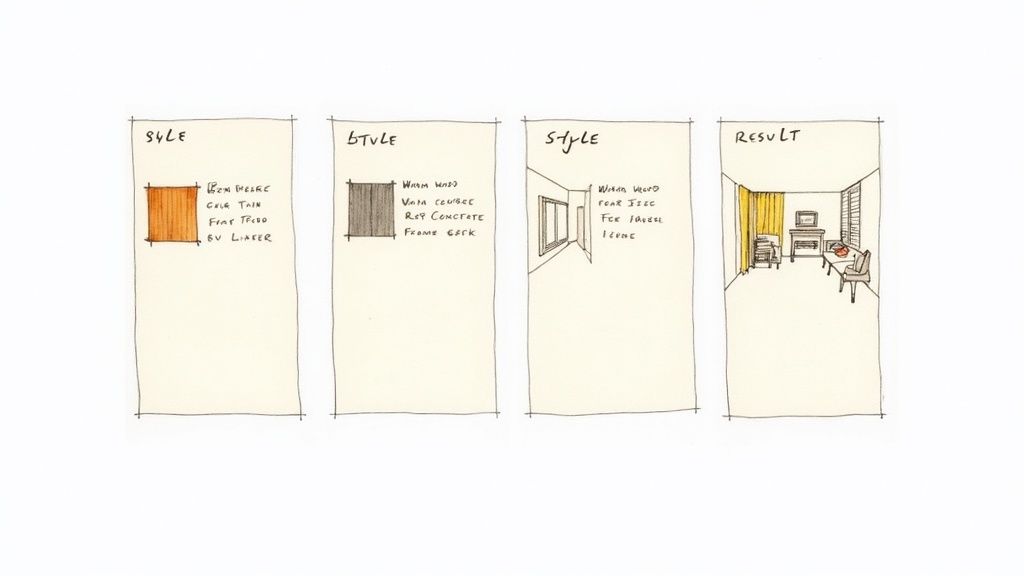
Okay, you've taken the quiz. Now what? Getting your result is the exciting moment when your vague ideas start taking shape. But what does it actually mean if the quiz says you're "Industrial" or "Japandi"?
Think of your style result as a compass, not a cage. It's a guiding principle that helps you make sense of the endless options for colors, furniture, and textures. Having this direction is a huge relief, especially when you’re working with budget or space constraints, or trying to make a rental feel like home.
Getting to Know Your Style Profile
Every design style has its own vibe—a unique philosophy that creates a specific feeling. Once you understand the core ingredients, you can apply the look with confidence, whether you're staging a house to sell or just making your own apartment feel more like you.
To give you a better feel, let's look at a few common styles you might have gotten as a result.
Quick Guide to Popular Design Styles
This table breaks down the essentials of some popular interior design styles. Think of it as a cheat sheet to help you grasp the key feeling, common colors, and go-to materials that define your result. It's a great starting point for understanding the DNA of your aesthetic.
| Style | Key Feeling | Common Colors | Essential Materials |
|---|---|---|---|
| Modern Farmhouse | Cozy, inviting, fresh | Neutrals (white, gray, beige), black accents | Reclaimed wood, shiplap, metal, linen |
| Japandi | Serene, minimalist, warm | Muted neutrals, earthy tones, soft pastels | Light woods (oak, bamboo), rattan, paper |
| Industrial | Raw, edgy, open | Black, gray, brick red, metallic tones | Exposed brick, concrete, metal, distressed wood |
| Coastal | Airy, relaxed, bright | White, blues, sandy beige, soft grays | Light-washed wood, jute, rattan, cotton |
| Bohemian | Eclectic, free-spirited, vibrant | Rich jewel tones, earthy colors, patterns | Wicker, macrame, natural textiles, wood |
Hopefully, seeing it laid out like this makes your result click. It’s not about rigid rules, but about understanding the elements that work together to create a cohesive atmosphere.
From A Label to a Living Room
Knowing your style is one thing; bringing it to life is the next step. This is where you translate an abstract idea like "Coastal" into real-world decisions for your space. To keep it simple, focus on three core components: the mood, the color palette, and the materials.
Your design style is the "what," and your mood board is the "how." It's a visual collection of images, textures, and colors that captures the specific feeling you want your room to have. It's your blueprint for a beautiful, cohesive look.
Putting together a mood board is the best way to test-drive your vision before you spend a dime. You can pull together inspiration for furniture, lighting, and decor all in one spot. If you're new to the process, checking out some inspiring interior design mood board examples is a fantastic way to get ideas flowing.
See It Before You Build It with AI
A mood board is a game-changer, but seeing your style in your actual room? That’s next level. This is where AI tools become your secret weapon for any room makeover. Instead of just hoping that dark green accent wall will look good, you can see it in seconds.
Just upload a photo of your space to a tool like Interior Redesigne AI and tell it what you want. You could type in a prompt like, "Redesign my living room in a warm Japandi style with light oak furniture, a cream-colored sofa, and plenty of natural light."
The AI will generate realistic images of your room, completely transformed. It lets you experiment with different layouts, compare color schemes, and see how textures look without any risk. This saves an incredible amount of time and money, helping you dodge costly mistakes and giving you the confidence to make big design decisions.
Bringing Your New Style to Life, Room by Room
You’ve taken the quiz and discovered your design style. That’s the "what." Now comes the fun part: the "how." This is where we translate that style name into real-life changes in your home.
Whether you're decorating a tiny apartment, staging a house for sale, or finally making your forever home feel like you, the approach is the same. Start with the rooms that make the biggest impact and choose your updates with intention. It doesn’t have to be a massive overhaul; the secret is making smart, focused changes that align with your style while working within your budget and daily life.
The Living Room: A Welcoming First Impression
The living room is usually the best place to start. It’s the first impression guests have, and it’s where you spend time relaxing. Getting this room right sets the tone for your whole home.
- For a Modern Farmhouse living room, focus on a neutral palette with black accents. A quick win is a textured jute rug and swapping old throw pillows for simple linen covers. This adds instant warmth and character without breaking the bank.
- For an Industrial vibe, start with lighting. A raw metal floor lamp or simple track lighting can completely shift the mood. Then, layer in materials like a concrete-topped coffee table or a single distressed leather armchair.
The Bedroom: Creating Your Personal Sanctuary
Your bedroom should be your escape—a space that feels restorative and personal. A well-designed bedroom can genuinely change how you rest and recharge, making it a critical room to get right.
A Bohemian bedroom, for instance, is all about personality and layers.
- Layer Textures: Hang a macrame piece over the bed, mix and match patterned pillows, and toss a chunky knit throw over a rattan chair.
- Add Greenery: Plants are a must for this style. A few hanging planters or a large potted plant will breathe life and color into the room.
- Get the Lighting Right: Use warm-toned light bulbs and consider adding string lights for a soft, magical ambiance.
Practical Tip: Before you commit to an expensive bed frame or a bold accent wall, use an AI tool like Interior Redesigne AI to see how it will actually look in your space. It’s a risk-free way to experiment and avoid buyer's remorse, helping you design with confidence.
The Kitchen: The Heart of The Home
Kitchens are workhorses, but they can still be beautiful. You'd be surprised how much difference small, budget-friendly changes can make, especially if you're renting.
For a Minimalist kitchen, the goal is decluttering and creating clean lines. Start with smart storage like drawer dividers and sleek canisters to get things off the counter. One of the best bang-for-your-buck updates is swapping dated cabinet hardware for simple, modern pulls. It's a quick job that delivers a major visual upgrade.
If you’re a renter, look into high-quality peel-and-stick backsplashes or removable countertop film to get a luxe look without permanent changes. The right paint color is also key; our guide on how to choose paint colors for your rooms has practical advice.
The popularity of the home design style quiz has changed how people approach decorating. It’s not just a hunch—major design platforms reported that in 2025, over 50% of their website traffic came from users who took a style quiz first. Many went on to hire professional help, proving how powerful a clear starting point is. You can see more about these interior design trends on Artsy.net.
Visualize Your Ideas Risk-Free with AI
We’ve all been there: standing in a paint aisle, paralyzed by a thousand shades of white. Or eyeing a bold sofa online, but the fear of it looking wrong in your living room stops you. The biggest hesitation in any decorating project is the worry of making an expensive mistake.
This is where AI interior design tools become your new best friend. They give you the superpower to see the future of your room before you commit to a single purchase, turning "what if?" into a confident "let's do it!"
See It Before You Buy It
Instead of just imagining how your new style will look, you can actually see it. The process is simple: snap a photo of your current room and feed it to the AI along with simple instructions based on your quiz results. This helps you save stress and money.
- Experiment Without Commitment: Can’t decide between a warm, minimalist Japandi look and a breezy Modern Coastal vibe? Render both in seconds and see them side-by-side in your space.
- Test Bold Choices Safely: Will that deep emerald green you love make your bedroom feel like a cozy jewel box or a cramped cave? An AI visualization gives you the answer instantly.
- Perfect Your Layout: See exactly how that new sectional will fit or if a bigger dining table will overwhelm the room before it arrives.
Practical AI Prompts for Your Space
Getting great results from a tool like Interior Redesigne AI comes down to clear directions. Think of it like briefing a designer. Start with the room and your style, then layer in details like colors, textures, and furniture.
A great prompt is specific. For instance, if your quiz result was Industrial, you could try: "Redesign my living room in an Industrial style with a distressed leather sofa, black metal light fixtures, and an exposed brick accent wall."
To help you get started, here are a few examples you can adapt.
AI Prompts for Your Design Style
| Your Style Result | Example AI Prompt for Your Living Room |
|---|---|
| Modern Coastal | "Redesign my living room in a Modern Coastal style. Include a light-colored slipcovered sofa, natural wood coffee table, sheer white curtains, and add blue and sandy-toned accents." |
| Industrial | "Visualize my living room in an Industrial style. Feature a distressed leather sofa, an exposed brick accent wall, metal bookshelves, and factory-style pendant lighting." |
| Japandi | "Show me my living room in a Japandi style. Use a neutral color palette, minimalist furniture with clean lines, light wood tones, and incorporate natural elements like bamboo and stone." |
| Bohemian | "Transform my living room with a Bohemian style. Fill it with layered rugs, lots of plants, a mix of patterns on pillows and throws, and warm, earthy colors." |
Feel free to swap out materials, colors, and furniture to perfectly match your vision.
A Pro Tip for Real Estate Agents and Hosts: AI is a fantastic tool for virtual staging. Create gorgeous, aspirational images that show a property's potential, making your listings stand out without the expense of physical furniture and boosting their appeal.
The global home decor market is set to hit USD 880.13 billion by 2030. A big reason is the rise of digital tools, like the home design style quiz, which give people the confidence to create spaces they love. You can see more data on the home decor market and how tech is shaping what we buy.
Remember, AI is an amazing brainstorming partner, but it isn't perfect. It might not always nail tricky architectural details. It's best to use its renderings as inspiration, then blend those ideas with your own instincts—or a professional designer—to create a space that is both beautiful and uniquely you. To learn more, see our guide on using AI for room design.
From Quiz Result to Cohesive Home: Expert Tips
You've taken the home design style quiz and have a direction. Now, the goal is to create a unified feeling that flows from room to room without being boring or repetitive. We're aiming for harmony, not uniformity.
A common mistake is thinking every room needs to be a carbon copy of the last. Instead, focus on creating a common thread. This could be a consistent color palette, a repeated material like warm oak wood, or a shared feeling like "relaxed and airy." This approach gives each room its own personality while ensuring it still feels like part of the same home.
Mix Styles with Confidence
It’s completely okay—in fact, it's often more interesting—to love more than one style. The secret is blending them in a way that feels intentional. A good rule of thumb is the 80/20 split: pick a dominant style for 80% of the room, and use another as an accent for the remaining 20%.
- Example Scenario: You love the cozy vibe of Modern Farmhouse but are also drawn to the raw look of Industrial design.
- How to Blend: Use Modern Farmhouse as your foundation—think neutral colors and natural textiles. Then, layer in Industrial accents like black metal light fixtures, a coffee table with steel legs, or exposed metal shelving.
This creates a layered, personal look that feels curated over time, not just pulled from a catalog.
The Human Touch Behind the AI
AI tools are fantastic for brainstorming and visualizing ideas risk-free. You can hop on Interior Redesigne AI and ask it to show you exactly what "Modern Farmhouse with Industrial accents" would look like in your living room. It’s an incredible way to test ideas before you commit time and money.
But the most beautiful spaces always tell a personal story. AI can't replicate the sentimental value of your grandmother’s armchair, the quirky art you found on vacation, or a collection of frames filled with family photos.
Use AI as your creative co-pilot. Let it do the heavy lifting of visualization, but always trust your own gut to add the final, meaningful touches that turn a well-designed house into a warm, inviting home. A great first step is to build a visual guide; you can learn more about what a mood board is in interior design and why it's so critical.
Ready to see how your design ideas could look in your space? Take a photo or upload a sketch to Interior Redesigne AI to instantly reimagine your room.