what is my house design style13 min read
What is my house design style? Discover Yours with AI Visualizations
Not sure what is my house design style? Take our quick guide to identify your taste, explore top styles, and visualize your dream home with AI.
By Interior Redesign AI editorsPublished
Ever feel like you're drowning in design terms? "Modern Farmhouse," "Japandi," "Coastal Grandma"... it's a lot. If you've ever asked yourself, "What is my house design style?"—you're in the right place. We're going to cut through the noise and get to what really matters: creating a space that feels authentically you.
This guide will give you practical, step-by-step advice to find the perfect look for your home, whether you're a homeowner, an Airbnb host, or a real estate agent. Let's find your style, together.
Why Bother Finding Your Design Style?
Pinning down your house design style isn't about slapping a label on your taste; it's about creating a personal blueprint for every design choice you make. This blueprint is the single most important tool for creating a home you'll absolutely love, saving you time, money, and a ton of decision-making stress.
Without a clear vision, decorating can feel like throwing spaghetti at the wall. You buy individual pieces you like, but they just don't click together. The result? A room that feels disjointed and cluttered—a frustrating and expensive mistake.
The Power of a Clear Vision
Once you know your style, it becomes your secret weapon. It’s a filter that helps you tune out distractions and focus only on what will bring your vision to life.
Here’s why this matters for real spaces:
- Homeowners: You can finally invest in furniture and finishes with confidence. No more second-guessing or expensive do-overs, because you'll know every piece fits your long-term plan, reducing waste and budget stress.
- Airbnb Hosts: A cohesive style—like “Cozy Scandinavian” or “Urban Industrial”—makes your listing pop. It helps you attract more bookings, justify a higher nightly rate, and get those rave reviews.
- Real Estate Agents: Understanding design styles helps you stage properties that connect with buyers, helping them immediately picture their life in that beautiful, thoughtfully designed space.
Your design style is more than just a look—it’s the functional framework for your life. It ensures your home not only looks great but also works for your needs, whether you need a calm sanctuary or a vibrant hub for a busy family.
Ultimately, identifying your style gives you the confidence to stop chasing fleeting trends and start building a space that tells your story.
And here’s the best part: you don’t have to do it alone. Tools like an AI Interior Designer let you visualize ideas before you buy. You can instantly see how different styles look in your actual room, trying out layouts and colors risk-free. It’s a game-changer for reducing decision stress and making sure you love the final result.
Exploring the 8 Most Popular Design Styles
So, you understand why you need a design style, but what are your options? Let's walk through some of the most popular aesthetics.
Think of each style as a personality that communicates a specific feeling through colors, materials, and shapes. Your goal right now isn't to pick "the one." Just notice what you're drawn to—which moods and textures make you feel something. This is the first step to figuring out your home's design identity.
The journey of finding your style is a clear process of refining your vision and building the confidence to make choices.
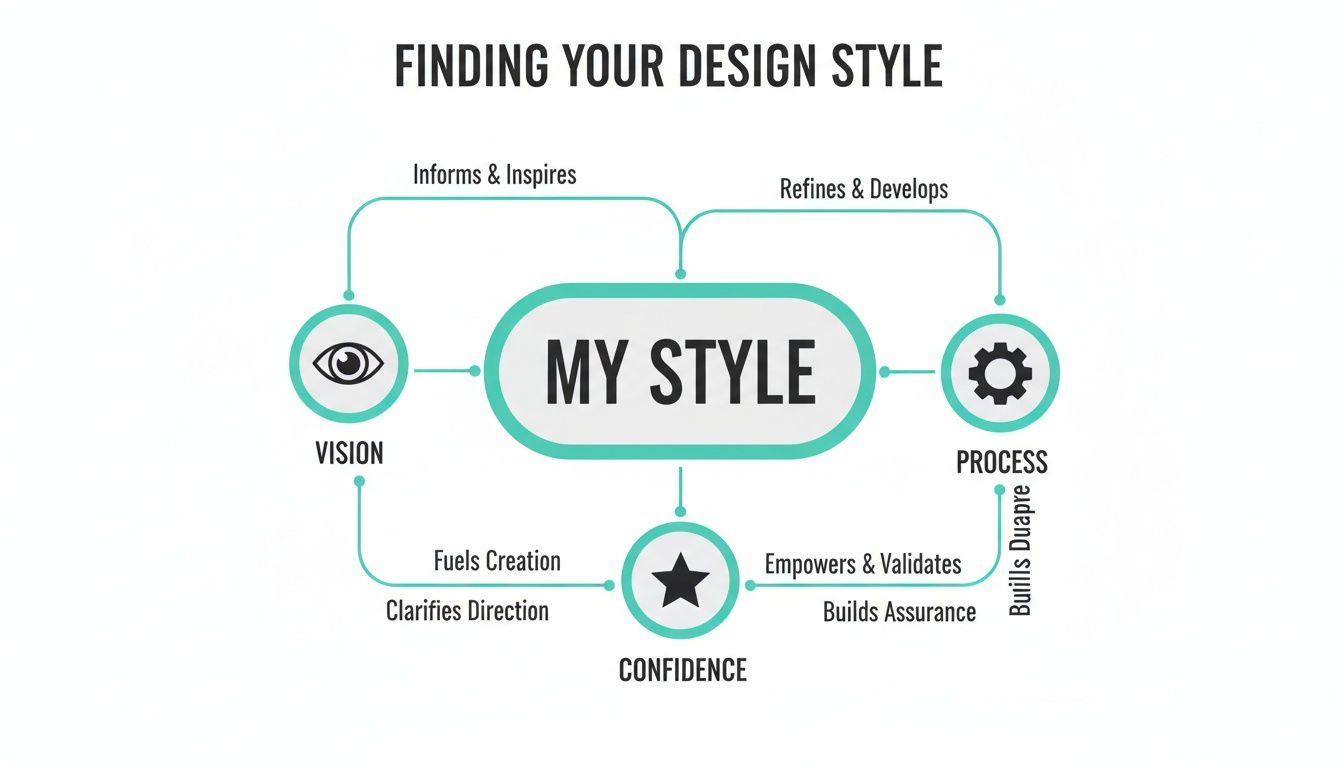
As you can see, you start with a general idea and work your way toward a final, confident design. It’s a path anyone can follow.
Modern and Minimalist
People often lump these two together, but they have distinct personalities. Modern design has roots in the early-to-mid 20th century and is defined by clean lines, natural materials like wood and leather, and a lack of fussy details. The feel is structured yet surprisingly warm.
Minimalism, on the other hand, is the art of "less is more." It strips everything back to its essential function to create a serene, uncluttered space. This style relies on negative space—the empty areas around objects—to make a quiet but powerful statement.
- Why it matters: Perfect for anyone who craves order. It’s a lifesaver in small apartments or for busy families where clutter can quickly feel overwhelming.
- Living Room Example: A low-profile sofa with crisp lines, a simple geometric coffee table, and one large piece of abstract art on the wall.
- AI Design Tip: Layout is everything in a minimalist room. Use an AI Interior Designer to test different furniture arrangements and see how negative space can open up even a tiny room before you move a thing.
Scandinavian and Japandi
Scandinavian design is all about creating a space that is cozy, light-filled, and functional. It uses light woods, soft textiles, and a muted color palette to maximize brightness—a must in Nordic countries. The vibe is warm and effortlessly comfortable, a feeling captured by the Danish concept of hygge.
Japandi is a beautiful hybrid that blends the rustic simplicity of Japanese design with Scandinavian functionality. It’s a mix of neutral tones, natural materials, and an appreciation for craftsmanship.
- Why it matters: Ideal for those who want their home to be a bright, comforting sanctuary. It's perfect for families and renters who need a space that's both stylish and practical.
- Bedroom Example: A simple wooden bed frame, layered neutral bedding (think linen and wool), and a single, well-placed plant create that serene Japandi feeling.
Farmhouse and Transitional
Modern Farmhouse is beloved for its warm, rustic-meets-refined feel. It combines practical country elements—like shiplap and big, comfy furniture—with modern touches like sleek lighting and clean colors. It’s a style built for real life.
If you're stuck between traditional and modern, Transitional style is your perfect middle ground. It elegantly blends the comfort of traditional design with the clean profiles of contemporary pieces. It's helpful to compare how different Shaker vs. Raised Panel cabinet styles can anchor these distinct aesthetics in a kitchen.
- Why it matters: Transitional design is a game-changer for couples merging different tastes. It creates a balanced, sophisticated backdrop that feels both fresh and familiar, putting an end to most design arguments.
- Kitchen Example: Classic Shaker cabinets paired with modern, simple hardware and a clean quartz countertop.
Industrial and Eclectic
Inspired by old factories and urban lofts, Industrial style celebrates raw materials like exposed brick, polished concrete, and metal. The vibe is edgy, urban, and refreshingly spacious.
Eclectic style is the art of mixing and matching different styles, eras, and textures to tell your personal story. It requires a careful eye to ensure the final look is cohesive, not chaotic. For a deeper dive, check out our complete interior design styles guide for more inspiration.
- Why it matters: These styles are great for renters or homeowners who love collecting unique items over time. They allow you to incorporate personal finds and vintage pieces into a cohesive whole.
- Outdoor Space Example: An industrial patio could feature metal furniture and concrete planters, while an eclectic balcony might mix a vintage wicker chair with colorful, patterned outdoor cushions.
A Simple Quiz to Uncover Your Personal Style
Ready for some self-discovery? Let's connect your real life to a design aesthetic that actually works for you. This isn't about getting a "right" answer; it's about spotting the patterns in what makes you feel truly at home.Grab a notebook and jot down your gut-reaction answers to these questions.
Step 1: Analyze Your Lifestyle and Priorities
Your home's design should support your life, not just look pretty.
- What does your ideal weekend at home look like? Hosting lively dinners, curling up with a book, or getting lost in a creative project?
- When you think of "comfort," what's the first image that comes to mind? A plush sofa, a clean countertop, or a perfectly organized bookshelf?
- What's your biggest frustration with your current space? Constant clutter, not enough light, or a lack of cozy spots to relax?
Your answers reveal your functional needs. A desire for order might point to Minimalism, while a love for hosting suggests a warm style like Farmhouse.
Step 2: Tune Into Visual and Sensory Clues
Now, let's uncover the colors, materials, and moods you're naturally drawn to.
- Which materials feel right to you? The warmth of natural wood, the sleekness of metal, or the soft touch of linen and wool?
- Open your closet. What colors do you see most? Your wardrobe is often a great predictor of the color palette you'd love to live in.
- Which atmosphere do you want to create?
- Calm and Serene
- Vibrant and Energizing
- Sophisticated and Elegant
- Cozy and Welcoming
Putting It All Together: Look for themes. Did you choose "cozy" and "warm wood"? You might love Scandinavian or Farmhouse styles. Did "sleek" and "serene" resonate? Modern or Minimalist could be your match.
This exercise gives you a fantastic starting point. But if you want a clearer answer, our full home design style quiz can help you dig deeper.
Instantly Visualize Your Style with AI
So, you've explored design styles and have some ideas. But how do you know if that “Modern Farmhouse” look you love on Pinterest will actually work in your living room? Instead of guessing, you can now see it for yourself.
This is where AI interior design tools change the game. They bridge the gap between imagination and reality, saving you from expensive mistakes and the stress of too many choices.
How AI Brings Your Vision to Life
Think of an AI designer as your creative sidekick. It lets you test-drive different styles in your actual room, completely risk-free.
The process is incredibly simple:
- Snap a Photo: Take a picture of your room—it can be cluttered, empty, or even just a quick sketch.
- Upload and Select: Pop the image into an AI tool like Interior Redesign AI and pick a style you're curious about, like ‘Scandinavian’ or ‘Industrial.’
- Generate and See: In seconds, the AI creates a realistic image showing what your room could look like with a full makeover.
This ability to see concepts instantly is why design technology is booming. It makes professional-level visualization accessible to everyone.
The Practical Benefits of AI Visualization
Using an AI tool is one of the smartest moves you can make in any design project.
- Avoid Costly Mistakes: Ever paint a room and immediately regret it? AI lets you see if that bold wallpaper or dark paint will actually work before you spend a dime. Visualizing ideas first saves money and reduces waste.
- Reduce Decision Stress: Stuck between three flooring options or two furniture layouts? Generate a few versions and compare them side-by-side. Seeing the possibilities makes the final choice feel so much clearer.
- Boost Property Appeal: For real estate agents or Airbnb hosts, AI is a secret weapon for virtual staging. Transform an empty listing into a warm, furnished home to help buyers or guests truly picture themselves living there, boosting its appeal.
While AI is fantastic for brainstorming and visualization, it's a tool to guide you. The best results come from combining AI-generated ideas with your personal taste. If you're undertaking a major renovation, you might still want to consult a professional designer.
Ready to see your ideas come to life? Our guide on using free AI room design tools is the perfect place to start.
Bringing Your Chosen Style to Life in Any Room
Alright, you’ve pinpointed your style and have a vision. Now for the fun part: making it real. The secret is to focus on small, meaningful changes, one room at a time. The right tweaks can make your style come alive, even if you're renting or on a tight budget.
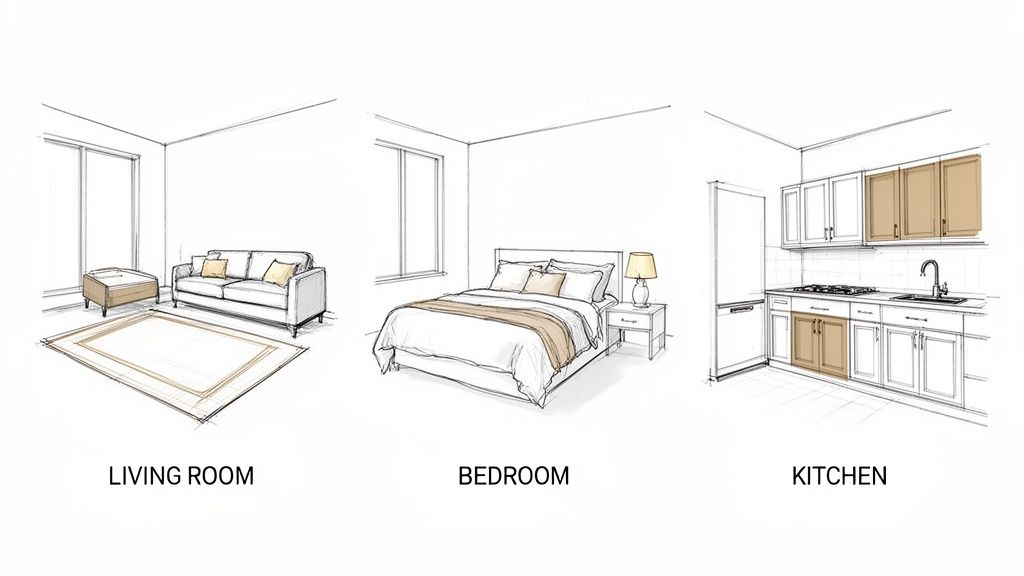
The goal isn't a perfect match but a cohesive feeling that flows through your home.
A Room-by-Room Action Plan
Here are practical tips for infusing your style into key areas of your home.
- The Living Room: Start with your focal point. For a Minimalist look, this might be a single piece of art. For a Farmhouse vibe, a big, cozy sofa. Before rearranging heavy furniture, use an AI designer to test layouts to find the best arrangement for flow without hurting your back. Different mirrors and specialty glass styles can also add unique character.
- The Bedroom: This room is your personal sanctuary. An easy way to introduce your style is through textiles. Layered bedding and natural fibers create a Scandinavian feel, while a vibrant rug can anchor an Eclectic room. Swapping a harsh overhead light for soft lamps can completely change the mood.
- The Kitchen: This space is full of potential for small but mighty upgrades. If you're renting or on a budget, swap out cabinet hardware (keep the old ones to switch back!). Peel-and-stick tiles for a new backsplash or a fresh coat of paint on the cabinets can transform the kitchen for a fraction of a full remodel cost.
- Outdoor Spaces: For an Industrial patio, use metal furniture and concrete planters. For an Eclectic balcony, mix a vintage wicker chair with colorful patterned cushions and string lights to create a cozy escape.
Pro Tip for Airbnb Hosts: Cohesive design directly impacts guest experience and reviews. A well-styled kitchen with good knives and coffee, or a living room with comfortable seating, shows you care. Those details make a listing stand out and feel premium.
Pulling It All Together
To ensure everything comes together, create a plan. Before you buy anything, gather images and samples to build a visual guide. You can find fantastic interior design mood board examples to see how pros organize their ideas.
Your home should tell your story. Don’t be afraid to mix in personal items that don’t perfectly fit the "rules." Those are the things that truly make a space feel like yours.
Common Questions About Finding Your House Style
As you pin down your design style, a few practical questions often come up. Let's tackle the most common ones with real-world advice.
Can I Mix Different Interior Design Styles?
Absolutely! In fact, some of the most captivating spaces blend elements from two or three different styles. This is the heart of Eclectic and Transitional design.
The secret is to find a common thread to tie it all together, like a consistent color palette or a repeated material like warm wood. A great rule of thumb is the 80/20 rule: pick a dominant style for about 80% of your space and sprinkle in accents from another. For example, use a clean, Scandinavian foundation and add raw, Industrial elements like black metal light fixtures.
This is where an AI design tool shines. You can instantly see how combinations look in your room, taking the guesswork out of creating a unique, blended style.
How Do I Find My Style on a Tight Budget?
You don't need a massive budget to create a stylish home. The trick is to focus on high-impact, low-cost updates.
- Start with Paint: It's the most affordable way to completely change the mood of a room.
- Embrace Secondhand: Thrift stores and online marketplaces are gold mines for unique furniture that often just needs a little love.
- Focus on Textiles: Rugs, curtains, and throw pillows are brilliant for introducing your style's colors and textures without a big financial commitment.
The Best Budget Tip: Plan before you buy. Visualizing your ideas with an AI tool helps you create a focused shopping list, preventing expensive impulse buys that don't fit your vision.
What If My Partner and I Have Different Tastes?
This is a common hurdle for couples, but it's completely solvable. The goal is to find a compromise you both genuinely love.
Start by having each person list the top three things they love about their preferred style. You’ll often find surprising overlaps, like a shared appreciation for comfort or uncluttered spaces. From there, you can find a "bridge" style—like Transitional, which marries modern and traditional elements—or agree on a neutral foundation and let smaller decor pieces express your individual personalities.
For more helpful tips, you can always explore our detailed FAQ page.
Ready to stop guessing and start seeing what’s possible in your space? With Interior Redesign AI, you can upload a photo or sketch of your room and instantly reimagine it in dozens of different styles. Find the look that truly feels like home. Try it now and bring your vision to life in seconds.
Try it on a photo of your room
Upload a photo; structure lock asks the AI to keep walls, windows and doors. 5 free credits for eligible new accounts.